South Africa's Mokala National Park
Help Me Plan- Home
- >
- African Travel
- >
- South Africa
- >
- National Parks
- >
- Mokala National Park
Mokala National Park Destination Guide
Mokala National Park is a place of dramatic beauty and quiet wildness. Set 70 km southwest of Kimberley in South Africa’s Northern Cape, it sits where the Kalahari meets the Karoo. Visitors come for rare antelope, open vistas, and far-from-the-crowds tranquility in natural surroundings across rugged hills and camel thorn plains.
Getting There
By Air: The nearest airport is Kimberley (KIM), about 70 km from the park. On arrival, you are met and transferred by road to your lodge or camp within Mokala. Scheduled flights also serve Bloemfontein (BFN) and Upington (UTN), with onward road transfers available.
By Road: Distances are approximately 575 km from Johannesburg and 900 km from Cape Town. Our itineraries often include an overnight stop en route. Travel is in a private, air-conditioned vehicle with an African Sky guide.
Weather & Best Time To Visit
Spring (September–October) and autumn (April–May) offer the most comfortable conditions, though spring can be arid. Mid-summer is extremely hot, while winter nights and early mornings can be very cold—pack warm layers.
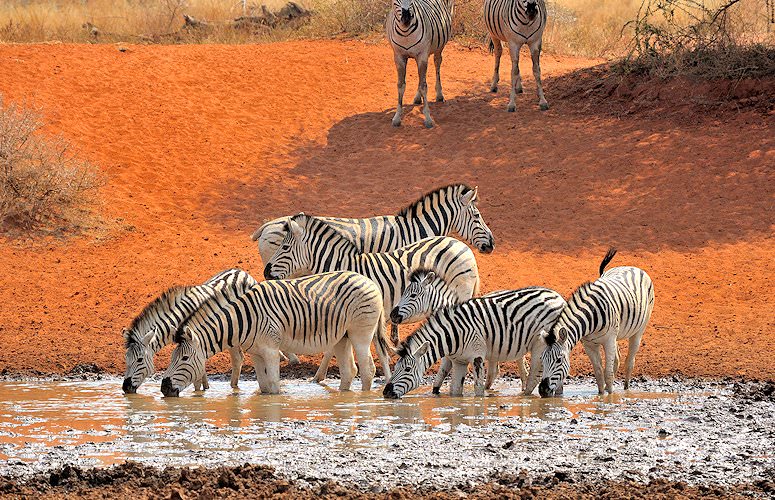
The park lies at the meeting point of the Kalahari and Karoo biomes. “Mokala,” a Setswana word for camel thorn, reflects the signature trees of its sandy woodlands. These hardy trees are a vital food source and shelter for wildlife across the reserve. Around fifty mammal species occur here.
Reasons to visit Mokala National Park
Incredible Wildlife
See some of South Africa’s rarer antelope: roan, sable, and swift tsessebe. Mokala is also a haven for bat-eared fox, aardvark, and brown hyena; with luck, you may even encounter endangered pangolin.
Stargazing
Dry, clear air and minimal light pollution make Mokala ideal for stargazing. The Northern Cape’s star-filled skies attract photographers and amateur astronomers alike—look up and be amazed.
Bird Watching
Sparse vegetation and limited water sources can simplify birdwatching and photography once species are located. Keep an eye out for several kingfisher species around pans and the Riet River.
Experiences to Savor at Mokala National Park
Nature lovers will find ample moments to savor—from golden hours on hilltops to quiet pans alive with birds.
Tree-Dotted Plains
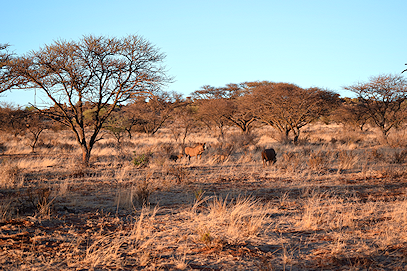
The Kalahari–Karoo transition creates arresting vistas. From hilltop lookouts, camel thorn punctuates tawny plains like brushstrokes on canvas—endlessly shifting with light and weather.
Amazing Sunsets
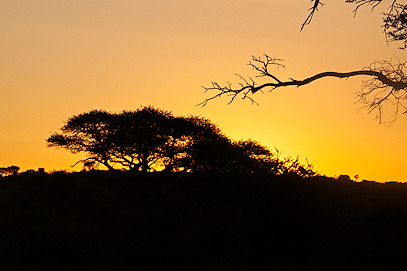
Fiery sunsets paint the semi-desert sky. Find a quiet spot in late afternoon, pour a favorite drink, and watch nature’s daily show—equal parts spectacle and solace.
Remote Isolation
Mokala trades crowds for calm. It’s easy to disconnect here, with wide horizons, little traffic, and a rare sense of solitude.Useful Information
History
Mokala was proclaimed in 2007, the newest of South Africa’s national parks, created after the de-proclamation of Vaalbos National Park. Ancient human history is evident in widespread San rock art sites across the park.
Wildlife
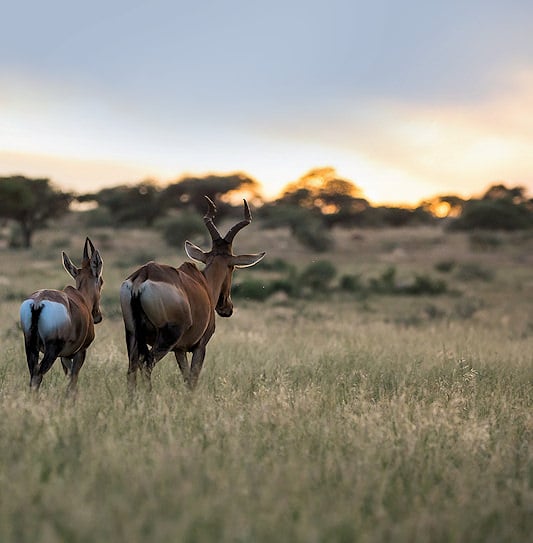
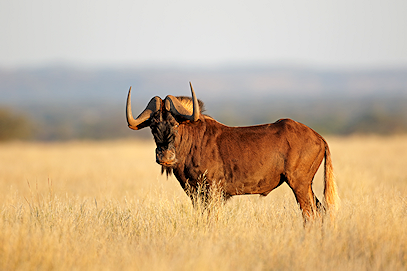
Mokala hosts many antelope. You may see eland—the largest antelope in South Africa—and swift tsessebe. Other notable species include red hartebeest, buffalo, kudu, springbok, gemsbok, roan, sable, and black and blue wildebeest, plus smaller species such as steenbok, duiker, and klipspringer.
White and black rhino, giraffe, and ostrich are regularly encountered. The largest predator present is black-backed jackal. Aardvark, bat-eared fox, and large herds of zebra also occur.
Vegetation & Terrain
Terrain and vegetation span open plains, koppies, and rocky outcrops with widespread camel thorn. Lying in the transition between Kalahari and Karoo biomes, Mokala offers a distinctive mosaic of habitats not found elsewhere.
Activities
Book a guided game drive or explore on self-drive in search of both rare and common species. The Riet River enables seasonal fly-fishing, while two 4×4 routes offer rewarding off-road experiences. Several picnic spots provide relaxed breaks amid nature.