• USD
  • EUR
  • GBP
  • AUD
  • CAD
  • ZAR

Etosha National Park Travel and Vacations

Help Me Plan

Etosha National Park Destination Guide

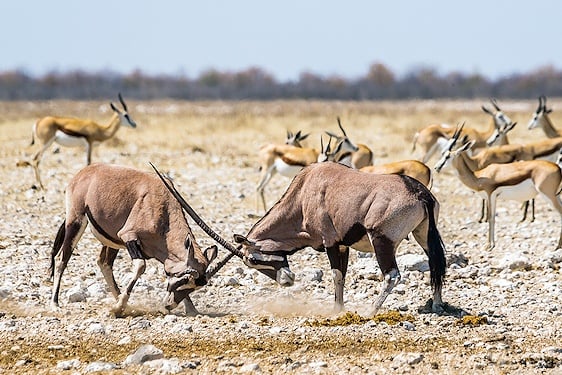
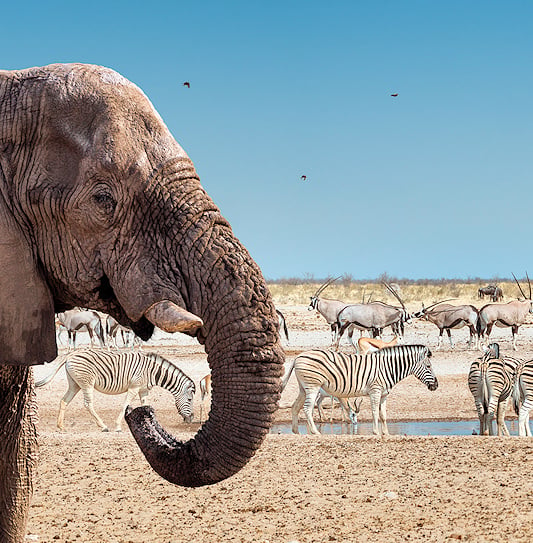
Etosha’s vast white salt pan creates distinctive safari scenes, where wildlife gathers at open waterholes against stark horizons. In few places in Africa can so many species be photographed together with such clear sightlines. If you travel to Namibia, plan at least a night or two on safari in Etosha to experience this unique setting.

Getting to Etosha National Park

By Air: Guests typically fly to Windhoek or Walvis Bay from Cape Town or Johannesburg. Afterward, guests board a light-aircraft charter to an airstrip outside the park. Charters are usually employed when staying in private game reserves bordering the park, like Ongava or Onguma.

By Road: On a private overland safari, guests also fly to Windhoek or Walvis Bay from Johannesburg or Cape Town, then travel by road in a hardy 4x4 with their African Sky guide. From Windhoek, the trip is around four and a half hours; Walvis Bay to Etosha is roughly a five and a half hour drive.

Weather & Best Time To Visit

The best time to visit Etosha is during the dry season—the winter months between May and October. Water becomes scarce, so wildlife converges around waterholes. Vegetation thins out further, allowing for unobstructed, high-quality viewing. The pan is often bone dry, and the arid landscape makes for unique photographs. Average maximums range from 26°C (79°F) to 33°C (91°F), while minimums vary between 8°C (46°F) and 15°C (59°F).

In the summer months between November and April, average daily temperatures range from 25°C (77°F) to 35°C (95°F), and very hot days can exceed 40°C (104°F). The rains transform the park from a dry, dusty pan to a green landscape. Bird populations peak in summer, with many Northern Hemisphere migrants arriving. The pan can gather water and become a shallow lake that attracts wetland bird, including flamingo in suitable years. Many larger mammal species, like elephant, move toward Namutoni after rain, while Okaukuejo tends to be drier.

Medical Considerations

Malaria risk exists in northern Namibia, including Etosha, particularly in or after the rainy season. The Centers for Disease Control and Prevention recommends anti-malarial prophylaxis. Ensure routine vaccinations are current, and pack any allergy or dust-related medication for winter visits.

Health & Safety

Crime is rarely an issue inside the national park. Remain discreet with valuables to avoid petty theft. Do not feed animals—baboon and monkey can become aggressive if habituated to people. Do not exit your vehicle unless you are in a demarcated safe area or accompanied by an armed ranger.

Top Attractions in Etosha

Etosha National Park provides a unique safari experience in northern Namibia, where open pans and numerous waterholes make wildlife viewing remarkably consistent.

Etosha Pan aerial view

Etosha Pan

The Etosha Pan is a bright, white expanse that covers almost a quarter of the park. It is the largest salt pan in Africa. In exceptional wet years, hundreds of thousands of flamingo gather to feed and breed on the flooded flats before the pan dries again.

Okaukuejo waterhole at dusk

Waterholes

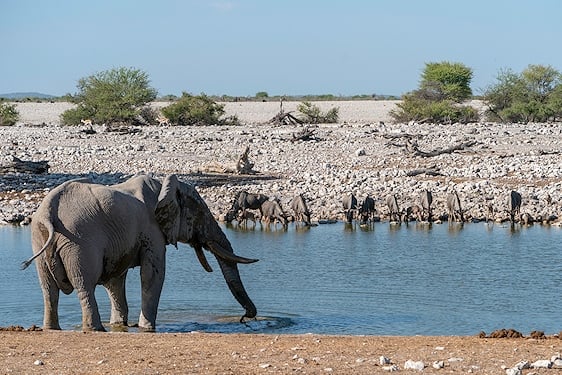
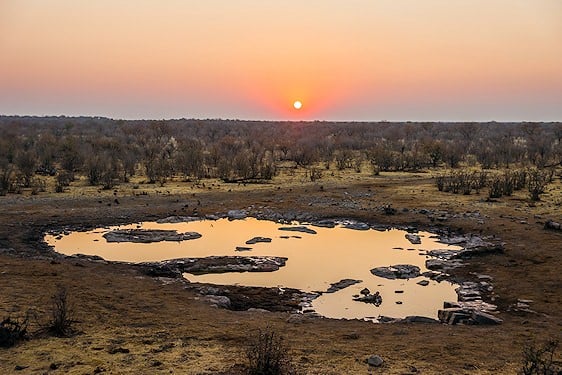
Many waterholes are scattered throughout Etosha. These oases attract wildlife and bird species in large numbers, especially during the dry season. Each main rest camp has a floodlit waterhole that brings exciting game viewing to your doorstep.

Fairy-tale Forest moringa trees

Fairy-tale Forest

Situated east of Halali, the Fairy-tale Forest covers about one square kilometer and features dense stands of moringa (Moringa ovalifolia). While especially associated with Namibia, this species also occurs in southwestern Angola; Etosha is unique for its concentration on the plains.

Etosha National Park Vacation Options & Travel Tips

The vast salt pan of Etosha creates a distinctive safari landscape, where you can often watch elephant, giraffe, lion, rhino, and antelope together.

Safari tours icon

Tours, Safaris & Honeymoons

Browse our thoughtfully crafted safari tours.

Tailor-made icon

Tailor-Made Vacation Packages

All our tours and safaris can be customized.

Travel tips icon

Travel Tips & Advice

Important information about visiting Southern Africa.

Help Plan My Trip

Recommended Safari Camps & Lodges

Etosha National Park and adjacent concessions offer a wide range of accommodation options, from national park rest camps to luxury lodges.

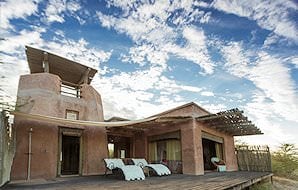
Ongava Lodge exterior

Ongava Lodge

Ongava is one of Namibia's premier lodges set on a hill with sweeping views across the African landscape. It is on a private concession with easy access to Etosha National Park.

Onguma The Fort outlook

Onguma The Fort

Onguma The Fort overlooks Fischer's Pan and offers luxury accommodation and immersive nature experiences both on its 34,000-hectare concession and in Etosha National Park.

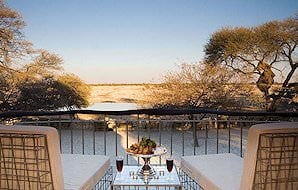
Okaukuejo Camp waterhole

Okaukuejo Camp

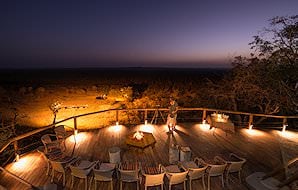
Etosha's main national park rest camp offers comfortable en-suite bungalows under thatch. The camp overlooks a floodlit waterhole where exceptional animal sightings are common.

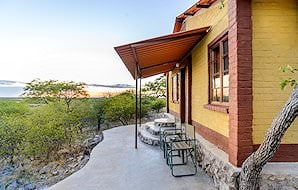
Etosha Safari Camp setting

Etosha Safari Camp

A comfortable camp that provides easy access to Etosha offers accommodation in en-suite bungalows set among mopane trees. The camp is reasonably priced.

View All Etosha Lodges & Camps

Etosha Travel Overview

Etosha National Park is one of the best game reserves in Africa for observing a diverse range of animal and bird life. Game viewing in Etosha is excellent, as wildlife congregates around the park's waterholes for much of the year, and there is little vegetation to obstruct one’s view.

Location
Northern Namibia
Established
1907
Size
22,270 km²
Mammal Species
114
Bird Species
340
Pan Size
~5,000 km²
Best Season
May–Oct
Signature Feature
Floodlit waterholes

Exciting predator and prey encounters

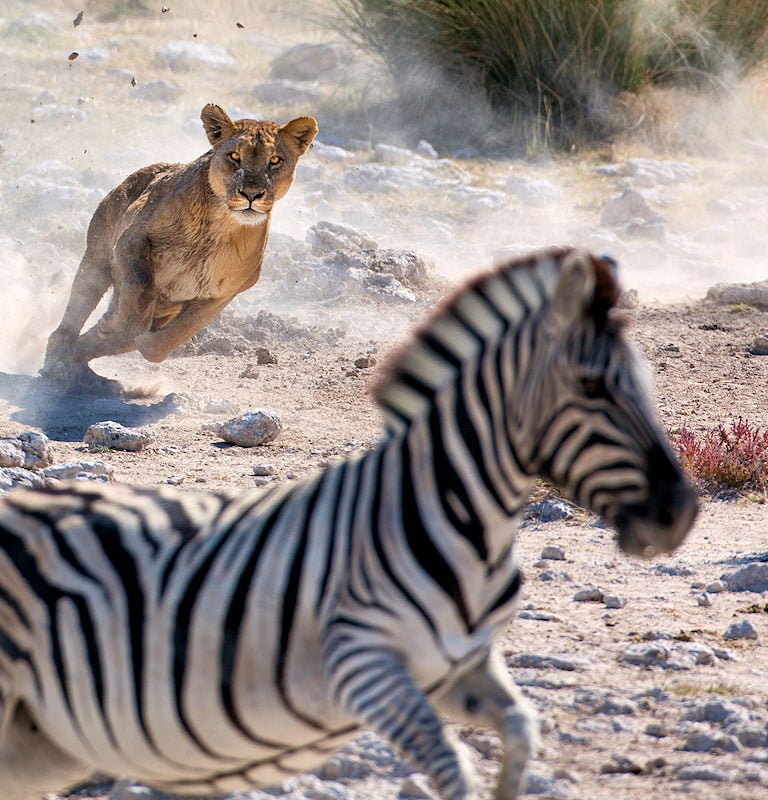
Predator-versus-prey scenarios are not uncommon in safari areas, but what sets Etosha apart is its unique white-colored landscape, where thrilling hunting scenes unfold in open spaces dotted with waterholes where diverse wildlife gathers to drink—and sometimes hunt.

There is something special about seeing a lioness chasing a zebra, its black-and-white stripes echoing the salt pan, while the big cat adapts to the lack of long grass cover.

Lioness hunting on Etosha pan edge

Foods to try when visiting Etosha National Park

Gemsbok steak

Gemsbok

The gemsbok is a striking oryx that roams the desert landscapes of Namibia. Its lean meat is served as steak, sausage, biltong, and goulash.
Springbok carpaccio

Springbok

Springbok meat is light and lean. This gazelle thrives in arid environments and yields naturally free-range fare; carpaccio is a popular preparation.
Namibian beer

Beer

Namibia’s beers are brewed to German purity laws—a legacy of colonial history. Windhoek is the most popular; a cold lager or draft is a classic post-safari treat.
Freshly baked Brötchen

Brötchen

A brötchen is a German bread roll—another echo of “German South-West.” These rolls are so popular that the word appears across languages in Namibia.

Etosha National Park FAQ

Does Etosha have the Big Five?

Buffalo is absent from Etosha, so you can see four of the Big Five: lion, elephant, leopard, and black rhino.

Can wild animals harm me?

As long as you avoid feeding animals or wandering around the park on your own, you need not worry about being harmed by animals. Always follow your ranger or guide’s instructions.

Are bush walks available?

Guided bush walks are available at private reserves like Onguma or Ongava that border the park; walking is not offered within the national park itself.

Do I need to take malaria medication?

Anti-malarial prophylactics are recommended for visitors to Etosha.

Can I view animals at night?

Yes. Night drives are available from official rest camps (Okaukuejo, Halali, Namutoni) on guided vehicles operated inside the park. Floodlit waterholes at camps also allow night viewing from within the camp.

Are my valuables safe at the lodges & Camps?

Petty crime is generally very low. For high-value items, request safe storage at reception for the duration of your stay.

Is there fresh water to drink?

Bottled mineral water is readily available at all rest camps and private lodges. Tap water is safe but mineral-rich and may taste brackish.

Are there any species that are unique to Etosha?

Look for black-faced impala, Damara dik-dik, and Hartmann's mountain zebra—regional specialties that are rare or absent in many other wilderness areas.

Is there water in the Etosha Pan?

In the rainy season (November to April), parts of the pan can hold a thin layer of water and attract wetland bird; in winter it usually remains dry.

Will I have mobile reception and access to the Internet?

Rest camps and lodges typically have mobile reception, but you’ll often be off-grid on drives. Internet is available at some establishments and may be slow.

History

The name Etosha (spelled Etosha in early literature) comes from the Oshindonga word meaning “Great White Place,” referring to the Etosha Pan. The Hai//Om called the pan “Khubus,” meaning “totally bare, a white place with lots of dust.”

Explorers Charles John Andersson and Francis Galton were the first Europeans to record the pan on 29 May 1851. Traveling with Ovambo copper-ore traders, they reached Omutjamatunda (now Namutoni) and then continued north to the pan.

Areas north of the pan were inhabited by Ovambo people, while various Otjiherero-speaking groups lived immediately outside the current park boundaries. Areas near the pan had Khoisan-speaking peoples.

In 1886, German troops occupied Okaukuejo, Namutoni, and Sesfontein to control wildlife movements during a rinderpest outbreak. A fort was built at the Namutoni spring in 1889. On 28 January 1904, 500 men under Nehale Mpingana attacked Imperial Germany’s Schutztruppe at Fort Namutoni and destroyed it, before the fort was later rebuilt. The area was proclaimed a game reserve in 1907, and Lieutenant Adolf Fischer became the first “game warden.”

Mammals & Birdlife

Most visitors to Etosha are struck by the abundance of wildlife in a seemingly harsh environment. Because of the arid nature, animals congregate around waterholes, delivering extraordinary opportunities to photograph multiple species together.

Buffalo is absent, but the rest of the Big Five—lion, leopard, elephant, and rhino—occur throughout. A cheetah is a rarer sighting. Etosha is home to both plains zebra and the threatened Hartmann’s mountain zebra (mainly in the west). Brown hyena and spotted hyena may also be encountered.

For avid birders, summer is ideal. While many consider dry-season game viewing best, summer rains can turn the vast pans into seasonal lakes that attract migratory and wetland species. Etosha hosts about 340 bird species, roughly a third migratory, from flamingo and the lilac-breasted roller to about 35 raptor species.

Fischer’s Pan is a birding hotspot. A flamingo and a stork occupy the shallow waters when rains gather. African openbill, and great crested and black-necked grebe, also occur. After substantial rain, the roughly 5,000 km² Etosha Pan fills and can attract flamingo in large numbers; the best viewing is often January–February when water is present.

Geography

The salt pans are the most noticeable geological features in Etosha. The main depression covers about 5,000 km², roughly 130 km long and up to 50 km wide. Hypersaline conditions limit permanent residents in the pan, though extremophile microorganisms occur. The pan is usually dry but may briefly fill in summer, attracting pelican and flamingo.

In the dry season, winds blow saline dust from the pan across Namibia and out over the southern Atlantic. This enriches soils downwind—benefiting some wildlife—though salinity also poses farming challenges.

The Etosha Pan was one of several sites in the Southern African Regional Science Initiative (SAFARI 2000), which combined satellite, aerial, and ground data to study land-atmosphere interactions.

The dolomite hills on the park’s southern border near the Andersson Gate are called “Ondundozonananandana,” meaning “place where young boy herding cattle went never to return,” likely reflecting historical predator density. The Halali area also features dolomite hills, including a hill inside the camp and nearby Twee Koppies.

Last Updated: November 21, 2025 Curated By: Riaan Viljoen