


Description
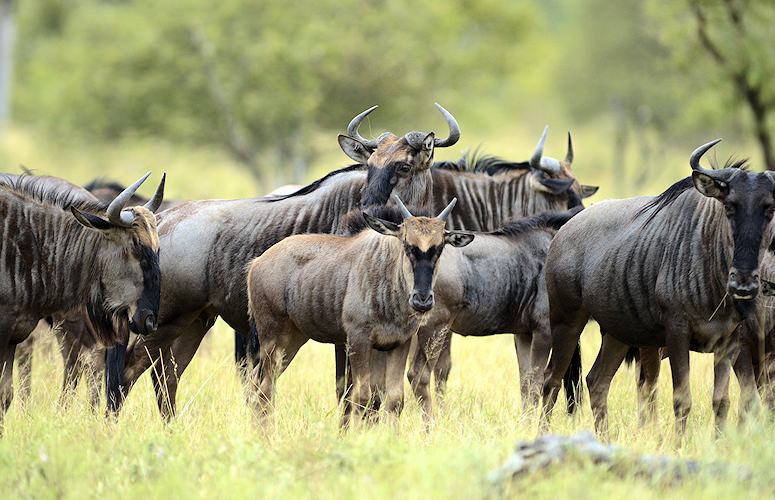
A muscular, deep-chested antelope with a broad muzzle and cow-like horns, the blue wildebeest (also called the brindled gnu) shows dark vertical striping on the flanks and a beard on the throat. Both sexes carry horns; bulls are heavier with thicker horn bases. Herds move across open grassland, shaggy manes and swishing tails evident at a trot.
This is another common antelope found throughout the Kruger National Park. In the southern parts of the park, one does not often see the very large herds moving around, but as you travel further north towards the Tshokwane area and beyond, the herds tend to become much bigger. One of my favourite places to watch the antics of blue wildebeest is at the Tihongonyeni Waterhole near Mopani, where they can often be seen running around, rolling in the dust, and generally behaving like the clowns of the bushveld, as they are so often described.
 - Mary-Anne Finlay - Tour Guide Since 2006 (THETA Registration No: GP 2432)
In Southern Africa, blue wildebeest are widespread across suitable savanna and open woodland, including the Kruger National Park, Botswana’s northern parks, Namibia’s Etosha system, and parts of Zimbabwe and Zambia. Massive migratory populations also occur on the East African plains of Tanzania and Kenya.

Status
Blue wildebeest are listed as Least Concern with large, well-managed populations in numerous parks and conservancies. Local pressures include fencing, habitat conversion, and water dependency in arid areas, but protection in major ecosystems supports healthy numbers.

Habitat
Primarily short-grass grazers, they favor open savanna, grassland and lightly wooded mosaics, from Kalahari pans to mopane and miombo fringes. They’ll track recent rainfall and fresh grazing, often congregating near water during dry periods.

Social Organization
Structure includes territorial bulls, mobile maternal herds, and bachelor groups. During dry seasons or in migratory systems, herds merge into large aggregations that move in response to grazing quality and water availability.
Finest Safari Areas in Africa for Encountering Blue Wildebeest
For reliable sightings on game drives and guided walks, we recommend these parks and private reserves.

Social Behavior
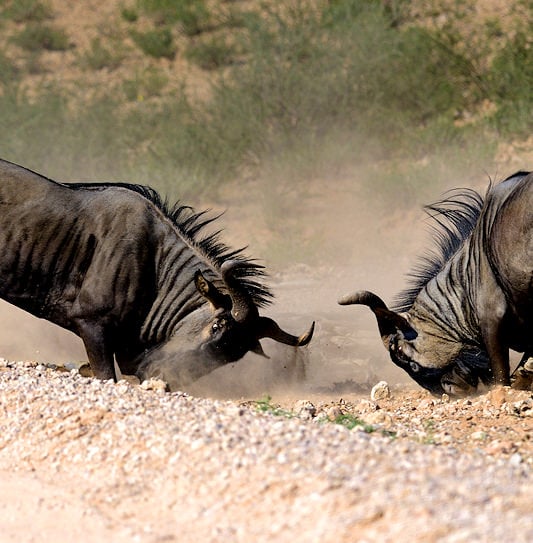
Bulls advertise territories with displays, horn-rattling, pawing and scent-marking (dung, urine, preorbital glands). Daily “challenge” rituals between neighbors reinforce boundaries and hierarchy, while herds spend much of the day grazing and moving between forage and water.

Reproduction
Breeding is seasonal. After a brief, synchronized rut, cows drop calves in a tight birth pulse (about three weeks) the following wet season. Gestation is roughly eight months; the synchronized timing boosts calf survival by swamping predators when forage is best.

Anti-Predator Behavior
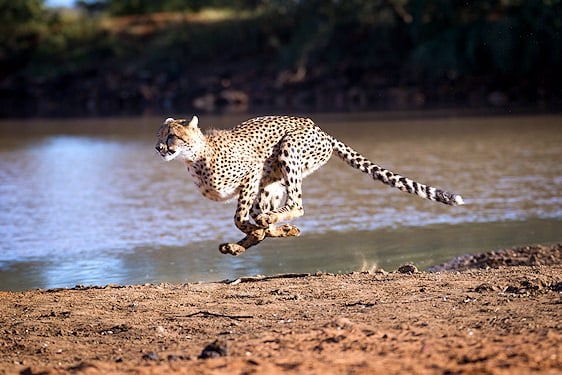
Alarm snorts, tight group formations, and stamping “stotting” displays are common responses to threat. Adults face lion, hyena, wild dog and crocodile; calves and subadults are also vulnerable to cheetah and large python. When chased, herds break into sustained, ground-eating gallops across open country.