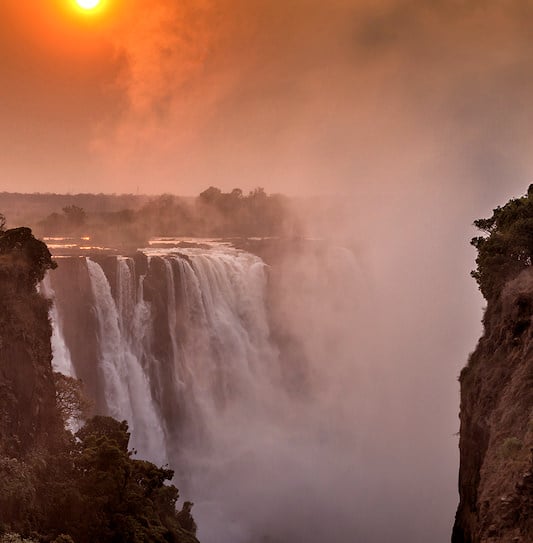
Victoria Falls Travel and Vacations
Help Me Plan- Home
- >
- African Travel
- >
- Zambia
- >
- Victoria Falls
Victoria Falls Destination Guide
Victoria Falls is a grand natural spectacle and one of Southern Africa’s most popular destinations. No vacation here feels complete without gazing across the gorge at the world’s largest curtain of falling water. Beyond scenic viewpoints, you can add white-water rafting, sunset cruises, and seasonal Devil’s Pool, with stays on either the Zimbabwean or Zambian side.
Getting to Victoria Falls
A few daily commercial flights connect Johannesburg to the town of Victoria Falls in Zimbabwe and the town of Livingstone in Zambia. These flights are about an hour and forty minutes in duration. A short transfer of twenty to thirty minutes from Livingstone or Victoria Falls airport brings guests to their overnight destination.
Weather & Best Time To Visit
Winter months from late May to the end of August are the most temperate. Summers can be very hot, with temperatures rising above 40 degrees Celsius. Rainfall typically arrives as late-afternoon thundershowers from mid-October to late March.
The best time to see Victoria Falls at peak flow is roughly March to June, after the summer rains in the Zambezi catchment. Later in the dry season, activities like Devil’s Pool and some river adventures are possible when water levels are lower.
Passport & Visa Info
Many nationalities require visas for Zimbabwe or Zambia. Requirements and fees change periodically; check official government sources or your nearest embassy before travel.
Visas are typically obtainable at ports of entry or in advance via missions/online systems, with single or multiple-entry options available.
Medical Considerations
Victoria Falls lies in a high malaria-risk area; consult your physician about prophylaxis and ensure routine vaccinations are up to date.
Health & Safety
Livingstone and Victoria Falls are busy tourism hubs. Keep valuables secure in crowds and use lodge/hotel safes where available.
Popular Activities at Victoria Falls
Around Victoria Falls are several national parks and protected areas that safeguard the landscape for future generations. The Zambezi River supplies the falls and forms the border between Zambia and Zimbabwe.
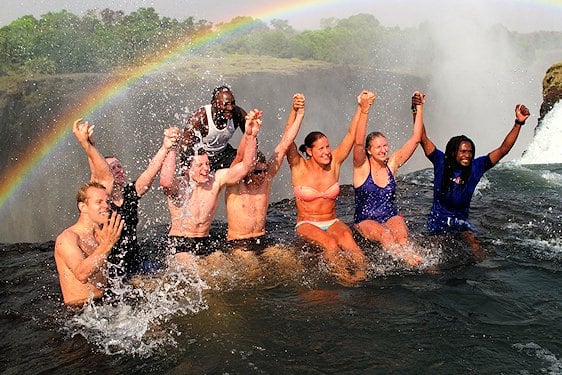
Devil’s Pool is a trench naturally gouged out of the rock on the very edge of one section of the falls, allowing adventurous visitors to experience the cataract up close when water levels are low (generally mid-August to mid-January). This activity is not for the faint of heart.
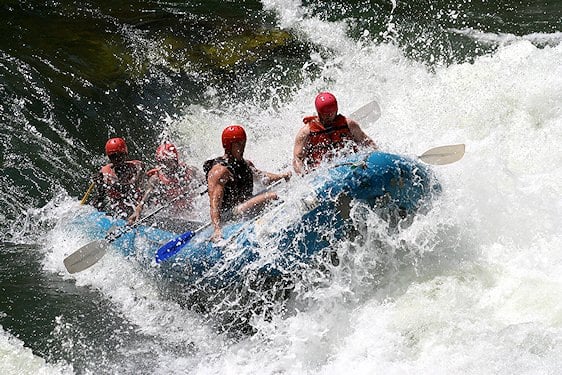
The classic adrenaline adventure: rafting the Zambezi below the falls, widely regarded as one of the world’s best one-day white-water runs. Depending on levels, rapids reach Grade IV–V.
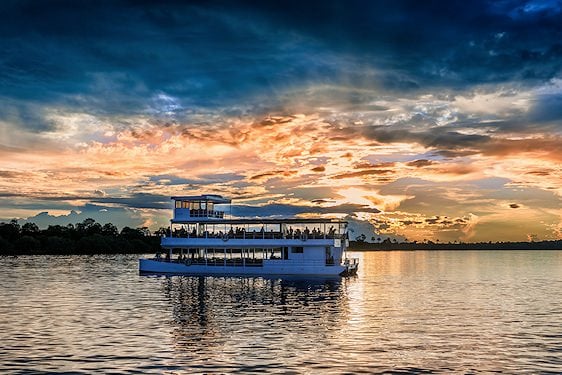
Few places offer more dramatic river scenery for a sunset cruise than the upper Zambezi. It’s a laid-back complement to high-energy activities.
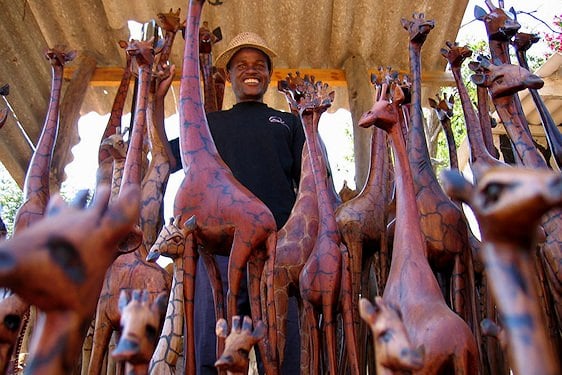
These excursions enrich your understanding of local traditions and crafts and offer opportunities to purchase hand-made curios.
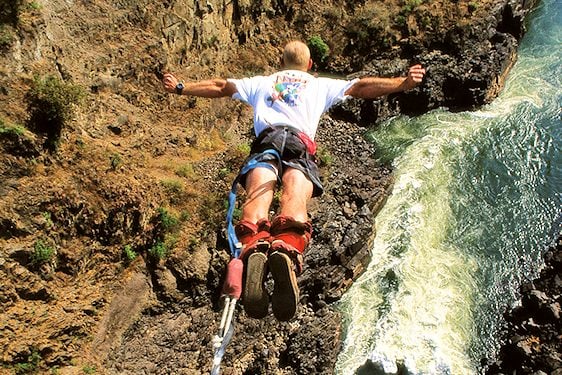
For the brave: professional jump masters operate from the bridge linking Zambia and Zimbabwe, above the Batoka Gorge.
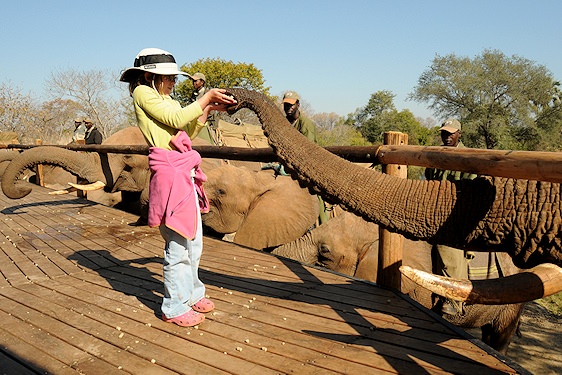
Elephant encounters remain a popular activity at Vic Falls. Experiences typically involve close-up viewing and interaction under supervision by experienced minders.
Victoria Falls Vacation Options & Travel Tips
Victoria Falls can be viewed from both Zambia and Zimbabwe, and it lies close to Botswana, so many itineraries include world-class Chobe National Park.
Tours, Safaris & Honeymoons
Browse our thoughtfully crafted safari tours.
Tailor-Made Vacation Packages
All our tours and safaris can be customized.
Travel Tips & Advice
Important information about visiting Southern Africa.
Recommended Accommodation
Accommodations at Victoria Falls range from hotels in Livingstone and Victoria Falls to luxurious lodges on the banks of the Zambezi River.
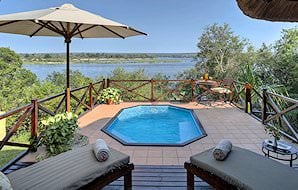
River Club
This magnificent lodge overlooks the Zambezi from a perch on the river’s banks on the Zambian side.

Royal Livingstone
The Royal Livingstone is a fine luxury hotel, colonial in style, close to the falls on the Zambian side of the Zambezi River.
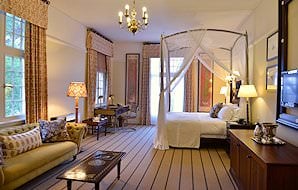
Victoria Falls Hotel
Built in 1904 by the British, the iconic Victoria Falls Hotel remains one of the finest hotels available in the area.
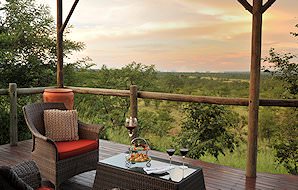
Elephant Camp
The Elephant Camp overlooks the Zambezi River gorges inside the Victoria Falls National Park.
Victoria Falls Travel Overview
One of Africa's grandest natural wonders, Victoria Falls, is a destination not to be missed when traveling to Southern Africa.
These mighty falls occur in the Zambezi River between northeast Zimbabwe and southwestern Zambia—one of the world’s natural wonders.
Witnessing the majesty of the falls
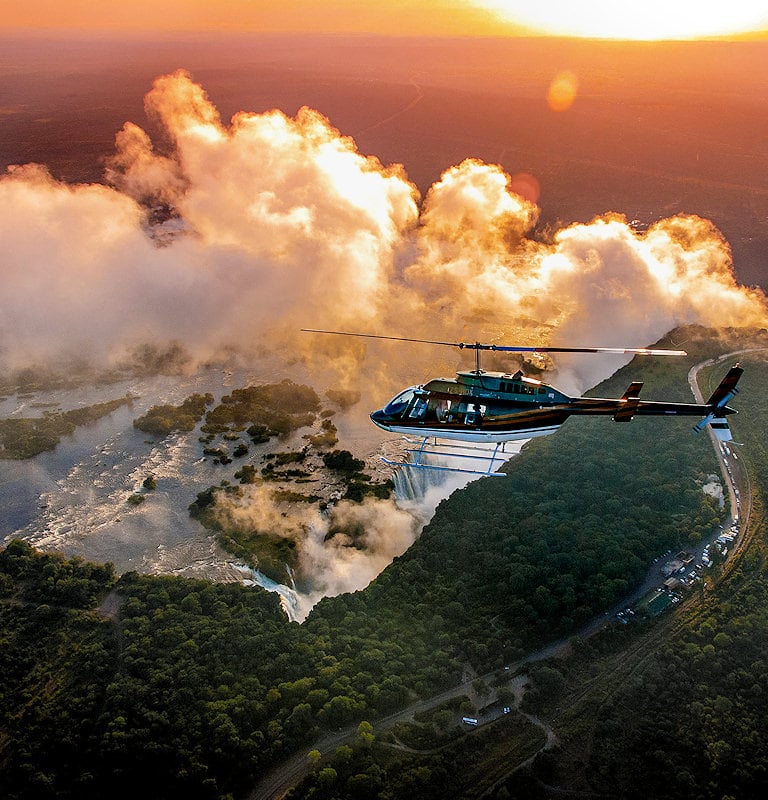
Victoria Falls is often described as the largest continuous curtain of falling water in the world, despite not being the tallest waterfall in Africa. Its scale is best appreciated in person—locals call it “The Smoke That Thunders.” You can experience the falls up close in the spray, from a helicopter, or via river adventures like white-water rafting. Some lodges enjoy superb Zambezi views.
Foods to try when visiting the Vic Falls
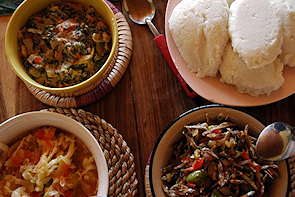
Nshima
Nshima is the staple in both Zambia and Malawi. It is a starch dish cooked with water, salt, and maize flour. Salted water is brought to a boil, after which the maize flour is added and cooked for ten to twenty minutes.

Tilapia
Tilapia is a local freshwater fish species abundant in the Zambezi. Methods of preparation include pan-frying, roasting, or serving tilapia in a traditional fish stew.
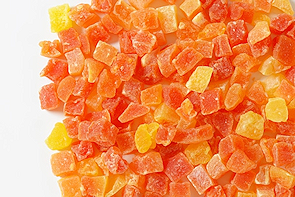
Mapopo Candy
Made from papaya, sugar, mint, and grated lemon peel, Mapopo Candy is a local sweet treat. It is available in local markets and at many hotels and lodges during papaya season.
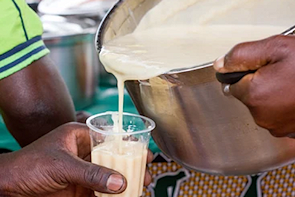
Maheu
A creamy drink made from maize meal, Maheu has a slightly sour taste and becomes alcoholic if left to ferment. It’s popular locally and worth a try if you enjoy new flavors.Victoria Falls FAQ
In times of peak flow, you will be drenched by the spray cloud of the falls. It is not necessary to bring your own raincoat, as ponchos can be hired at a nominal fee.
Each side is different and special in its own way. Roughly two-thirds of the viewpoints are on the Zimbabwean side and about one-third on the Zambian side.
Reputable operators use trained guides, proper safety briefings, and certified equipment. Note that rapids on this section of the Zambezi can reach Grade IV–V and conditions vary with river levels, so rafting is best suited to fit and confident swimmers.
A stay of three nights with two full days is ideal for most visitors, giving time to explore the falls, enjoy a sunset cruise, and add an activity like white-water rafting or a helicopter flight.
Transfers from Victoria Falls or Livingstone airport to most hotels and lodges typically take about 20 to 30 minutes, depending on traffic and exact location.
Devil’s Pool usually operates from mid-August to mid-January, depending on Zambezi water levels and safety assessments by licensed operators.
Botswana’s Chobe National Park is the most popular add-on for river and elephant encounters, while Zimbabwe’s Hwange National Park is another excellent safari option within reach by road or air.
There is no single “best” property for everyone. Classic hotels close to town suit guests who enjoy easy access to restaurants and shops, while quieter riverside lodges on the Zambezi offer a more secluded, nature-focused experience.
Yes. Both Victoria Falls and Livingstone offer mobile reception and Internet access, although speeds can be slow and coverage varies by provider and exact location.
History
Victoria Falls is one of the most recognizable natural wonders in Africa. It was first described to Europeans by Dr. David Livingstone during his expeditions, leading to his first sighting of the falls on 16 December 1855. He then named the waterfall after the British monarch, Queen Victoria.
During the early 20th century, a town was established near the falls after Cecil John Rhodes proposed exploiting the area and its resources. Rhodes also backed construction of the bridge here, driven by his Cape-to-Cairo railway vision.
Tourism accelerated when the Victoria Falls Hotel opened in 1904 to serve railway passengers. By 1990, annual visitor numbers were approaching 400 000, and today the area remains a well-managed, highly sought-after destination.
The Gorges
A gorge is a deep, narrow valley formed by river erosion. At Victoria Falls, the First Gorge lies immediately below the falls; downstream, the river has carved a sequence of further gorges.
Six gorges are commonly identified in the immediate area. The last of these is notable for its size, at roughly 3.3 km in length and about 140 m deep.