• USD
  • EUR
  • GBP
  • AUD
  • CAD
  • ZAR

South Africa's Mountain Zebra National Park

Help Me Plan

Mountain Zebra National Park Destination Guide

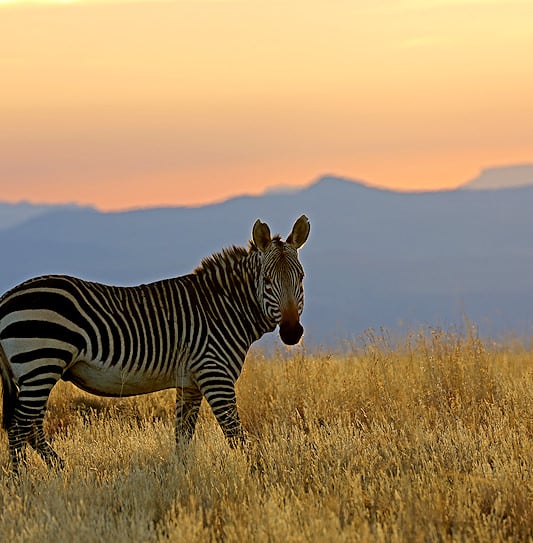
Set near Cradock in South Africa’s Eastern Cape, Mountain Zebra National Park protects rolling Karoo grasslands and rugged peaks. Beyond its signature Cape mountain zebra, you can look for cheetah, black wildebeest, eland, and kudu, plus excellent birding. It’s a quieter, scenic alternative to busy routes—big skies, starry nights, and rewarding year-round viewing.

Getting There

By Air: The closest major airports are Gqeberha (Port Elizabeth) and East London. On arrival, we arrange a road transfer to the park; driving time is typically three to four hours depending on routing and stops.

By Road: Classic itineraries link Cape Town, the Garden Route, and the Eastern Cape. The park is roughly nine hours by road from Cape Town and about three hours from Gqeberha.

Weather & Best Time To Visit

The park’s main attractions can be seen year-round. Winters are cold—temperatures can dip below freezing and snow is possible on surrounding peaks. Summers (October to March) are warm, with most rain from December to February. Summer is best for birding, newborn animals, and flowering flora.
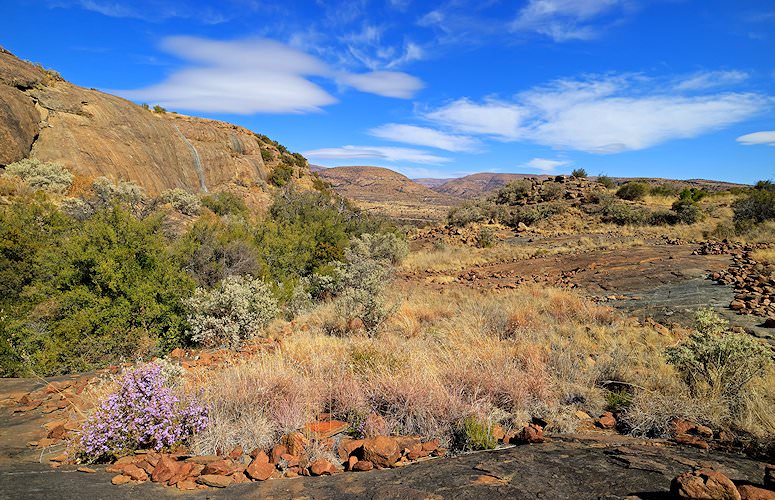
Besides Cape mountain zebra, the park hosts herds of large game such as eland, red hartebeest, kudu, and black wildebeest, with more than 200 recorded bird species. Set within classic Karoo scenery, it pairs sweeping views with dependable wildlife and fewer crowds than many better-known reserves.

Size
28,400 hectares
Established
1937
Province
Eastern Cape
Animal species
~350
Plant species
~680
Cape mountain zebra
~700
Bird species
~275
Big Five
4/5 (no elephant)

Reasons to visit Mountain Zebra National Park

1

The Views

The vistas across Karoo grasslands to blue-hued mountains are remarkable. Lodgings on a ridge overlook open plains—perfect for sunsets and stargazing on cloudless nights.

2

Unique Species

The park shelters animals not always seen on mainstream safaris, including endangered Cape mountain zebra and ground squirrel. A population of black rhino adds to the appeal.

3

Heritage & Culture

Three rock-art sites preserve San history from roughly three centuries ago. Stone Age artifacts attest to people inhabiting the region more than 10,000 years ago.

Start Planning

Experiences to Savor at Mountain Zebra National Park

Standout experiences combine charismatic wildlife with sweeping Karoo scenery.
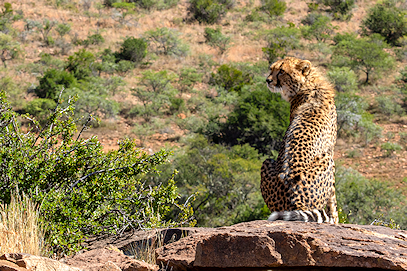
Cheetah Encounters

Guided drives and walks that track cheetah are exhilarating. With expert guidance—and some luck—you may find this superb hunter and learn about its behavior and conservation.
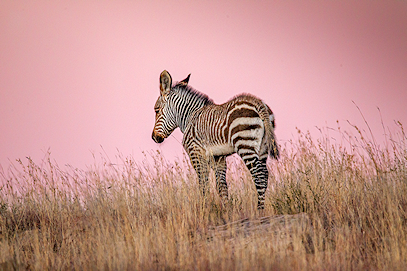
Zebra Crossing

On game drives you’ll often see Cape mountain zebra crossing roads or grazing close by, offering excellent photo opportunities from a respectful distance.
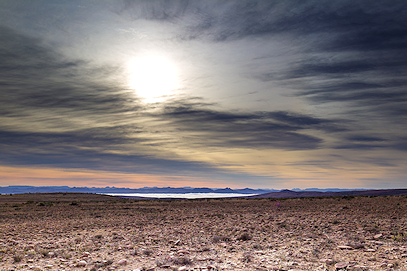
Unique Landscape

Wide plains roll toward distant mountains, creating ideal habitat for zebra and cheetah—and endlessly photogenic layers of light and color.

Useful Information

History

Established in 1937 to save the Cape mountain zebra from extinction after the quagga’s demise (the last died in 1883), the park became a source for reintroductions across South Africa once numbers recovered by the 1980s. During the Anglo-Boer War, soldiers famously played “mirror chess” between Saltpeterkop and Cradock—traces remain visible today.

Wildlife

Visitors can view the Big Five except elephant. Buffalo favors acacia thickets and wooded valleys. Black rhino, lion, and Cape mountain leopard are elusive; cheetah is often easier to encounter. Lesser-seen mammals include aardwolf, bat-eared fox, and caracal. Nocturnal species such as Cape fox, aardvark, genet, black-footed cat, and striped polecat are possible on night drives.

More than 700 mountain zebra occur. Antelope are plentiful—expect eland, kudu, blesbok, black wildebeest, red hartebeest, and springbok. Vervet monkey and chacma baboon are common. Black-backed jackal, yellow mongoose, and ground squirrel are often seen. Birding is strong, with blue crane, secretary bird, Verreaux’s eagle, and many more; at least 275 species are recorded.

Vegetation & Terrain

Threatened vegetation includes Eastern Upper Karoo and the Nama-Karoo biome. Karoo escarpment grassland and thicket add further diversity. This mosaic supports rich flora and fauna and helps conserve fragile soils. About 680 plant species occur, including 13 Red Data species.

Activities

A guided open-4×4 game drive is ideal for sightings in early morning, late afternoon, or evening. Self-guided and guided walks—including the Salpeterkop Hike—offer deeper immersion. Birders should watch for blue crane and eastern clapper lark, especially at dawn.

Last Updated: November 21, 2025 Curated By: Riaan Viljoen