


Description
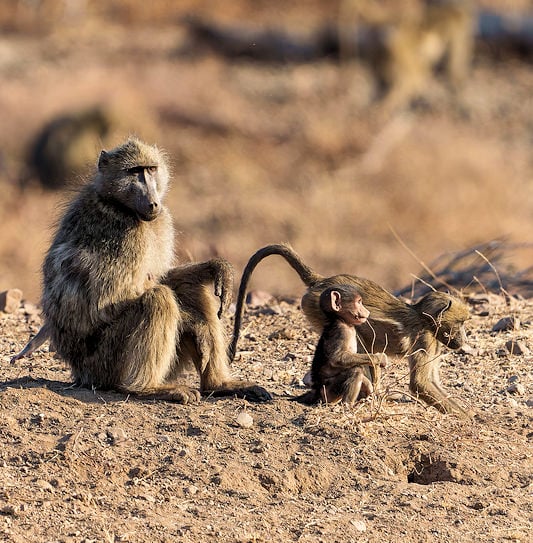
Large, robust baboons with shaggy brown to grey-brown fur and a long dog-like muzzle. The naked face and rump skin are dark. Males are noticeably larger, with heavier shoulders and prominent canine teeth (impressive, but not longer than a lion’s).
These animals are also very common throughout the Kruger National Park. Early mornings and late afternoons are often the best times to see them along river roads, as they are either leaving their sleeping sites to go foraging for the day or returning to their favourite trees for the night. The Sabie River road between Skukuza and Lower Sabie is always a favourite area to watch these entertaining animals simply being baboons. They have many different vocal calls used for play, communication, and alarm signals, and every now and then one gets to witness an adult disciplining one of the youngsters.
 - Mary-Anne Finlay - Tour Guide Since 2006 (THETA Registration No: GP 2432)
Endemic to southern Africa, chacma baboons occur widely in South Africa (including the Kruger system), Namibia, Botswana, Zimbabwe and parts of Mozambique and Zambia. They use habitats from arid karoo and fynbos to savanna and woodland, provided water and secure sleeping sites (cliffs or large trees) are available.

Status
Listed as Least Concern. Chacma baboons remain common in many protected and rural landscapes, though local declines occur where conflict with agriculture and persecution are high. In and around Kruger, populations are stable.

Habitat
Highly adaptable omnivores using woodland, riparian corridors, rocky hills and coastal fynbos. Diet includes grass seeds, fruits, roots, bulbs, insects and small vertebrates; in popular tourist areas they may scavenge, so secure food storage is essential.

Social Organization
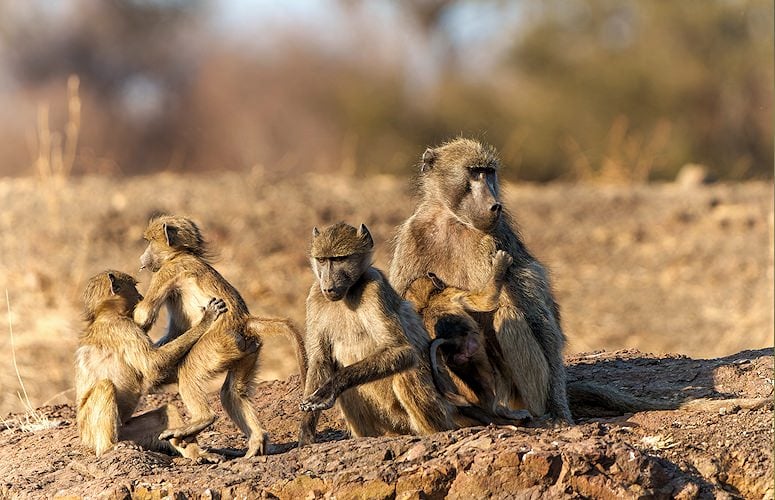
Live in multi-male, multi-female troops typically ~20–80 strong (smaller to >200 in some systems). Not territorial, but maintain home ranges that vary with habitat productivity. Social bonds are reinforced by frequent grooming; infants ride on the mother’s belly or back during travel.
Finest Safari Areas in Africa for Encountering Chacma Baboon
Reliable sightings on game drives and near camps are common in the following parks and private reserves.

Social Behavior
Broad vocal repertoire (barks, grunts, screams) and rich visual displays. Forage by day, rest in shade during the heat, and ascend cliffs or large trees to sleep. Around rest camps, troops investigate novel objects—secure windows, doors and food to avoid habituation.

Reproduction
Females mature at ~4.5–5 years. Estrus is signaled by swelling and skin coloration; mating is brief and can be selective by female choice. Gestation is ~6 months; single infants cling to the mother and begin riding dorsally as they grow. Interbirth intervals are commonly 1–2 years depending on conditions.

Anti-Predator Behavior
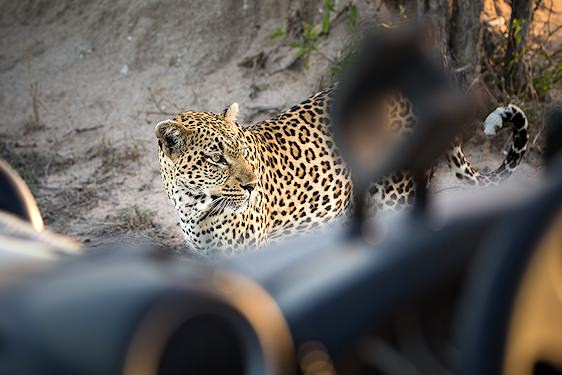
Main predators include leopards, lions, hyenas and large pythons. Sentinels give loud alarm barks; adult males confront threats while the troop retreats, often to elevated sleeping sites. Night-time clashes with leopards are sometimes audible near rivers and camps.