


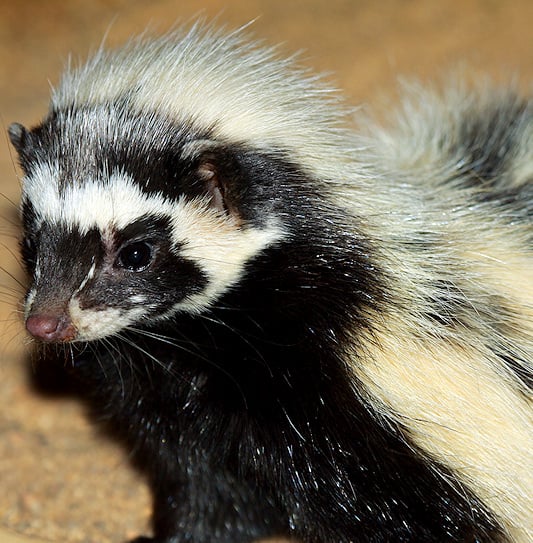
Description
The striped polecat is a small, low-slung carnivore with a bold white facial blaze and four pale stripes running from head to tail along a dark coat. The tail is long and bushy, often held arched when alarmed. Compact legs and a close-to-ground gait enable quick dashes, while strong scent glands broadcast warnings that deter harassment by larger carnivore.
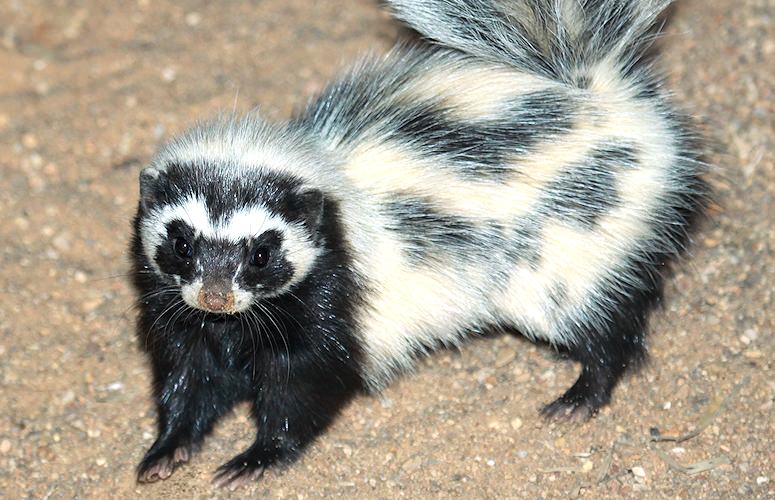
The striped polecat ranges widely across Africa, with strongholds in open savanna, scrub, and lightly wooded regions from the Horn of Africa south into Southern Africa, including South Africa. It is generally absent from hyper-arid desert and dense equatorial rainforest. Records are scattered and often nocturnal, so sightings are rare even where the species is locally established near protected areas and farmlands.

Status
The striped polecat is generally assessed as Least Concern due to broad distribution and presumed large population. Abundance varies with rainfall, prey, and human pressure, and robust estimates remain scarce because activity peaks at night and detection rates are low. Local conflict arises around poultry, but overall viability appears stable where habitat mosaics persist and persecution is limited by effective livestock-protection practices.

Habitat
Preferred habitat includes open grassland, savanna, scrub, and agricultural margins where small vertebrates and large insects are available. The striped polecat hunts along fencelines, track verges, and rodent-rich edges, denning in rock crevices, termitaria, or burrows made by other species. Flexibility in prey and shelter selection supports persistence across varied elevations, provided ground cover and refuge sites remain intact.

Social Organization
The striped polecat is largely solitary, with brief associations during the breeding period and extended maternal care for dependent young. Adult male range widely and encounters between males can be tense, often resolved through posturing, piloerection, tail arching, and scent emission rather than prolonged fights. Home ranges overlap at productive foraging sites, with activity concentrated around dusk, night, and dawn.
Finest Safari Areas in Africa for Encountering Striped Polecat
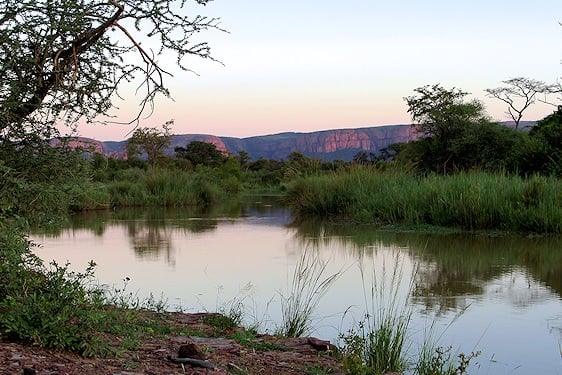
We recommend the following National Parks and Private Reserves for the best chances of spotting the striped polecat on safari game drives and bush walks.

Social Behavior
Vocal repertoire includes low growls, grunts, and short contact calls used at close range, with harsher notes in aggressive or defensive contexts. Scent marking—via anal glands, scrapes, and body rubbing—defines routes and resources. When approached, the striped polecat may stamp, arch the tail, and sidestep laterally while presenting the hindquarters, a ritualized warning that typically prevents escalation.

Reproduction
Breeding often precedes the summer rains so that food peaks when young are weaned. Gestation lasts roughly a month, and litters usually contain one to five kits raised in a secure nest or appropriated burrow. Neonates are altricial and sheltered for several weeks. As mobility improves, short nocturnal excursions start near the den, with gradual expansion into the mother’s foraging circuit.

Anti-Predator Behavior
Primary threats include domestic dog near settlements and opportunistic attacks by jackal and smaller cat species. The striped polecat relies first on avoidance—irregular foraging paths and cover use—then on ritual warnings and a potent defensive spray emitted from specialized glands. The discharge causes intense irritation and can disrupt attacks long enough for a rapid, low sprint to cover.