


Description
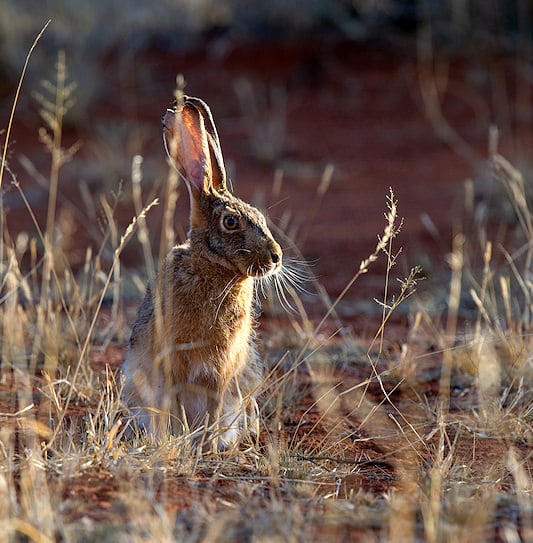
The scrub hare is a medium-sized lagomorph with mottled gray-brown fur, long ears with black tips, and a white tail that flashes when it runs. It favors grassy, shrubby edges and open savanna, resting by day and feeding at night. Quick, zigzag sprints help it evade predators on open ground.
This animal lives above ground and does not live in burrows like rabbits do. They sit incredibly still and will often only move once you are almost on top of them, which can make spotting them quite difficult. The two roads where I have most consistently seen scrub hares are between Satara and Orpen Gate, as well as between Letaba and Phalaborwa Gate.
 - Mary-Anne Finlay - Tour Guide Since 2006 (THETA Registration No: GP 2432)
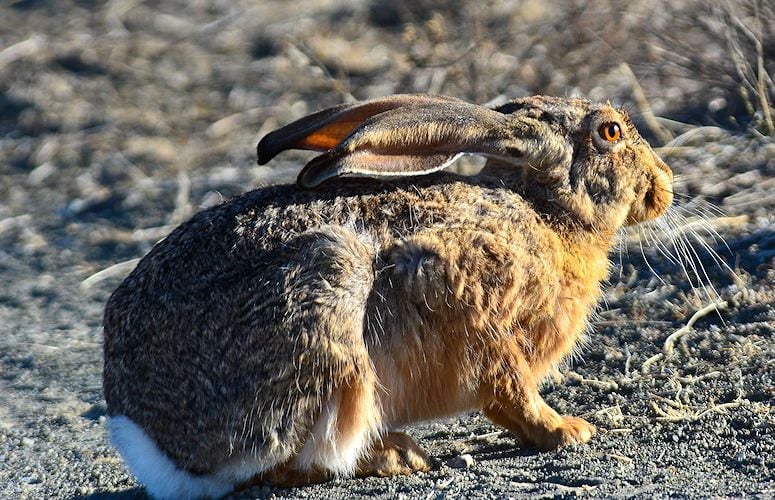
They occur across much of South Africa, from fynbos in the Western and Eastern Cape to bushveld and Lowveld, subtropical regions of KwaZulu-Natal, and arid Karoo semi-desert. They also occur in Eswatini and parts of southern Namibia.

Status
As a species, the scrub hare is listed as Least Concern with a wide distribution in Southern Africa. Local trends vary by habitat and pressure, and populations can be patchy, but the species is not currently considered globally threatened.

Habitat
Scrub hare are adaptable. They favor savanna, shrubland, and taller grasslands with nearby cover and often feed along open verges in the evening. They require grassy foraging areas and sufficient daytime shelter under shrubs or grass tussocks; dense forest and extreme desert are generally unsuitable.

Social Organization
These animals are typically solitary. Two may be seen together during the mating season or when offspring accompany a mother in early life. Males can be hostile toward other adult males, especially when competing for receptive females.
Finest Safari Areas in Africa for Encountering Scrub Hare
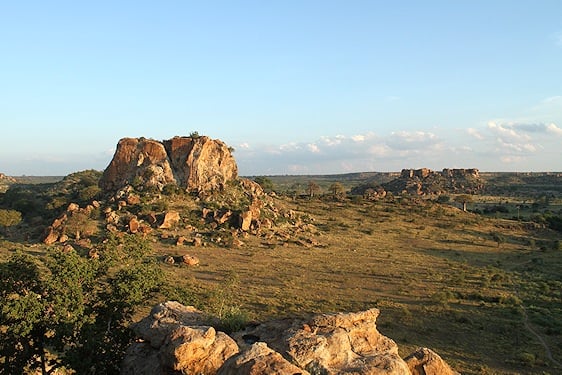
We recommend the following National Parks and Private Reserves for the best chances of spotting the scrub hare on safari game drives and bush walks.

Social Behavior
Scrub hare are nocturnal, though they may be active on overcast days. In grassland they feed mainly on green grasses; in harsh conditions they browse leaves, stems, bark, or other available plant material. They drink water when available to aid digestion and maintain hydration during hot conditions.

Reproduction
Breeding may occur year-round, often peaking in summer. When a female is in heat, multiple males may pursue her; competitors box and kick using fore and hind legs until one mates. Gestation lasts about 42 days. Females usually bear one to three young and may produce several litters per year.

Anti-Predator Behavior
Like many small mammals, their primary defense is rapid flight. Zigzag running and sudden stops can shake pursuit. Predators include small cat species such as serval and caracal, jackal, python, and bird of prey.