


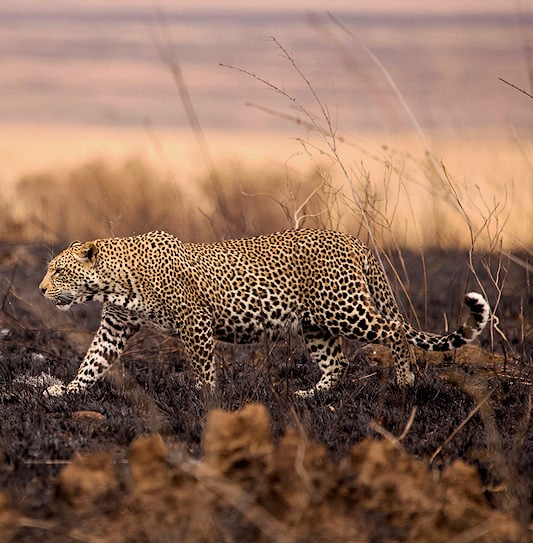
Description
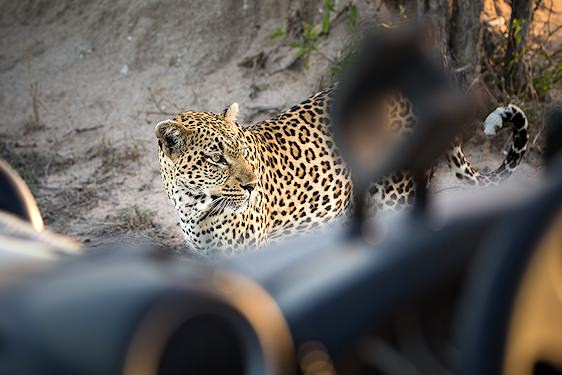
Leopards are powerfully built, medium-sized big cats with rosette-spotted coats, long tails, and the characteristic “sawing” call. Stockier than cheetahs and more arboreal than lions, they rely on stealth and cover to approach prey. Sexual dimorphism is subtle in the field, but males are typically larger and broader-headed than females.
Leopard are notoriously difficult to find in Kruger as they favour thick cover and often remain hidden in trees or long grass. I usually look for the flicking white-tipped tail that often gives away their position. Favourite leopard areas for me include the S25 along the Crocodile River, the S130 near Lower Sabie, Lake Panic and the S100 near Satara. North of the Olifants River they become far more elusive in the dense mopane woodland.
 - Mary-Anne Finlay - Tour Guide Since 2006 (THETA Registration No: GP 2432)
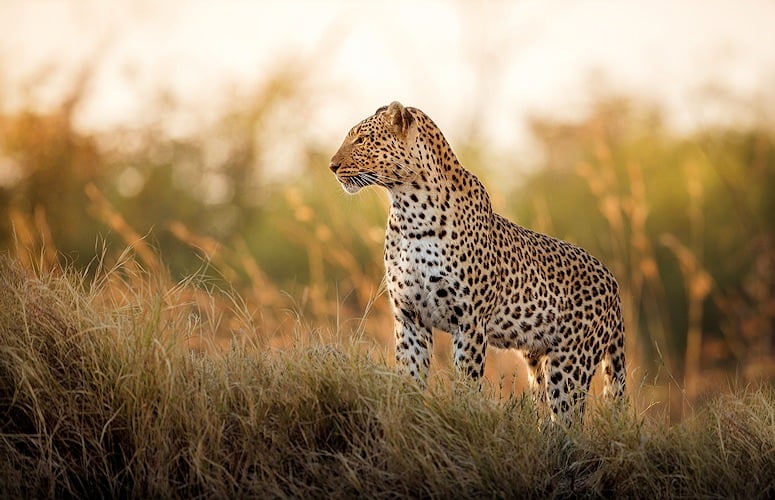
In southern Africa, leopards occur from arid savanna to woodland and montane foothills, including the Kruger region and adjoining private reserves. They are highly adaptable and use rivers, drainage lines, and thickets for hunting and denning. Sightings are frequent on well-managed private reserves with off-road tracking, especially around Sabi Sand and Timbavati.
Best Safari Tours for Viewing Leopard
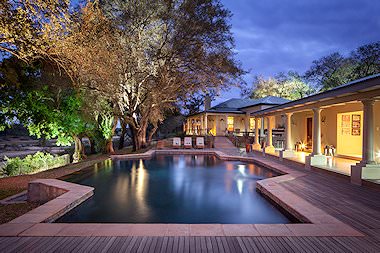
7 Day Kruger's Finest Fly-In Safari
Indulgent fly-in to the Sabi Sand, South Africa’s most reliable leopard country.
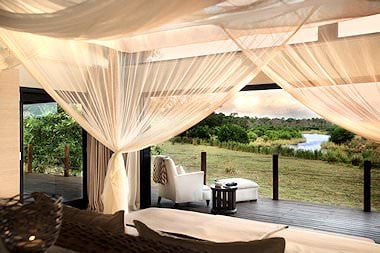
7 Day Luxury Timbavati & Sabi Sand Safari
Two premier private reserves with superb leopard tracking and photography.

5 Day Best of Sabi Sand Safari
Short, focused stay for high leopard encounter rates with expert trackers.



Status
Global status: Vulnerable. Leopard populations are declining in many regions due to habitat loss, depletion of prey, conflict, and illegal killing. Southern Africa retains some strongholds—especially large protected areas and private reserves—but precise continental totals are uncertain, and trends require ongoing monitoring.

Habitat
From semi-arid savanna to moist woodland and foothills, leopards prefer broken terrain with cover (thickets, koppies, river lines). They are capable climbers and stash carcasses in trees to avoid kleptoparasites like hyenas; lions and even some leopards climb too, but less adeptly than adult leopards. They can be water-independent for periods but will use permanent water where available.

Social Organization
Solitary and territorial. Home-range sizes vary widely with prey density and habitat—females often ~5–20 km², males larger and overlapping several females, commonly >10–30 km² on productive reserves. Territorial advertisement relies on scrape marks, urine spraying, and the trademark sawing call, most active at dusk and night.
Finest Safari Areas in Africa for Encountering Leopard
Top parks and reserves where patient tracking and off-road access produce reliable sightings.

Social Behavior
Mothers rear cubs alone and may associate with independent offspring for months after weaning. Adult encounters are brief—courtship, territorial disputes, or kleptoparasitic interactions. Communication is dominated by olfactory cues (spray, scrapes, rubbing) and the deep, rasping sawing call that carries well at night.

Reproduction
Breeding can occur year-round; regional peaks help time births with prey abundance. Oestrus lasts a few days; pairs may mate repeatedly over several days. Gestation is ~90–105 days, with litters typically 1–2 cubs in concealed dens. Independence is often around 18–24 months.

Anti-Predator Behavior
Lions are the principal threat to adults; hyenas frequently steal kills. The classic defense is elevation—caching and feeding in trees—combined with stealth and nocturnal activity. Baboons and other primates may mob leopards; adults avoid large troops and open ground by day.