


Description
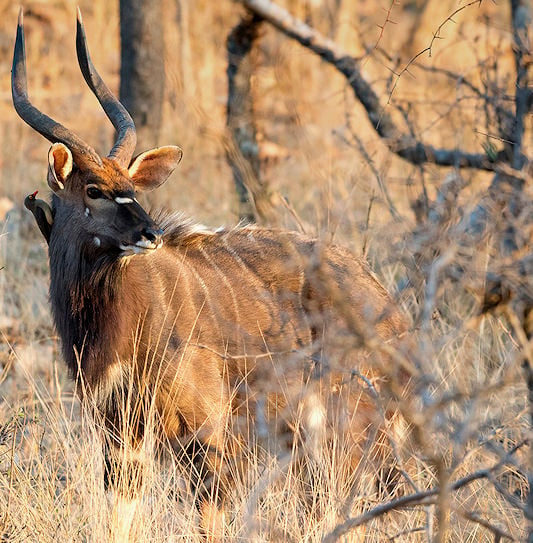
Males have dark brown coats with vertical white stripes down their sides and a white ridge of hair on their back. Their legs, from their knees down, are a spectacular red-brown color. They have slightly curled horns and big, white-lined ears. Females have light red-brown fur coats and vertical stripes down the sides.
This is probably one of the most handsome antelope one can see, and most people are always surprised at how different the bulls look compared to the ewes. They are animals that prefer areas near rivers with large trees where they can browse. In the Kruger National Park, I have seen them many times around the Lake Panic area near Skukuza, as well as on the road from Skukuza towards Tshokwane up until one passes the Sand River area. They are also found in full abundance right in the far north of the park along the Luvuvhu River around the Pafuri Picnic Site area. Interestingly, where nyala are found in abundance there, one also finds an abundance of nyala trees. This is also one of the best places to photograph them, especially the bulls, which are incredibly handsome animals.
 - Mary-Anne Finlay - Tour Guide Since 2006 (THETA Registration No: GP 2432)
Nyala occur in the southeastern parts of Africa, primarily within northern South Africa, Mozambique, Malawi, and Eswatini, with populations also in Zambia and Zimbabwe. Populations have been introduced to Namibia and Botswana. The southern and northern parts of the Kruger National Park have the highest concentrations of nyala.

Status
Their conservation status is Least Concern. Most of the population occurs in protected areas such as Kruger National Park and Hluhluwe-iMfolozi Park in KwaZulu-Natal, with a substantial portion on private land. Numbers have recovered well in historically inhabited areas and where introduced. The current global population is considered stable at about 36,500 individuals.

Habitat
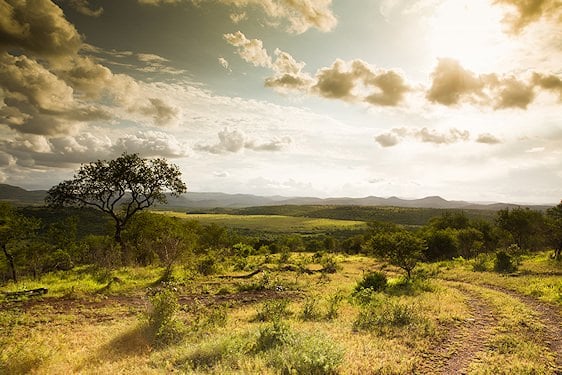
Nyala inhabit areas where a diet of leaves and fruits from woody plants, along with fine grasses for grazing, is consistently available. They also require a constant supply of water. Nyala prefer dense forests, woodlands with scattered trees, and grassland edges. In Kruger, suitable habitats include the southern Lowveld with dense vegetation, grasslands around Satara, and the northern Pafuri region.

Social Organization
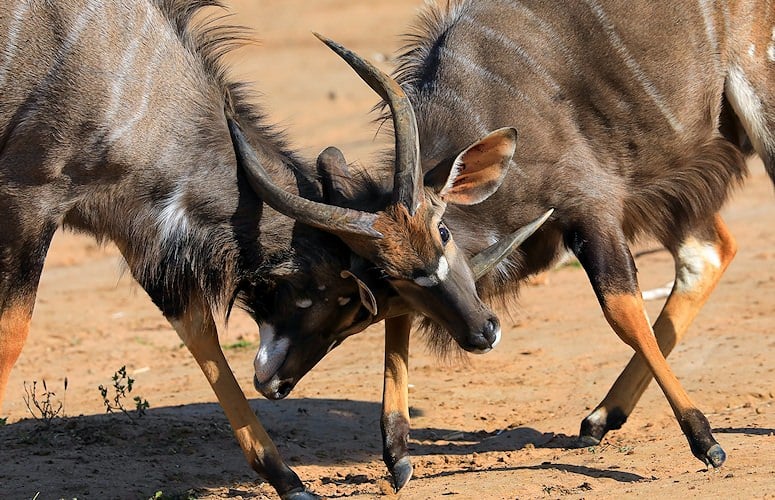
Nyala groups may be all females with calves, all males, or mixed. Maternal groups typically consist of closely related females led by a dominant female. Males sometimes form bachelor groups but are often solitary. Mixed groups can include up to 10 individuals that browse and drink together. Nyala are not territorial; dominance disputes are uncommon, with the breeding season the main exception.
Finest Safari Areas in Africa for Encountering Nyala
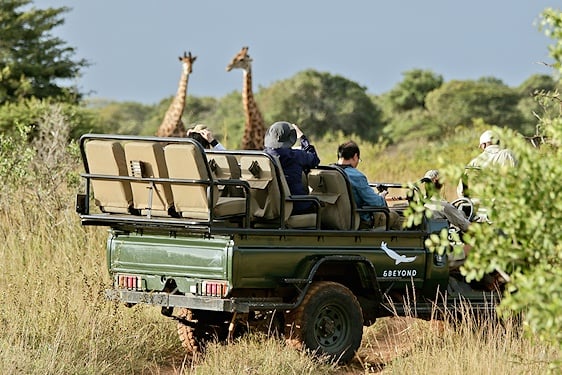
We recommend the following National Parks and Private Reserves for the best chances of spotting nyala on safari game drives and bush walks.

Social Behavior
Nyala are mainly active in the early morning and late afternoon, avoiding the midday heat. They are frequently seen around waterholes and dams. In drier areas, they feed on high-quality foods such as fruits or pods when water is scarce. During the rest of the day, they often rest in shade or groom themselves.

Reproduction
The mating ritual often starts when a bull approaches a female group and displays the white crest of hair along his back. Once a mate is found, breeding occurs during a short receptive period in the estrus cycle. Gestation is roughly seven months. Females hide their newborns in thick vegetation for about two months to reduce predation risk.

Anti-Predator Behavior
Lions, leopards, spotted hyenas, wild dogs, and crocodiles are natural predators of the nyala. Young nyala may fall prey to pythons, eagles, and jackals. When threatened, they emit a high-pitched bark to alert others before fleeing.