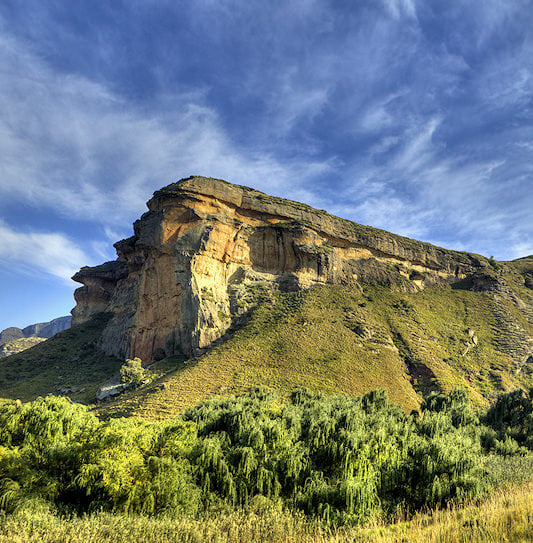
South Africa's Golden Gate Highlands National Park
Help Me Plan- Home
- >
- African Travel
- >
- South Africa
- >
- National Parks
- >
- Golden Gate Highlands National Park
Golden Gate Highlands National Park Destination Guide
Golden Gate gets its name from the towering golden-yellow sandstone cliffs that catch the afternoon light at the valley of the Little Caledon River near the park’s western entrance. Set against the Maluti Mountains, this compact, high-altitude reserve is famed for Brandwag Buttress, rolling montane grasslands, and big skies—perfect for quiet hikes, scenic drives, and birding.
Getting There
By Air: Fly into OR Tambo (Johannesburg), King Shaka (Durban), or Bram Fischer (Bloemfontein). Overland transfers can be arranged from your arrival city or a previous stop on your itinerary.
By Road: The park sits in the northeastern Free State near Clarens and the Lesotho border, roughly 320–360 km from Johannesburg, Durban, or Bloemfontein via good tarred roads.
Weather & Best Time To Visit
Summer (October–April) brings most of the rain—often with dramatic afternoon thunderstorms—turning slopes green and wildflower-studded. Winters (May–September) are dry, crisp, and can be very cold; frost and occasional snow are possible. The park is rewarding year-round; pack layers and be prepared for rapid weather changes typical of mountain environments.
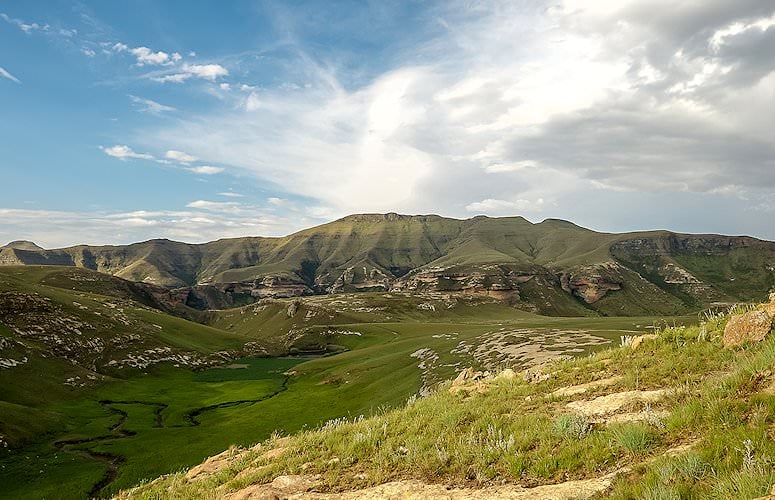
Grassland specialists like black wildebeest, oribi, blesbok, mountain reedbuck, and grey rhebok roam the hillsides. Birders watch for bearded vulture (Lammergeier), Verreaux’s eagle, and seasonal steppe buzzard. The park’s geology—layered sandstones and basalts sculpted by erosion—makes a superb open-air classroom.
Reasons to visit Golden Gate Highlands National Park
Basotho Cultural Village
Alongside classic scenic and hiking experiences, enjoy a guided visit to the Basotho Cultural Village. Meet local hosts, learn about traditions, and step into reconstructed homesteads that tell the story of the region’s people.
The “Golden” Gates
At sunset the cliffs blaze with warm tones, especially around Brandwag Buttress. It’s a natural amphitheater of color—an unforgettable foreground for stargazing once darkness falls.
Birding Beauty
Vast grasslands and rugged crags make excellent raptor country. Watch thermals for Verreaux’s eagles and scan high plateaus for the threatened bearded vulture; larks, cisticolas, and sunbirds enliven the lower slopes.
Experiences to Savor at Golden Gate Highlands National Park
Golden Gate rewards travelers who love scenery, solitude, and sky—an off-the-beaten-track complement to big-game itineraries.
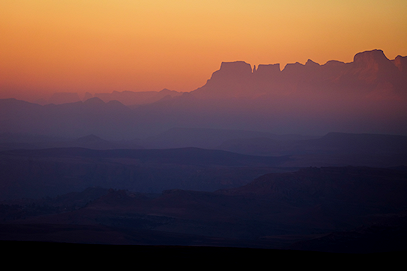
Otherworldly setting
The russet, gold, and black cliff bands set against blue or brooding skies are mesmerizing—especially when summer rains paint the grasslands green.
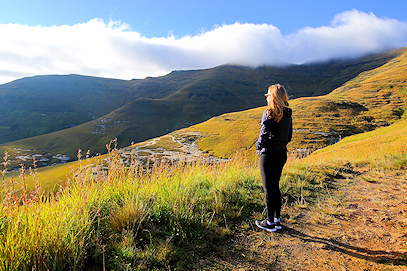
Peace and Quiet
Compared with South Africa’s big-name safari parks, Golden Gate stays blissfully uncrowded. Hike by day; at night, lie back and gaze at southern stars.
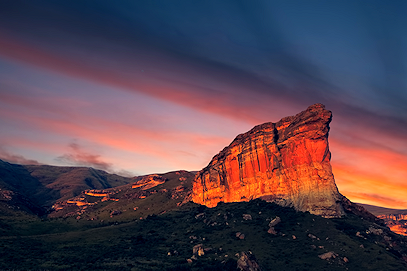
Brandwag Buttress
The sentinel of the park and namesake of the “golden gate” effect. Admire it from the valley or hike for elevated views across the Maluti foothills.Useful Information
History
Before its proclamation in 1963, the area hosted successive peoples starting with San hunter-gatherers, who left rock art and scatterings of stone tools across shelters and cliff faces. Later, Voortrekker and Basotho histories intersected in these valleys; nearby farmsteads and battle sites attest to a turbulent 19th century. Today the park conserves both landscapes and cultural narratives.
Wildlife
This is grassland country rather than Big Five territory—perfect for hikers. Look for oribi on the Oribi Loop, plus black wildebeest, eland, blesbok, red hartebeest, mountain reedbuck, springbok, and Burchell’s zebra. Predators are scarce; black-backed jackal occurs and, more rarely, caracal. Birders can expect over 200 species, including vultures and a variety of larks, chats, and cisticolas. Reptiles include puff adder, mountain adder, and rinkhals. Be cautious when hiking and stick to marked paths.
Vegetation & Terrain
Golden Gate protects South Africa’s signature highveld grassland biome. Multicolored sandstone and dark basalt form sheer buttresses and rounded kopjes, their strata telling a deep-time story of ancient rivers, dunes, and volcanic events. Highland-Sourveld and Themeda-Festuca veld dominate; Ouhout thickets occupy drainages and slopes, supporting rich invertebrate life.
Activities
Choose from scenic drives, well-signed day hikes, and the longer Ribbok Trail. In season, guided abseiling and canoeing may be available. Horse rides offer a wider view of the grasslands. The Basotho Cultural Village experience includes storytelling, traditional architecture, and a medicinal plant trail. For raptors, visit the vulture feeding project viewpoint. On warm days, swim in a natural rock pool near Glen Reenen Rest Camp.