


 Blog
Blog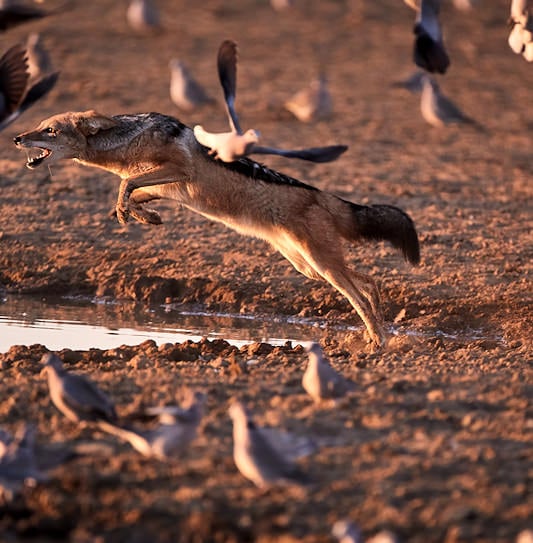
Description
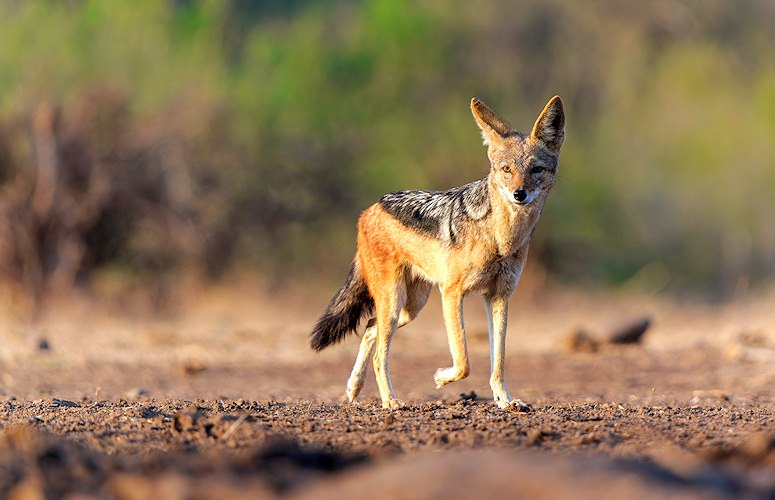
Lean and long-legged, the black-backed jackal moves with quick, purposeful strides, a bushy tail carried low behind it. The underparts are warm ginger to rufous, while the back and flanks show a mottled black-and-gray “saddle” bordered by pale buff. The sharp muzzle and large, alert ears give it a distinctly fox-like profile.
This is also a species that one does not commonly see. They are what we call crepuscular animals, meaning they are most active during dawn and dusk. Areas where I have commonly seen them early in the mornings are around the Crocodile Bridge roads, as well as around Satara, especially on the H7 road heading towards Olifants. Another area where they are often seen is in the grassy areas around Orpen Gate, Tamboti, and Marula. Should one encounter a lion kill, one will often find black-backed jackals hanging around nearby, hoping to grab a snack or two while the lions are lying around resting.
 - Mary-Anne Finlay - Tour Guide Since 2006 (THETA Registration No: GP 2432)
In Southern Africa, the species ranges from southern Angola across Botswana, Zimbabwe, Mozambique, and most of Namibia and South Africa, with absence in the most barren parts of the Namib Desert. A separate population occurs in East Africa, including parts of Kenya and Ethiopia.

Status
The black-backed jackal is assessed as Least Concern and remains widespread and adaptable across eastern and southern Africa, with local densities varying by habitat and human influence.

Habitat
Within its range it overlaps with side-striped jackal in well-watered woodland. Black-backed jackal favors open savanna, grassland with scattered acacia, and coastal scrub outside hyper-arid zones. An opportunistic carnivore and scavenger, it hunts small mammal, bird, reptile, and insect and often attends carcasses alongside hyena and vulture.

Social Organization
Pairs are typically monogamous and defend territories that may span roughly 1–4 km², with an average near 2.5 km². Older offspring often remain temporarily as helpers, assisting with pup guarding, provisioning, and territory defense until dispersal.
Finest Safari Areas in Africa for Encountering Black-backed Jackal
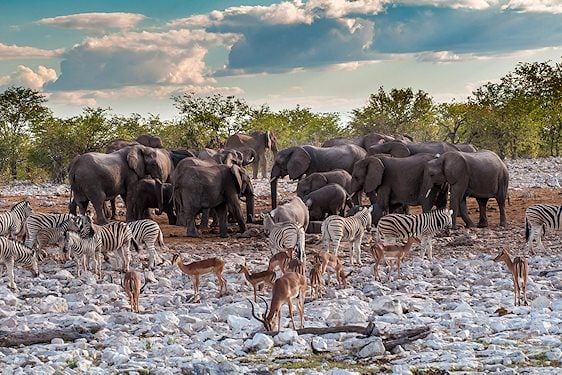
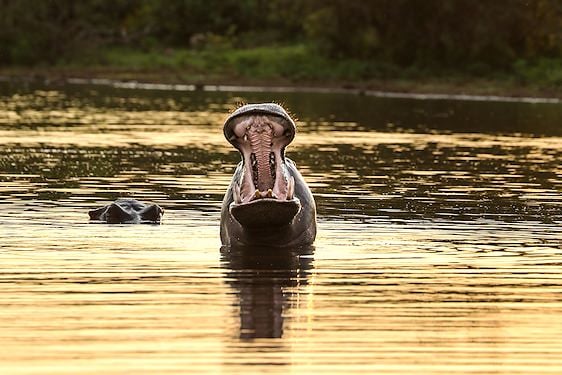
We recommend the following national parks and private reserves for some of the best chances to see the black-backed jackal on game drives and bush walks.


Social Behavior
One of three jackal species in Africa, the black-backed jackal is frequently seen near lion kills and other carcasses. It communicates with yip, howl, and bark and readily shifts between scavenging and active hunting of small prey. When competition is high, assertive displays and vocal duets reinforce pair bonds and territorial ownership.

Reproduction
Courtship includes scent marking, tail wagging, and close following by the male. After a gestation of about 60–70 days, the female gives birth in a burrow or sheltered den, typically to 3–6 pups. Helpers may provision and guard pups, improving survival until weaning and eventual dispersal.

Anti-Predator Behavior
Pups are vulnerable to eagle; adults most often evade leopard and other large carnivore by flight and vigilance. Adults may mob smaller aerial threats near a den, but the primary defense is early detection, alert calling, and reaching cover quickly.