


Description
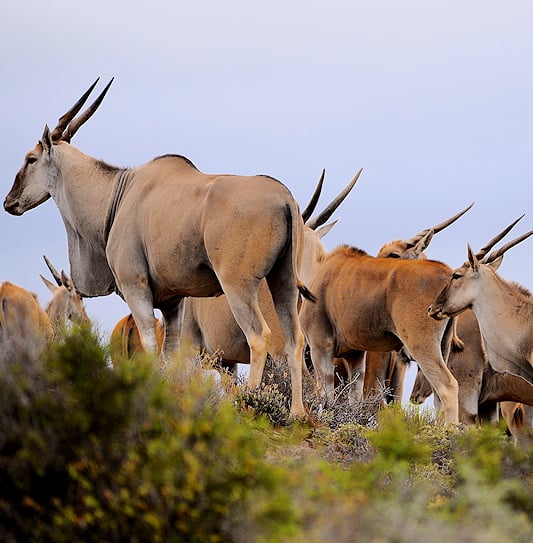
Africa’s heaviest antelope, eland show a fawn to gray-tan coat that may carry faint vertical body stripes. Both sexes have straight, slightly spiraled horns; females are smaller and sleeker than males. Mature males often display a dewlap and a dark neck ruff. A characteristic tendon “click” can be heard as individuals walk.
This majestic antelope is one of the most difficult animals to find in the Kruger National Park, as they are very shy and often run away if you do manage to sight them. I have personally only ever seen them north of the Letaba River. Two areas where I have consistently encountered them are on the road towards the Giriyondo Border Post between South Africa and Mozambique, as well as around the Tihongonyeni Waterhole near Mopani.
 - Mary-Anne Finlay - Tour Guide Since 2006 (THETA Registration No: GP 2432)
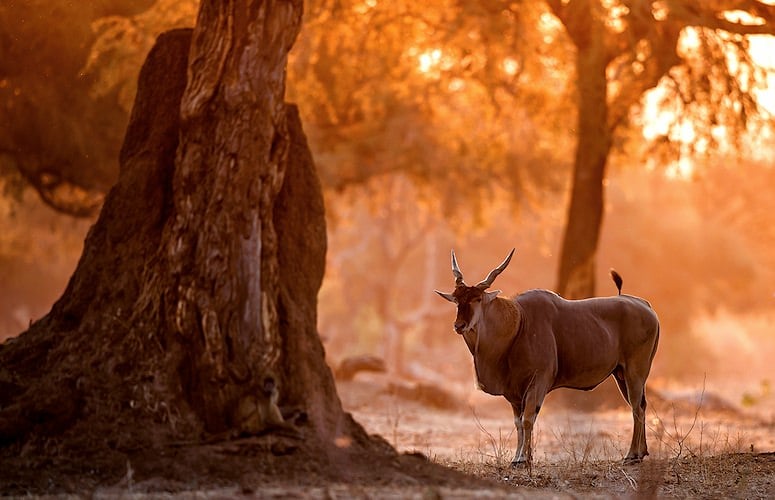
They inhabit Kenya and Zambia and scattered areas in Mozambique, Angola, Namibia, Zimbabwe, Botswana and South Africa. In South Africa they occur naturally in the Kruger National Park and the Kgalagadi Transfrontier Park, with larger populations in parks like Etosha National Park in Namibia and the Serengeti in Tanzania.

Status
Common eland are widely distributed and assessed as Least Concern. An estimated 136,000 animals occur across eastern and southern Africa, with substantial numbers on private lands and within protected areas. Local declines stem from habitat loss and hunting pressure, while some southern populations are stable under active management.

Habitat
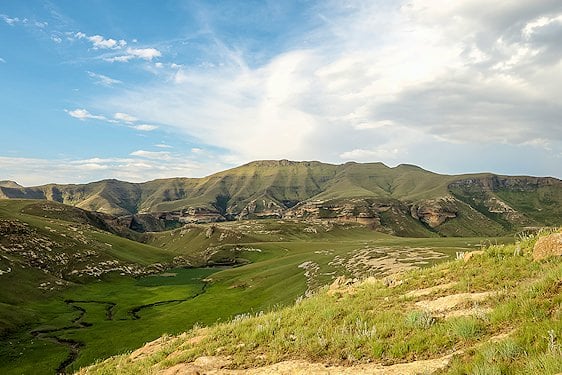
Eland favor open savanna, grassland and lightly wooded shrubland, often in drier regions with scattered browse. They avoid dense forest and use ecotones where woodland grades into grassland. In Kruger, look along northern and central mosaics with broadleaved woodland, drainage lines and open flats near seasonal water.

Social Organization
Eland are non-territorial and mobile, with home ranges that can span hundreds of square kilometers. Herd size varies from small groups to large, temporary aggregations exceeding one hundred on productive plains. Age- and sex-biased groups are common; animals fuse and split across shared ranges as forage conditions change.
Finest Safari Areas in Africa for Encountering Eland
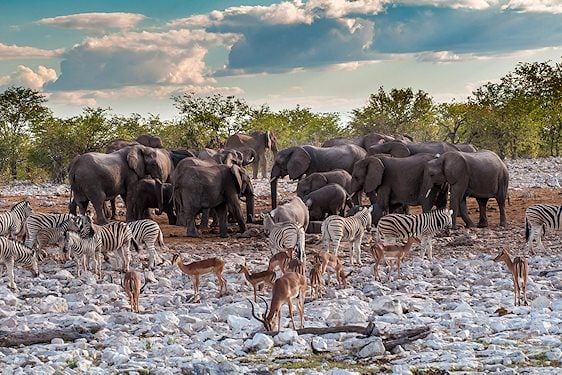
We recommend the following national parks and private reserves for the best chances of spotting eland on game drives and guided bush walks.

Social Behavior
Calf play is common and strengthens bonds. Adults communicate with posture and low calls; a distinctive tendon click from the foreleg often accompanies movement and may aid group cohesion. Much time is devoted to feeding and traveling between grazing and browse patches, with vigilance shared among nearby herd mates.

Reproduction
Breeding can occur year-round, with birth peaks where forage flushes. Females mature at about 2.5 years. Courtship involves close following, rubbing and head resting. Gestation is roughly nine months, after which a single calf is born and concealed for the first weeks before joining the moving herd.

Anti-Predator Behavior
Adult eland face few natural enemies, though lion may take individuals, and calves are more vulnerable. Defense relies on group vigilance, flight to open ground and, when necessary, assertive displays by larger bulls. Human pressure remains the principal threat outside protected landscapes.