


Description
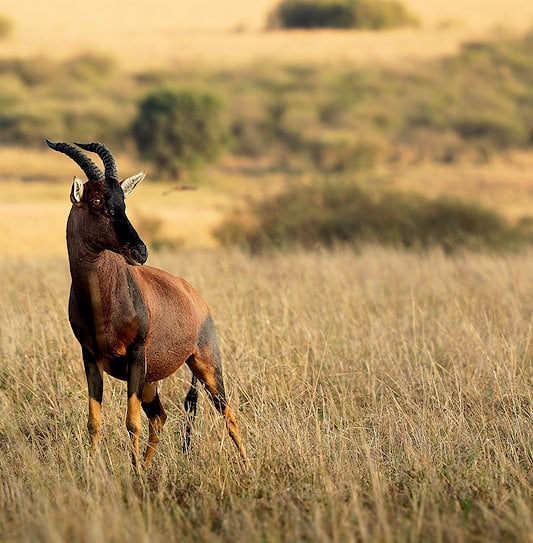
Tsessebe are sleek antelope with rich chestnut coats, darker shoulders and flanks, and lighter patches on the lower hind legs and belly. Both sexes carry sturdy, ridged, lyre-shaped horns. A long muzzle, high withers, and slightly sloping back hint at speed and stamina, while keen vigilance and raised head posture help detect danger on open plains.
This antelope is one that I have mainly seen from the Mooiplaas Picnic Site area and further north in the park. They are usually found in herds rather than alone and tend to move around within fairly large home ranges. Some of the areas where I have consistently seen them are along the tar road between Mooiplaas, Mopani, and Shingwedzi, especially around the Tihongonyeni Waterhole. I have also had good sightings again at Klopperfontein Dam near Punda Maria.
 - Mary-Anne Finlay - Tour Guide Since 2006 (THETA Registration No: GP 2432)
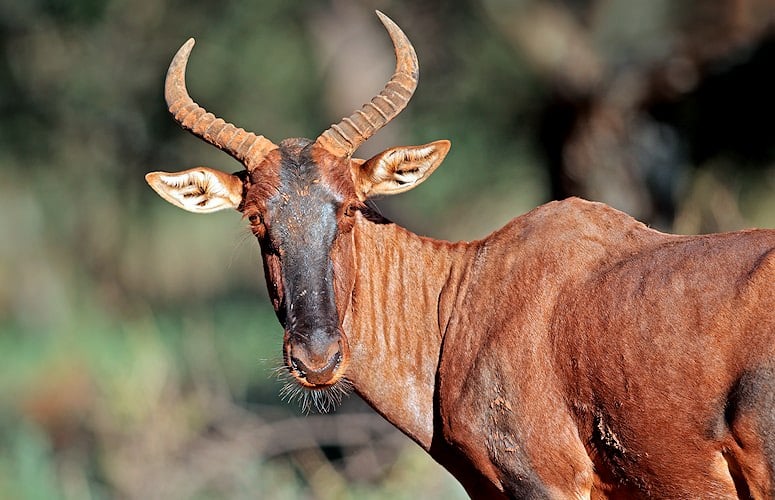
Within southern Africa, tsessebe are patchily distributed. Small populations occur in the Kruger National Park and in parks of the drier west, with additional populations in Namibia, Zimbabwe, and Zambia, and a separate range in parts of East Africa. They favor open grassland and lightly wooded savanna where long sightlines and speed reduce predation risk.

Status
Tsessebe are currently assessed as Least Concern, yet regional declines have occurred due to habitat loss, hunting, fencing, and fragmentation. Global numbers are often cited near 300,000, but distribution is uneven, with roughly a quarter in protected areas. Some southern subspecies depend heavily on parks and reserves, and local extirpations have been recorded where grassland connectivity has diminished.

Habitat
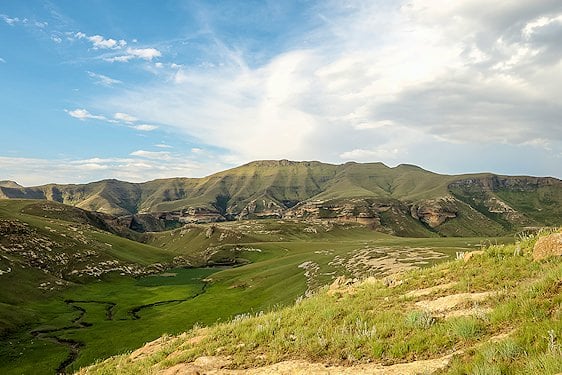
Open grassland, floodplains, and gently undulating savanna with scattered shrubs provide forage and visibility. In these habitats, tsessebe exploit short, nutritious grasses after fire or early rains and rest on slight rises for vantage. Where woody encroachment or fencing reduces movement, herds shift to remaining open patches, concentrating near seasonal water and mineral-rich grazing during the green flush.

Social Organization
Tsessebe form herds on open plains, with structure varying by density and season. Territorial male defend lek-like patches or strategic rises, courting receptive female that pass through. Family groups and nursery bands coalesce into larger herds where numbers allow; in South Africa, groups are typically fewer than 30. Head-held-high stances and synchronized scanning help spot predators at distance.
Finest Safari Areas in Africa for Encountering Tsessebe
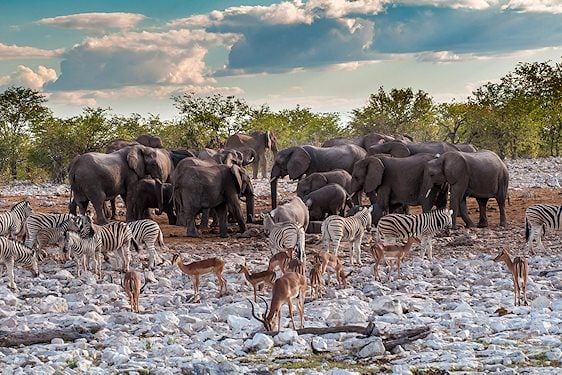
We recommend the following National Parks and Private Reserves for the best chances of spotting the tsessebe on safari game drives and bush walks.

Social Behavior
Territorial male scent-mark with preorbital glands on grass stems and often wallow after rain, coating horns and face with mud. Elevated termitaria within territories double as lookouts. Displays include head-high posture, prancing steps, and low grunts; clashes are brief, with horn-to-horn pushing before one male yields and resumes patrolling his preferred vantage mound.

Reproduction
When a tsessebe female comes into estrus, males give resonant bleats and approach with ears lowered and neck extended. Courtship may involve repeated mounts by one or more males. Gestation lasts about eight months, with births peaking early in the rainy season when forage quality rises. Newborn hide for several days, then join the herd at a steady trot.

Anti-Predator Behavior
Speed and early detection are primary defenses. Against smaller predators such as single hyena, jackal, or a lone wild cat, tsessebe face-off with head-high stances, snorts, and short charges. If risk escalates, herds break into long, ground-covering gallops, reputedly reaching up to 80 km/h, then regroup on a rise with coordinated scanning.