


Description
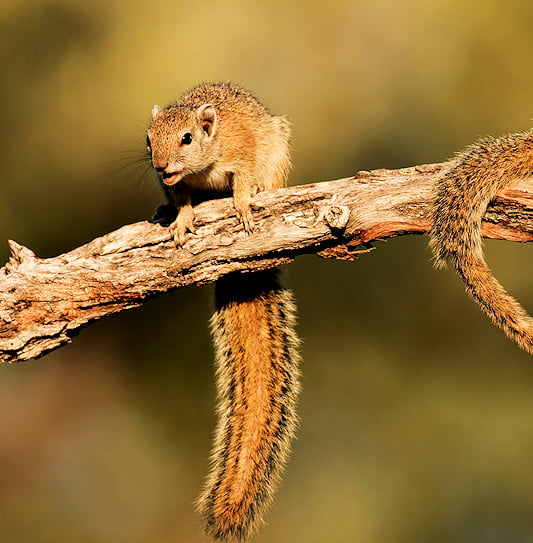
In Kruger, the subspecies commonly seen—often called Smith’s bush squirrel—is gray with warm yellow tones on the lower back and hind legs, and a long bushy tail used for balance and signaling. Large eyes, quick tail flicks, and sharp alarm calls betray nervous energy. Agile claws and strong hindlimbs power short dashes between branches and nest holes.
This is another animal that is abundant throughout the Kruger National Park. Naturally, one usually looks for them jumping around in trees. I especially enjoy watching them between Satara and Olifants during the winter months, when they often come out onto branches or tree trunks early in the morning to warm themselves in the sun before starting their daily search for food. Shingwedzi Rest Camp is also a favourite place to watch these little critters at work as they dash from tree to tree collecting food for themselves and their families.
 - Mary-Anne Finlay - Tour Guide Since 2006 (THETA Registration No: GP 2432)
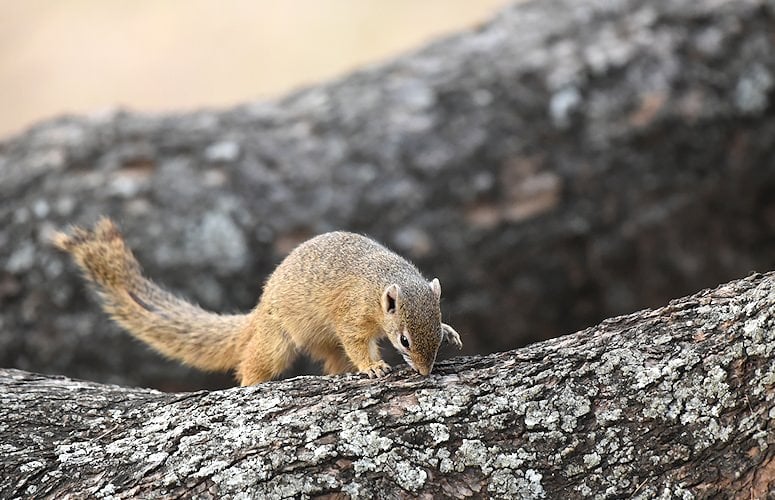
Tree squirrel occur through much of southern-central Africa, including Zambia, Malawi, Zimbabwe, Botswana, Namibia, Mozambique, and across South Africa. They are scarce in true desert such as the Namib and Kalahari where trees are absent, and avoid wide treeless floodplains. Wooded savanna with natural cavities provides food, cover, and nest sites close to daily foraging routes.

Status
Tree squirrel is widespread and currently assessed as Least Concern in suitable habitat. Abundance varies with woodland structure, nest-hole availability, and predation pressure, but protected areas like Kruger sustain healthy numbers. Local declines can follow heavy clearing or firewood collection; where trees and cavities persist, family groups rebound quickly due to flexible nesting and diet.

Habitat
Kruger’s mosaics of mopane, mixed woodland, and riverine trees provide shelter, nest cavities, and travel routes. Tree squirrel favors trunks with natural holes, old woodpecker cavities, or dense forks for dreys. Diet centers on seeds, fruits, and occasional insects, and caching or dropping seed contributes to dispersal beneath favored trees—an ecological side benefit of their busy foraging.

Social Organization
Family groups often share a central den and develop a shared scent profile that helps distinguish neighbors. Young are tended by their mothers, with frequent grooming, play, and contact calls that reinforce bonds. Territorial defense varies with season and food; adult male lead most boundary chases, though females and subadults may join when nest holes or fruiting trees lie near the border.
Finest Safari Areas in Africa for Encountering Tree Squirrel
We recommend the following National Parks and Private Reserves for the best chances of spotting the tree squirrel on safari game drives and bush walks.


Social Behavior
Diurnal by habit, tree squirrel spend the brightest hours in shade, moving along trunks and branches while foraging and keeping sentinel for raptors and other predators. Group members groom, chatter, and flick tails to signal alarm or maintain cohesion. Juvenile are especially vulnerable and remain close to cover, retreating to cavities at the first sharp alarm call.

Reproduction
Sexual maturity is typically reached at about six to nine months. Dispersal reduces inbreeding as dominant breeders exclude maturing offspring from core dens. Breeding can occur year-round, with peaks in the wet season when food is abundant. Nest cavities are lined with leaves and bark fibers, and mothers shuttle between foraging and nursing until young begin exploratory climbs near the den.

Anti-Predator Behavior
When threatened, groups may “mob” by clustering, tail-flagging, and issuing rapid clicks to advertise detection and deter approach. If a predator presses closer, individuals break off in short zigzag sprints to nearby cavities or dense cover. Alarm calls often trigger nearby birds and mammals to scan, briefly amplifying vigilance across the woodland edge.