14 Day Namibia Private Overland Tour
Help Me PlanAn In-Depth Private Namibia Overland Tour
Beginning and ending in Windhoek, this privately guided tour travels from the dunes of Sossusvlei to Swakopmund and Damaraland before crossing Etosha National Park from west to east. A dedicated African Sky guide and private vehicle provide flexibility throughout the 14-day route.
Tour Overview
The itinerary links Sossusvlei, Swakopmund and Damaraland before spending six nights crossing Etosha National Park from west to east. Two-night stays in each main region create time for desert, coastal and wildlife experiences without changing accommodation every day. Inside Etosha, the tour progresses through Dolomite, Halali and Namutoni, giving access to the park’s western, central and eastern areas.
Travel Pace & Distances
Several days involve substantial road travel on paved and gravel roads, particularly between Windhoek, Sossusvlei, the coast and Damaraland. A private African Sky guide handles navigation and daily arrangements while allowing sensible stops for comfort, photography and points of interest.
Ideal For
This tour suits first-time Namibia visitors, photographers and travelers who want a comprehensive privately guided overland experience with extensive wildlife viewing. Guests should be comfortable with longer driving days and an active touring pace. For other routes and travel styles, see our Namibia Safaris and Private Tours.
- 1 Night Windhoek
- 2 Nights Sossusvlei
- 2 Nights Swakopmund
- 2 Nights Damaraland
- 2 Nights Western Etosha National Park
- 2 Nights Central Etosha National Park
- 2 Nights Eastern Etosha National Park
Price Per Person Sharing From:
USD 6,837 - 10,308The price can be adjusted by choosing different Namibia lodges or hotels.
What influences prices?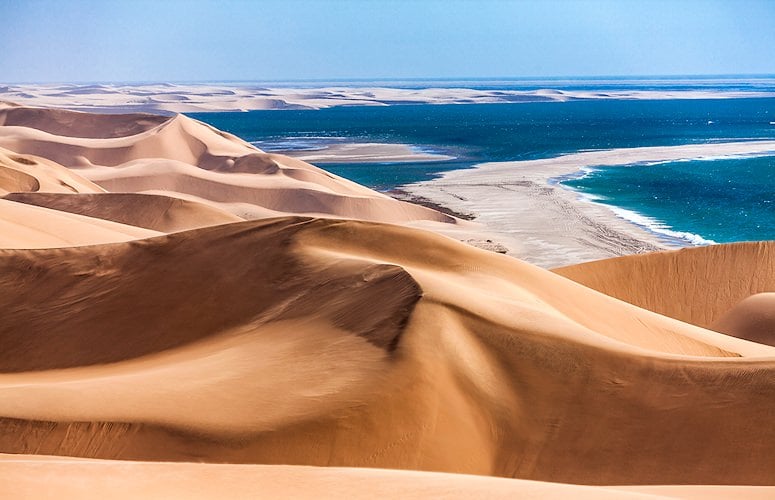
 Safari Ref. Code
 Starting Date
 Starting Point
 Ending Point
 Customizable
 Type
Type Accommodation Level
 Countries Visited
Namibia Private Tour Itinerary: 14 Day Namibia Private Overland Tour
This privately guided overland tour combines Namibia’s best-known desert and coastal landscapes with two nights in Damaraland and six nights progressing through western, central and eastern Etosha National Park. The route favors greater depth in each region while retaining the flexibility of a dedicated guide and private vehicle.
 - Riaan Viljoen - African Sky General Manager Since 1998


Day 1: Windhoek
Highlights
- Meet your private African Sky guide on arrival.
- Private transfer from the airport to Windhoek.
- Relax before the overland tour begins.
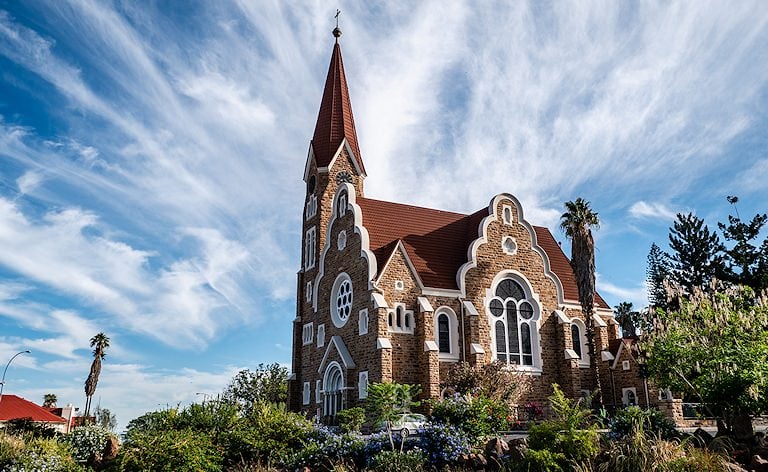
Guests are met by their African Sky guide on arrival at Hosea Kutako International Airport and transferred to Windhoek. After checking in at Hotel Heinitzburg, the afternoon is intentionally unhurried. This allows time to settle in after the flight, adjust to the local conditions and prepare for the overland tour that begins the following morning. Your guide will also confirm practical arrangements and the planned departure time for Sossusvlei.
Depending on arrival time, there may be an opportunity for a short orientation through Namibia’s capital or simply time to relax at the hotel. Windhoek provides a convenient starting point before the route moves into the country’s more sparsely populated interior. Dinner is included this evening, giving guests an easy first night before the tour heads southwest toward the Namib Desert and the dune landscapes around Sossusvlei.
Day 2: Windhoek / Sossusvlei
Highlights
- Travel from the central highlands into the Namib Desert.
- Watch the Sossusvlei dune landscape gradually emerge.
- Relax near Sesriem before an early desert excursion.
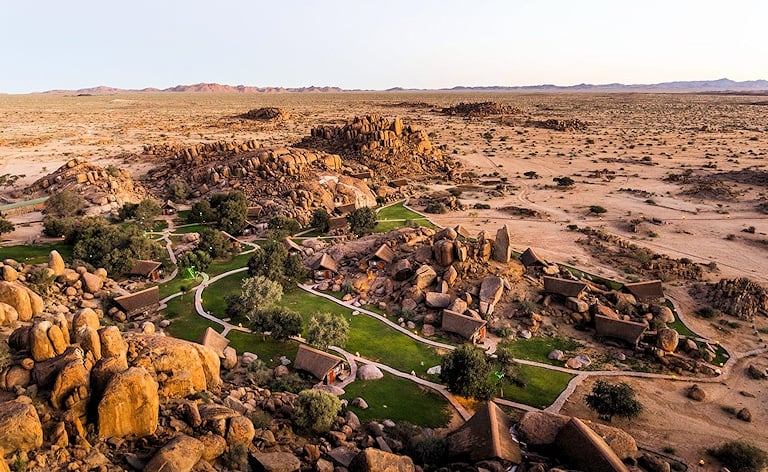
After breakfast, the tour leaves Windhoek and travels southwest through Namibia’s central highlands toward the Namib Desert. The landscape becomes progressively drier and more open as the route leaves the capital behind, passing through broad valleys, mountain country and sparsely populated farmland. Scenic stops are made where time and road conditions permit, allowing the changing terrain to form part of the experience rather than treating the day only as a transfer.
During the afternoon, the route approaches Sossusvlei, where the red dunes of the Namib Sand Sea become increasingly prominent. After checking in at Desert Camp near Sesriem, the remainder of the day is available to relax and enjoy the desert setting. An early night is worthwhile, as the following morning begins before the heat builds and is devoted to exploring Sossusvlei, Deadvlei and the surrounding dune field.
Day 3: Sossusvlei
Highlights
- Explore Sossusvlei and the ancient trees of Deadvlei.
- Optional climb for expansive views across the dune field.
- Walk through the narrow walls of Sesriem Canyon.
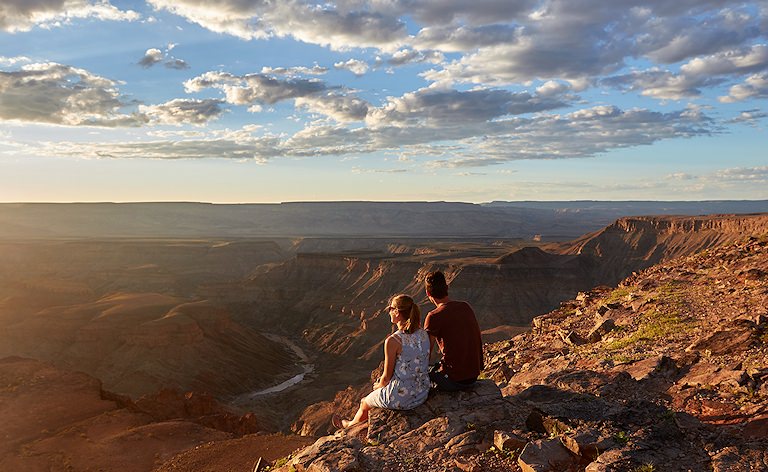
An early departure is made for the Sesriem entrance so that the main dune field can be explored during the cooler morning hours and in softer light. The route follows the Tsauchab valley between towering dunes before reaching the Sossusvlei area and nearby Deadvlei. Here, old blackened camel thorn trees stand across the pale clay pan, surrounded by red dunes. Guests who are physically comfortable doing so may choose to climb part or all of Big Daddy for elevated views across the surrounding sand sea.
Later in the day, the tour visits Sesriem Canyon. The narrow gorge provides a striking contrast with the open dune landscape and reveals layers of sediment shaped by the Tsauchab River over time. After exploring the canyon and surrounding area, guests return to Desert Camp for a second night, with the late afternoon available to relax in the desert surroundings.
Day 4: Sossusvlei / Swakopmund
Highlights
- Cross the central Namib toward the Atlantic coast.
- Experience the transition into Namibia’s coastal fog belt.
- Enjoy a relaxed afternoon in Swakopmund.
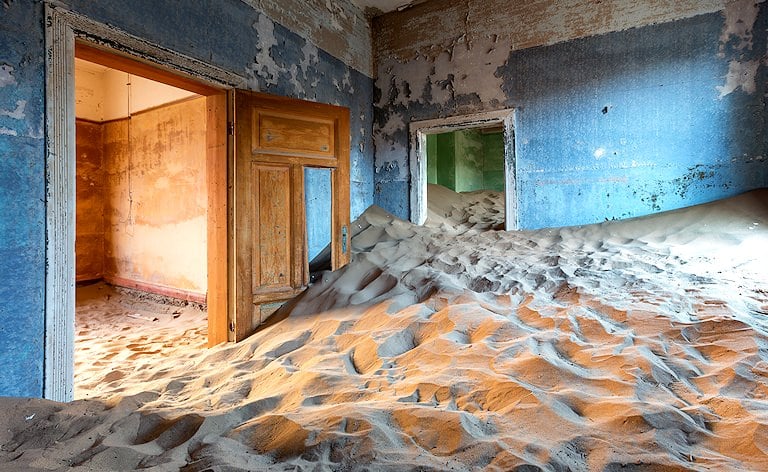
After breakfast, the tour leaves Sossusvlei and travels northwest across the central Namib toward the Atlantic coast. Open gravel plains, dry river valleys and rocky outcrops replace the red dune scenery as the route passes through the Namib-Naukluft region and across the Kuiseb landscape. Several scenic stops can be made where practical, giving guests time to appreciate the scale and geological variety of this sparsely inhabited part of Namibia.
As the road approaches the coast, temperatures generally become cooler and the landscape changes into the coastal fog belt. The tour continues to Swakopmund, where the Atlantic meets the Namib Desert. After checking in at Desert Breeze Lodge, the rest of the afternoon is at leisure. Guests can relax at the lodge or explore the town, seafront, restaurants and shops before the following day’s 4x4 excursion into the coastal desert.
Day 5: Swakopmund
Highlights
- Explore the coastal Namib in a 4x4 vehicle.
- View the dunes and wetlands around Sandwich Harbour.
- Look for coastal birds and marine wildlife.
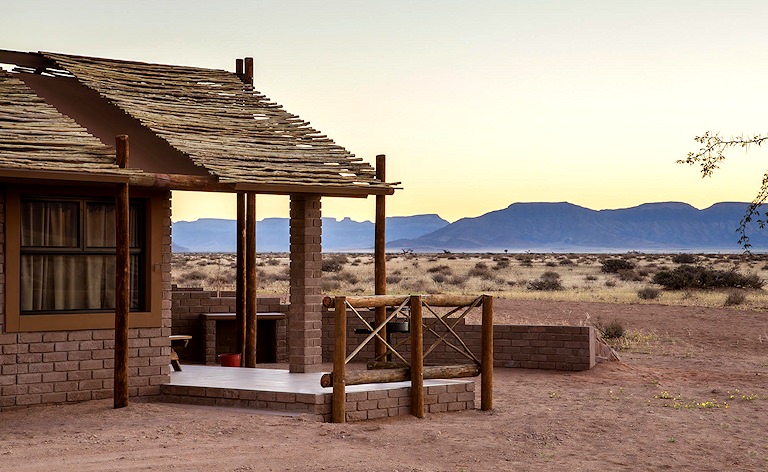
Today is devoted to the coastal Namib south of Swakopmund. The excursion travels through Walvis Bay and continues into the dune field in a suitable 4x4 vehicle, with the exact route determined by tide, weather and sand conditions. As the vehicle moves farther south, high dunes draw increasingly close to the Atlantic shoreline, creating one of the most distinctive landscapes on Namibia’s coast.
The objective is Sandwich Harbour, where coastal wetlands and the Namib dune system meet. When beach conditions allow, the excursion may approach along the shoreline; when the tide or swell makes this unsafe, the lagoon and coastline can instead be viewed from the surrounding dunes. Coastal birds are an important feature of the area, while seals and other marine wildlife may occasionally be encountered offshore. After time for photography and exploration, the excursion returns to Swakopmund for a second evening at leisure.
Day 6: Swakopmund / Damaraland
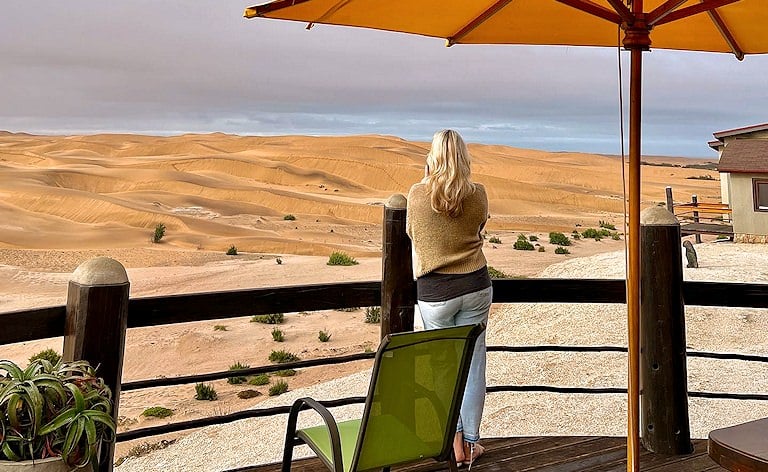
Highlights
- Visit the Cape Cross fur seal colony.
- Travel north through Namibia’s stark coastal landscapes.
- Enter the rugged dry valleys of Damaraland.
After breakfast, the tour leaves Swakopmund and travels north along the Atlantic coast toward Cape Cross. Time is allowed to visit the Cape Cross Seal Reserve before continuing through the stark coastal landscape. The contrast between the cold ocean, gravel plains and seemingly barren desert makes this section of the route particularly distinctive. From the coastal region, the road eventually turns inland toward the mountains and dry river systems of Damaraland.
The scenery changes noticeably as the route approaches Palmwag, with broken hills, broad valleys, rocky slopes and scattered desert vegetation replacing the flat coastal plains. This remote part of northwestern Namibia is known for wildlife adapted to extremely dry conditions. The tour arrives at Palmwag Lodge during the later part of the day, where guests settle in for two nights. The following day is deliberately kept free of a long transfer so that Damaraland can be explored properly rather than functioning only as an overnight stop.
Day 7: Damaraland
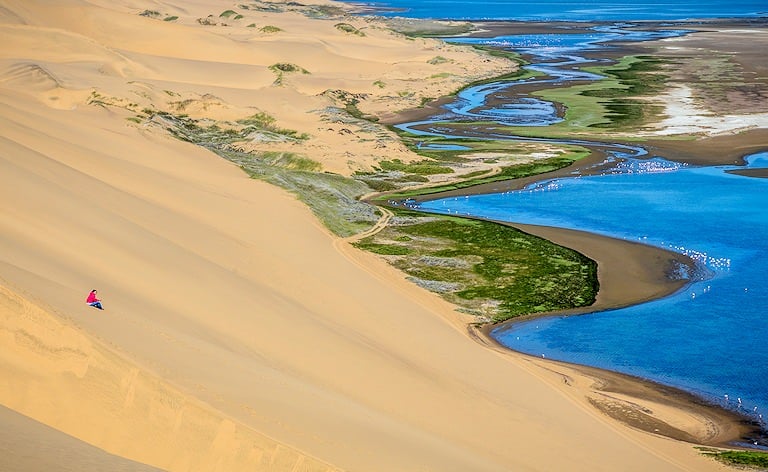
Highlights
- Full day exploring the Palmwag wilderness in Damaraland.
- Search for desert-adapted elephants and other wildlife.
- Experience the region without another long transfer day.
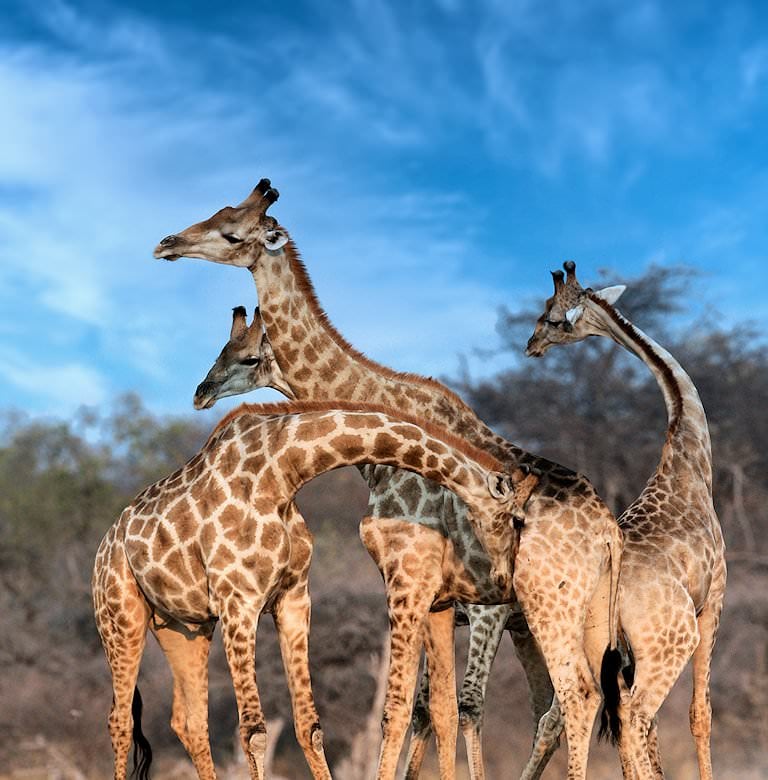
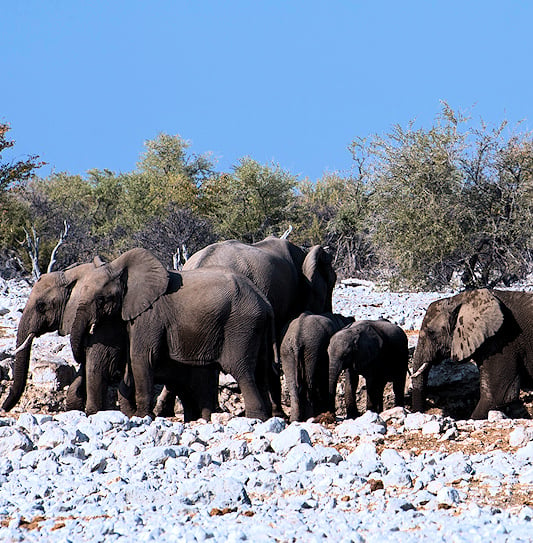
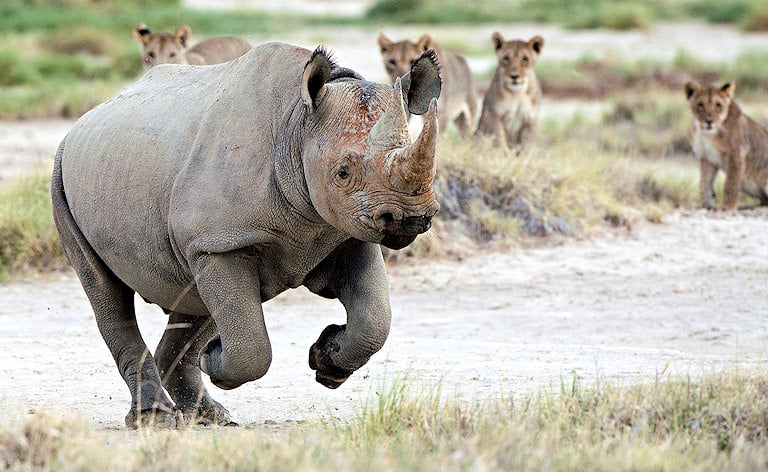
A full day is set aside to explore the Palmwag area and its surrounding Damaraland wilderness. Guided nature drives follow tracks through rocky valleys, open plains and ephemeral river systems in search of wildlife able to survive in this arid environment. Desert-adapted elephants occur in the wider region, together with species such as oryx, springbok, kudu and giraffe. Black rhino also occur within the broader Palmwag landscape, although all wildlife sightings depend entirely on natural movement and conditions on the day.
The value of this day is the time available to explore rather than covering another long road sector. The guide can adjust the route according to recent wildlife activity, weather and local conditions, with stops for photography and interpretation of the landscape. Returning to Palmwag Lodge for a second night gives the itinerary substantially more depth in Damaraland and creates a useful pause between the coast and the extended Etosha safari that follows.
Day 8: Damaraland / Western Etosha National Park
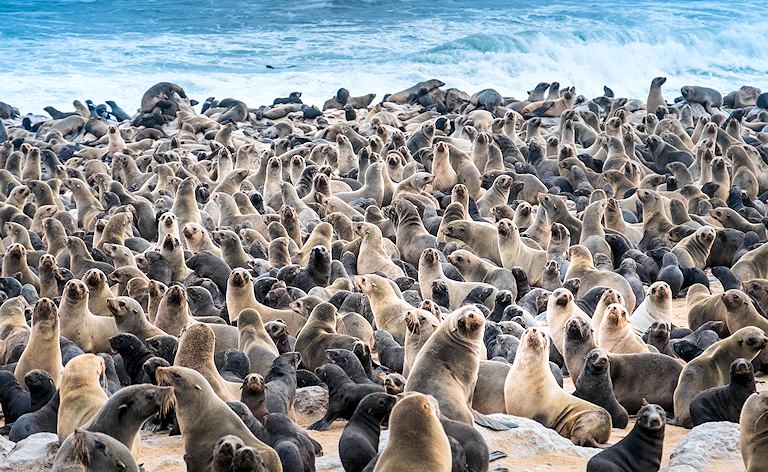
Highlights
- Enter Etosha through the western Galton Gate.
- Begin game viewing in a less-traveled park region.
- Stay among the western area’s dolomite landscapes.
After breakfast, the tour leaves Palmwag and travels east toward Etosha National Park. Entry is made through Galton Gate, providing direct access to the park’s western section. Once inside Etosha, the emphasis changes immediately from overland travel to game viewing. The private guide can begin exploring waterholes and wildlife areas on the way toward Dolomite Camp, with stops determined by animal activity and the time available before the park’s daily closing requirements.
Western Etosha differs noticeably from the busier areas farther east, with more rugged terrain, dolomite formations and a comparatively remote atmosphere. The region contains a network of waterholes that attracts a wide range of wildlife, particularly during the dry season. After the first afternoon of game viewing, guests settle in at Dolomite Camp for two nights. Its elevated position makes an appropriate base for exploring a section of Etosha that many shorter itineraries never reach.
Day 9: Western Etosha National Park
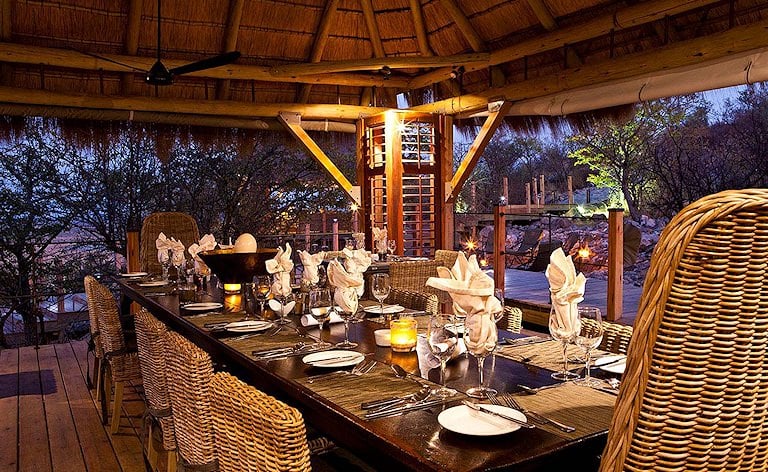
Highlights
- Full-day wildlife viewing across western Etosha.
- Explore remote waterholes and varied western habitats.
- Enjoy a second night at scenic Dolomite Camp.
The day is devoted to exploring western Etosha from Dolomite Camp. Game drives link a series of waterholes and open wildlife areas, with the exact route determined by recent sightings and seasonal conditions. The western landscape combines grassland, scrub and rocky formations, creating a different visual character from the flatter central and eastern sectors that will be explored later in the safari. Wildlife may include elephant, giraffe, zebra, springbok, oryx and a variety of predators, but sightings can never be guaranteed.
Having a second night in western Etosha means there is no need to push east immediately after entering the park. Morning and afternoon drives can therefore concentrate on the surrounding region, with a break during the warmer middle part of the day when appropriate. This slower approach also establishes the west-to-east progression that defines the second half of the itinerary, allowing guests to experience Etosha as a large and varied ecosystem rather than from a single accommodation base.
Day 10: Western / Central Etosha National Park
Highlights
- Game drive eastward across Etosha National Park.
- Watch the landscape change toward central Etosha.
- Evening wildlife viewing from Halali’s floodlit waterhole.
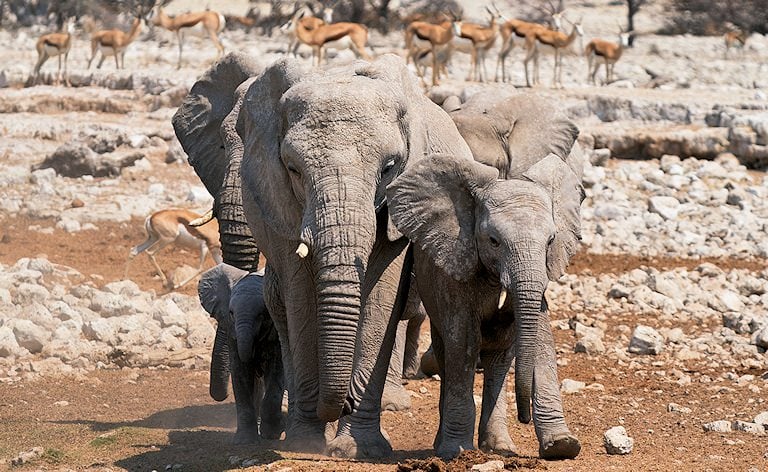
Today the safari begins moving east across Etosha National Park toward its central region. Rather than treating this as a simple transfer, the day is planned as an extended game drive, with stops at productive waterholes and wildlife areas whenever conditions warrant. The route passes through a broad range of habitats as the western highlands gradually give way to the more familiar open plains and mopane-dominated landscapes of central Etosha.
During the afternoon, the tour reaches Halali Camp, set among mopane woodland beneath a dolomite hill. Its central location provides a practical base for the next stage of the safari and allows access to a different network of waterholes from those explored around Dolomite. After checking in, there may be time for additional wildlife viewing before sunset. Halali also has a floodlit waterhole that can be visited after dark, extending opportunities to observe wildlife beyond the hours when the park roads are open.
Day 11: Central Etosha National Park
Highlights
- Full-day game drives through central Etosha habitats.
- Revisit productive waterholes as wildlife activity changes.
- After-dark viewing from the camp waterhole.
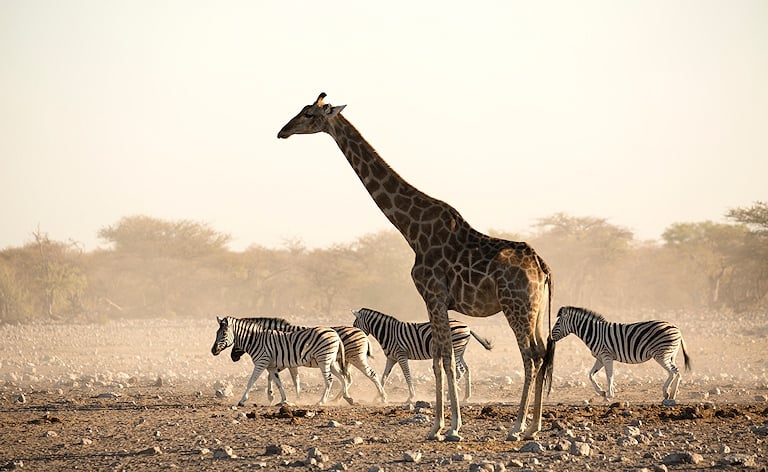
A full day is devoted to the central section of Etosha, with morning and afternoon game drives planned around wildlife movement and the condition of nearby waterholes. The Halali area provides access to a mixture of mopane woodland, open clearings and pan-edge environments, giving the day a noticeably different character from the western Etosha drives. Elephant, zebra, giraffe, springbok and other plains game may be encountered, while predators remain dependent on timing and natural movement.
Because the tour remains at Halali for a second night, there is flexibility to revisit productive waterholes or alter the route according to information gathered during the previous day. Time can also be spent resting at camp during the warmer hours before returning to the park roads later in the afternoon. After sunset, guests again have the opportunity to visit Halali’s floodlit waterhole, providing a quiet way to continue wildlife viewing once normal daytime game drives have ended.
Day 12: Eastern Etosha National Park
Highlights
- Game drive from central into eastern Etosha.
- Explore waterholes near Namutoni and Fischer’s Pan.
- Evening viewing at Namutoni’s floodlit waterhole.
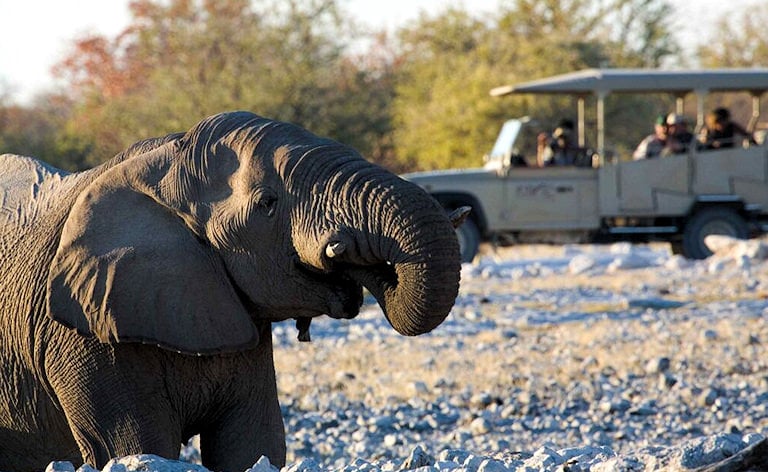
After breakfast, the safari continues east through Etosha National Park, with the transfer to Namutoni again forming part of the day’s game viewing. Stops are made at waterholes and viewpoints along the route whenever wildlife activity makes them worthwhile. As the tour moves farther east, vegetation and birdlife begin to change, and the landscape increasingly reflects the woodland and seasonal wetland influences associated with this side of the park.
Namutoni is situated in eastern Etosha near Fischer’s Pan and is built around a historic white fort. After arriving and settling in, the afternoon can be used to explore nearby waterholes or the broader eastern section of the park. Seasonal conditions strongly influence bird activity around Fischer’s Pan, particularly when water is present. In the evening, wildlife viewing can continue at Namutoni’s floodlit King Nehale waterhole, providing another perspective on Etosha after the park roads close.
Day 13: Eastern Etosha National Park
Highlights
- Final full day of game viewing in Etosha.
- Explore eastern waterholes, woodland and seasonal wetlands.
- Spend the evening at Namutoni’s floodlit waterhole.
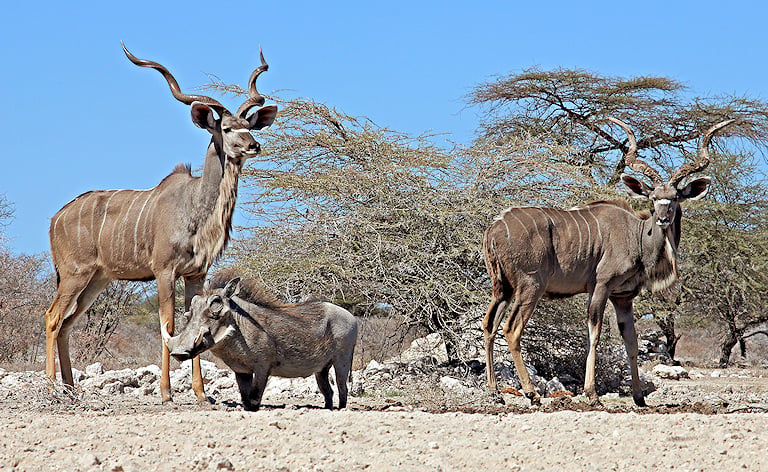
The final full safari day concentrates on eastern Etosha. Morning and afternoon drives explore the waterholes, woodland and open areas around Namutoni, with routes adjusted according to recent sightings and seasonal conditions. This side of the park can offer a different mix of habitats from the western and central sections visited earlier, adding further variety after almost a week of game viewing. Wildlife encounters remain unpredictable, which allows each drive to develop according to what is active on the day.
Between drives, guests can return to Namutoni for a rest before heading out again during the cooler afternoon hours. Birdlife can be particularly interesting around the eastern wetlands and Fischer’s Pan when seasonal water is present, while the surrounding waterholes continue to attract mammals throughout much of the year. The evening provides a final opportunity to spend time at the camp’s floodlit waterhole before the safari leaves Etosha and returns to Windhoek the following morning.
Day 14: Departure


Highlights
- Final wildlife viewing while leaving eastern Etosha.
- Return south through central Namibia to Windhoek.
- Transfer for your onward travel arrangements.
After breakfast, there is time for some final wildlife viewing while leaving the eastern part of Etosha National Park. The route then continues south toward Windhoek through the settled landscapes of north-central and central Namibia. This is a substantial road transfer, so the emphasis shifts from game viewing to reaching the capital comfortably, with suitable comfort stops made along the way.
On arrival in the Windhoek area, guests are transferred either to Hosea Kutako International Airport for their onward flight or to separately arranged accommodation if they are extending their stay. Because of the distance from eastern Etosha, onward flights should be timed with the road transfer in mind rather than assuming an early departure from Windhoek. The tour concludes after fourteen days linking Sossusvlei, the Atlantic coast, Damaraland and a west-to-east exploration of Etosha National Park.
Included

- 1 Night Hotel Heinitzburg
- 2 Nights Desert Camp
- 2 Nights Desert Breeze Lodge
- 2 Nights Palmwag Lodge
- 2 Nights Dolomite Camp
- 2 Nights Halali Camp
- 2 Nights Namutoni Camp

- Private African Sky Guide: From Day 1–14

- Private Air Conditioned Vehicle: From Day 1–14
- Only Meals Specified

- Private Arrival Transfer from Hosea Kutako International Airport to Windhoek (Day 1)
- All Overland Travel in Namibia by Private Guide Vehicle (Day 1–14)
- Private Departure Transfer to Hosea Kutako International Airport or Windhoek Accommodation (Day 14)

- All Activities Included in the Itinerary, Unless Stated as Optional
- All Entrance Fees to Places Mentioned in the Itinerary, Unless Stated as Optional

- Tourism Levy
- All Applicable Taxes
- All Park Fees, Where Applicable
Excluded

- International and Regional Flights to and from Windhoek
- Personal and Medical Insurance
- Drinks
- Gratuities
14 Day Namibia Private Overland Tour