


Description
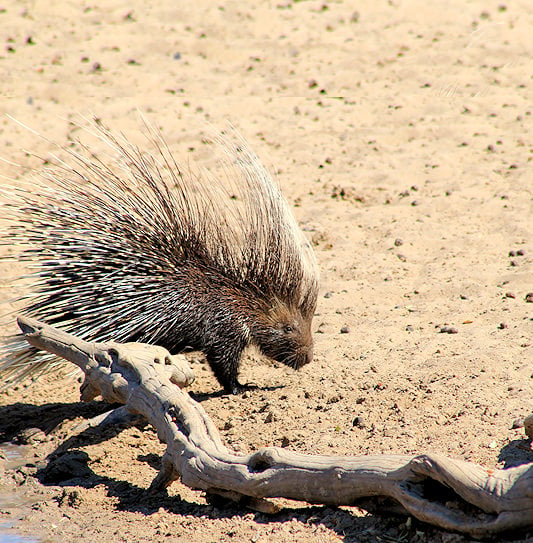
The Cape porcupine found in the Kruger region is the largest porcupine species on earth. A robust rodent covered in black-and-white quills, it raises and rattles these modified hairs when threatened. Short limbs, strong claws, and powerful incisors suit nocturnal foraging on roots, bulbs, and bark, while daylight hours are spent in burrows.
Porcupines are also nocturnal animals. The best times to see them are during the autumn and spring months when the temperatures are a little warmer, either very early in the morning or late in the afternoon. During the winter months they usually emerge a little later, as they do not enjoy the cold too much. Areas where I have commonly seen porcupines are along the Mlambane River road near Berg-en-Dal, the road between Lower Sabie and Tshokwane during the early mornings, as well as in the grassland areas around Satara. They can be surprisingly difficult to spot, and one of the best giveaways is watching for their quills moving through the grass.
 - Mary-Anne Finlay - Tour Guide Since 2006 (THETA Registration No: GP 2432)
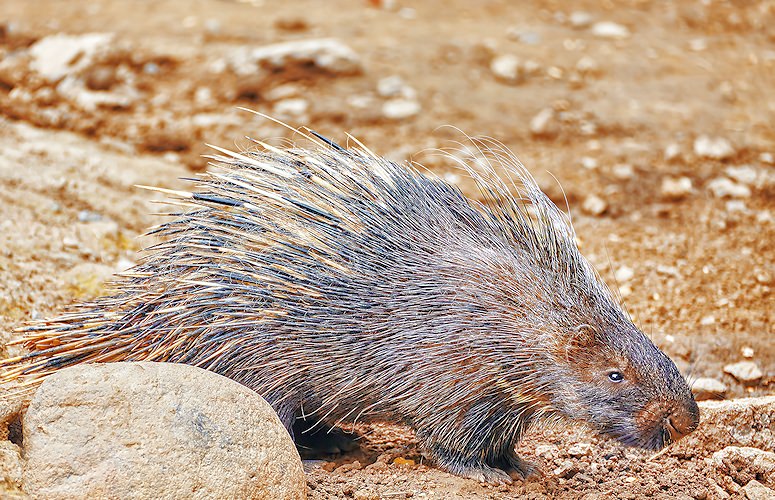
Cape porcupine occur widely across sub-Saharan Africa but avoid dense Congo rainforests and the driest parts of the Namib. In Southern Africa they are present across most countries, including the Greater Kruger area. Sightings in Kruger are typically nocturnal and localized near reliable food sources and suitable shelter.

Status
The species is listed as Least Concern on the IUCN Red List due to wide distribution, large population, and adaptability. Local pressures include persecution around croplands and road mortality, but overall the population is considered stable across much of its range.

Habitat
Cape porcupine occupy a wide range of habitats from sea level to highlands, favoring areas with diggable soils and forage. They avoid the wettest forests and the most arid desert core. Daytime refuge is typically in burrows—often modified aardvark burrows—or among rocky crevices; foraging focuses on roots, bulbs, bark, and fallen fruit.

Social Organization
Mate pairs usually remain together long term, sharing a territory that they scent-mark and defend. Family groups may include dependent young; neighboring home ranges can overlap, but defended cores are exclusive. Foraging is mostly nocturnal and often conducted as a pair.
Finest Safari Areas in Africa for Encountering Porcupine
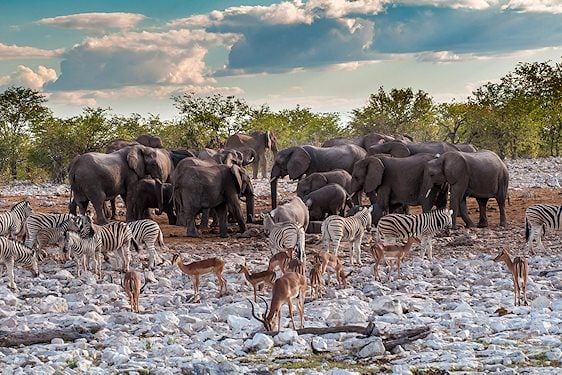
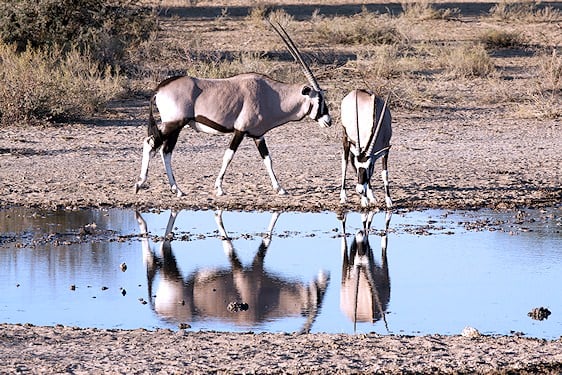
We recommend the following National Parks and Private Reserves for the best chances of spotting porcupine on safari game drives and bush walks.

Social Behavior
Food gathering dominates nightly activity, typically undertaken with a mate. Diet includes bulbs, roots, bark, and fallen fruit; bone gnawing supplies minerals. Warning displays feature tail-quill rattling, stamping, and hissing. If pressed, a porcupine may reverse or sidestep to drive quills into a predator.

Reproduction
Breeding can occur year-round. Females enter oestrus for about nine days, during which a copulatory plug may form. Gestation is roughly 94 days; typical litters are one to three. Newborns have soft quills that harden within hours and are hidden in the burrow for several weeks; weaning occurs around three to four months.

Anti-Predator Behavior
Most predators avoid healthy adults due to the risk from quills. Defensive behavior includes crest raising, tail-quill rattling, bluff charges, and forceful backward or sideways thrusts to expose quills; quills are not projected. Young rely on adults and the security of the burrow during threats.