


Description
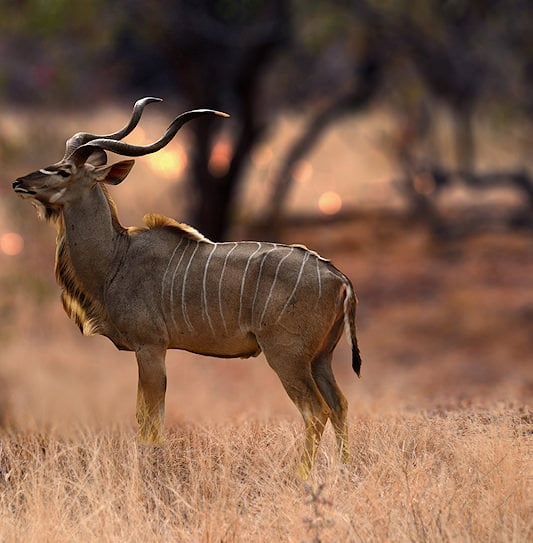
Greater kudu is a tall, elegant antelope with a lean body, large ears, and a brown coat marked by narrow white stripes. Males carry long, spiraled horns; females are hornless. A distinct white chevron between the eyes helps with identification. In Kruger, kudu is typically seen browsing along woodland edges and riverine thickets.
Kudu are known as the grey ghosts of the bushveld, and rightly so, as they have an incredible ability to disappear into the bush within seconds, often leaving one wondering if one actually saw them at all. This antelope is more commonly found in breeding herds of cows, which do not have horns, sometimes followed by a bull checking to see if any ladies need their skirts lifted. Bulls will also form bachelor herds, which can sometimes be as large as six animals. Kudu are abundant throughout the park and occur in both grassy and wooded areas. One of the habitats where I commonly see them is in the tamboti forests.
 - Mary-Anne Finlay - Tour Guide Since 2006 (THETA Registration No: GP 2432)
Distribution
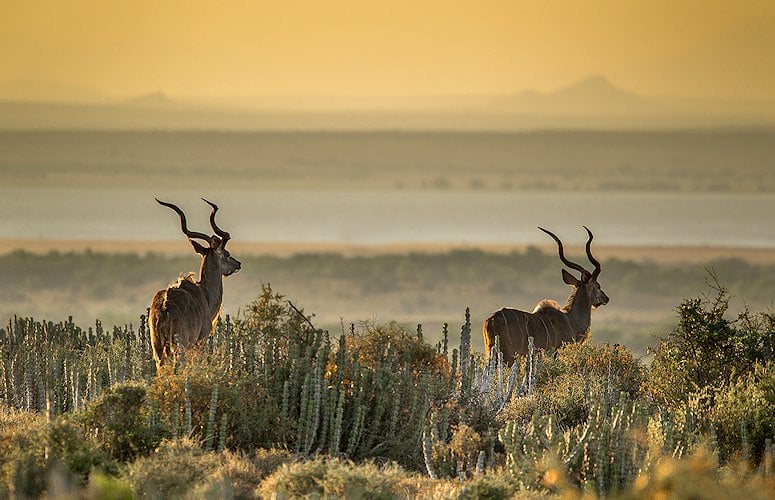
They are found extensively throughout Southern Africa, in South Africa, Botswana, Zimbabwe, Namibia, Mozambique, and Zambia, and farther north in Tanzania and Kenya. In the Kruger National Park, kudu commonly use woodland areas, including mopane and mixed savanna, where browse is accessible.

Status
Greater kudu is assessed as Least Concern regionally, supported by broad distribution and healthy numbers in many protected and private areas. In Kruger, population estimates vary by season and survey method, but kudu remains commonly encountered. Elsewhere in Southern Africa, major parks such as Etosha and Central Kalahari also hold strong populations.

Habitat
Kudu favors woodland, savanna, and arid-savanna with scattered shrubs and trees. As primarily browsers, kudu selects leaves, shoots, pods, and fruits, but may graze opportunistically. Access to permanent water is advantageous, especially late in the dry season, though browse moisture contributes to daily needs.

Social Organization
Kudu is non-territorial and ranges for food and water. Female-offspring herds typically include 5–20 individuals, while males are often solitary or in small bachelor groups outside the mating season. During resource-rich periods, groups space out; in the dry season, local aggregations form near reliable browse and water.
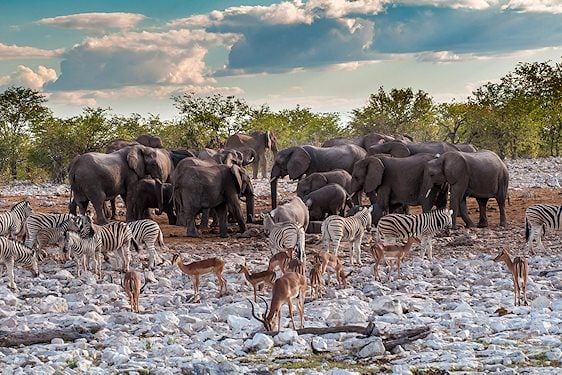
Finest Safari Areas in Africa for Encountering Kudu
We recommend the following National Parks and Private Reserves for the best chances of spotting the kudu on safari game drives and bush walks.

Social Behavior
Kudu maintains a home range rather than a defended territory. Female-offspring ranges may average around 4 square kilometers; bachelor ranges can be larger near 11 square kilometers. Dominance among males relates to age and size, with ritualized displays and horn wrestling reducing serious injury during the mating season.

Reproduction
Timing varies across the range; in South Africa, mating peaks in April–May. Calving follows after a gestation of up to nine months. Newborns typically remain hidden for several weeks while the cow returns to nurse. Sexual maturity is reached between one and three years, after which the cycle repeats.

Anti-Predator Behavior
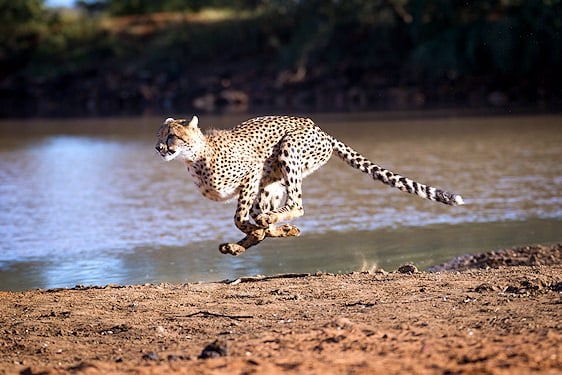
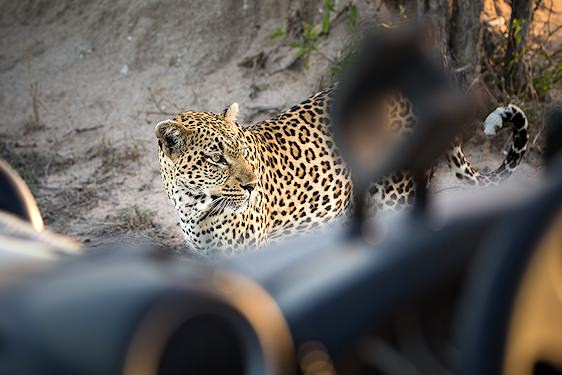
Principal predators include lion, leopard, African wild dog, and spotted hyena; cheetah, jackal, brown hyena, large eagle, and python take young. Cows often hide calves in tall grass for several weeks to improve survival. When threatened, kudu uses cover, bounding strides, and acute hearing to evade pursuit.