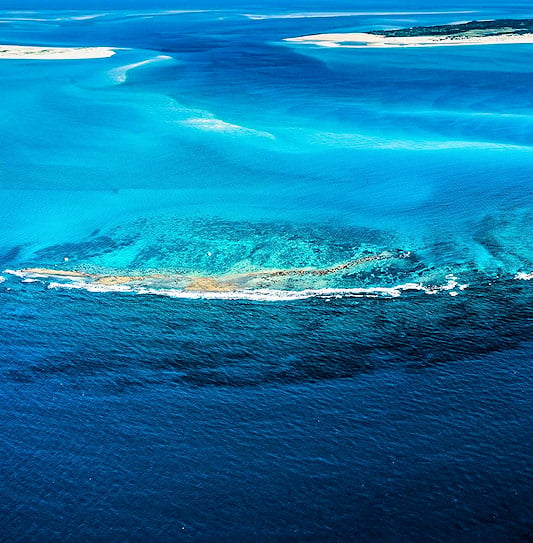
Mozambique's Bazaruto Archipelago
Help Me Plan- Home
- >
- African Travel
- >
- Mozambique
- >
- Bazaruto Archipelago
Bazaruto Archipelago Destination Guide
Bazaruto Archipelago National Park, proclaimed in 1971, protects five main islands (Bazaruto, Benguerra, Magaruque, Santa Carolina and Bangué) and their coral reefs and seagrass meadows. The islands lie off Vilankulo (Vilanculos), reached by boat or helicopter, and their waters hold Two Mile Reef and the last viable dugong population in the Western Indian Ocean. The dry season, from May to November, brings the most settled weather.
Getting to Bazaruto Archipelago
By Air: Vilanculos is in Mozambique's Inhambane Province. It is the most convenient access point for the Bazaruto Archipelago. Dhows frequently travel between the town and the islands. The town is only around 5 km long, yet equipped with the amenities required to make your visit comfortable yet authentic. Vilanculos Airport has direct flights from Johannesburg and Nelspruit, and connecting flights via Maputo. ANAC, Mozambique’s National Administration of Conservation Areas, sets out access by air, sea and road on its official Bazaruto Archipelago National Park page.
Weather & Best Time To Visit
Mozambique has a tropical climate with year-round warm temperatures. The best time to visit the area is during the dry season, which runs from May to November. These are also the cooler winter months. The islands are very hot during December and January, making travel unpleasant. Tropical cyclone risk is highest from January to March, within a broader November to April season, so expect occasional heavy rain.
When you choose to travel to Bazaruto may also depend on the activities that interest you. The waters of the Indian Ocean are warm, and scuba diving conditions tend to be good all year. Humpback whale migration is visible from June to September, and the best time to see a whale shark is from October to early December. The Bazaruto Archipelago is known for its big-game fishing. The best time to go marlin fishing is from September to January, while sailfish patrol the waters from May to September.
The larger islands hide tall dunes and freshwater lakes inland, and beyond their beaches lie the reefs, seagrass beds and deep channels that draw dugong, turtles, manta rays and game fish.
Beach Vacation Packages that visit Bazaruto
Our Bazaruto packages are easy to reach from Johannesburg, with island lodges a short boat or helicopter ride from Vilankulo.
10-Day Benguerra & Quirimbas Beach Vacation
Benguerra and the Quirimbas in one trip; not bookable while the Quirimbas lodge is temporarily closed.
5-Day Luxury Mozambique Getaway Beach Vacation
A short but memorable vacation on the beaches of southern Mozambique, easily accessible from South Africa.

Recommended Beach and Island Lodges
Two island resorts inside the national park, each with its own beach and reef activities.
Anantara Bazaruto Island Resort
Set on Bazaruto Island, the largest in the archipelago, this resort has its own dive center for the protected reefs, and sunset dhow cruises in whale season.
Azura Benguerra Island
Twenty villas, each with a private pool, on Benguerra Island, a short helicopter hop or boat ride from Vilankulo.
Reasons to visit the Bazaruto Archipelago
The Delightful Dugong
The national park protects the largest, and the only remaining viable, population of dugong in the Western Indian Ocean. East African dugong were listed as critically endangered by the IUCN in 2022, and the seagrass meadows around the islands are their main feeding ground.
Diver's Paradise
Bazaruto has a wide range of dive sites at every level of difficulty, from calm inner reefs for beginners to deeper walls for experienced divers. Most lodges in the area have diving schools or trusted connections with reputable operators.
Easy Access
Direct flights link Johannesburg and Vilankulo in about an hour and a half. From there, a motorized dhow or boat can take you to the islands, and a helicopter transfer is available at extra cost. The Quirimbas, farther north, are not currently advised, so Bazaruto is our recommended island destination in Mozambique for now; see our Quirimbas page for the latest.
Experiences to Savor
Experiences around the Bazaruto Archipelago focus on marine life, from deep-sea fishing to scuba diving and snorkeling on minimally disturbed coral reefs. The surrounding ocean teems with wildlife.
Ocean Safari
If you are not a qualified diver and do not plan to learn, an “ocean safari” by boat is a good way to look for larger marine life beyond the snorkeling reefs, from whale sharks to manta rays.
Catch of the Day
Mozambique is a seafood lover's paradise, and the fare is fresh. Expect prawns and the catch of the day, typically flavored with local spices or the famously fiery Piri Piri sauce.
Island Time
There are only a handful of lodges on the islands, and between activities the days slow to tides, reef walks and long stretches of fine white sand.Useful Information
History
The Bazaruto Islands have a long history of human occupation. Before Portuguese occupation of the coast, the islands were likely the site of East Africa's most southerly Muslim trading settlements. By the middle of the 16th century, Portuguese traders dominated, and the surrounding sea was known for high-quality pearls.
The Portuguese established their first settlement on Santa Carolina Island in 1855. Initially an ivory trading post, the island was later used as a penal colony but was abandoned by the beginning of the 20th century. Historical relics include a ruined 19th-century fort on Magaruque and a fully intact but non-operational lighthouse on Bazaruto.
Bazaruto National Park was proclaimed in 1971 and enlarged in 2001 to take in all five main islands and the surrounding ocean. It extends eastward from the coastline between Vilankulo and Inhassoro and covers about 1,583 km².
Notable Islands
Pansy Island
Not so much an island as a tidal sandbar south of Bazaruto Island, this landmark is often visited with Two Mile Reef. It is named for the so-called pansy shells (also called sea biscuits or sand dollars) that are abundant in its intertidal shallows. This shell-like object, with a five-petaled floral pattern on its flattened face, is the endoskeleton of a burrowing sea urchin in the order Clypeasteroida. The living creature is usually black or purple and covered in bristles, but the endoskeleton is bleached white by sun and saline water after it dies.
Bazaruto Island
A striking feature of the archipelago's largest island is its immense dunes rising from the southern shore. You can visit these with Two Mile Reef and Pansy Island. Reputedly the highest point on the islands, rising around 100 m above the surrounding water, the steep dunes can be climbed, with some sandblasting in windy weather. Once at the top, views extend in all directions, with ocean and islands to the south and a landscape of lakes and dunes running north. If you are staying at a lodge on Bazaruto, visit lakes and other dune fields and meet local communities.
Benguerra Island
Like its larger northerly neighbor, Benguerra supports a varied landscape of marsh, lake, and tall climbable dunes, well worth exploring on a guided drive if you are staying at a lodge. Wildlife includes monkeys, small antelope such as red duiker and suni, crocodiles in the lakes, and a mix of birds: brown-headed parrot, African hoopoe, green pigeon, crowned hornbill and various bee-eaters are conspicuous, while flamingos and other waterbirds visit the lakes. You can visit local communities.
Diving sites
There are numerous dive sites around the islands. The undisputed champion is Two Mile Reef, a barrier reef on the outer side of the archipelago between Bazaruto and Benguerra. Tides permitting, the best snorkeling spot is The Aquarium, a calm coral garden on the inner reef that supports a dazzling selection of hard and soft coral, as well as reef fish of many shapes and colors, from tiny coral fish to mighty potato bass and brindle bass. It is also a good spot to see reef sharks and turtles, while a lucky diver might meet a manta ray or a whale shark.
There are several dive sites on the seaward side of the same reef, with names such as The Arches, Shark Point, Surgeon Rock, The Cathedral, and The Gap. Any dive center can advise on the site most suitable to your interests and conditions. If you are setting up a trip from Vilanculos, it is worth paying extra to visit Two Mile Reef instead of taking the cheaper excursion to Magaruque, which has no comparable reefs and thus offers inferior diving and snorkeling.
Activities
These islands offer a wide range of activities. For starters, they host diverse birdlife, from shorebirds to forest species. From the beach, you can scan the water for dolphins or turtles with a drink in hand. Kayaking, water skiing, wakeboarding, and kneeboarding gear are available and a good way to explore the waters Portuguese traders once crossed. You can also join fishing trips, visit the spa, or ask your lodge for a picnic on a sandbar or a deserted beach.