14 Day Great Western Trek
Help Me PlanSummary
This epic off-the-beaten-track private overland adventure explores the remote corners of South Africa's Northern Cape and Western Cape provinces. It visits some unique and exciting destinations that are not customarily visited but offer an enriching experience to those looking for something unique.
- 1 Night Upington
- 3 Nights Kgalakgadi Transfrontier Park
- 1 Night Upington
- 1 Night Witsand Kalahari
- 2 Nights Augrabies
- 3 Nights Namaqualand
- 1 Night Olifants River Valley
- 1 Night Riebeek Kasteel
Price Per Person Sharing From:
USD 6,431 - 10,423The price can be reduced by substituting accommodations
What influences prices?
 Tour Ref. Code
 Starting Date
 Starting Point
 Ending Point
 Customizable
 Type
Type Accommodation Level
 Countries Visited
South Africa Tour Itinerary: 14 Day Great Western Trek


Day 1: Arrival / Upington
Highlights
- Meet-and-greet in Johannesburg, then fly to riverside Upington.
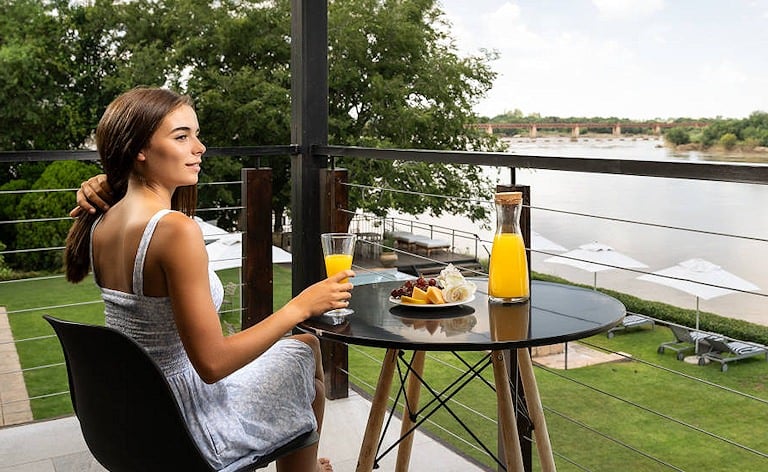
- Settle into River Place Manor on the Gariep River.
- Relaxed start with sunset views and gentle riverside ambience.
Once you’ve arrived in Johannesburg and have cleared customs and immigration, you’ll find a representative from African Sky waiting for you as you enter the arrivals hall. First, we’ll take care of a few formalities. You’ll be provided with all essential travel documentation and confirmation details for your upcoming holiday in digital form, including e-tickets for the included flight, accommodation and transfer vouchers, a detailed itinerary, and our emergency contact information.
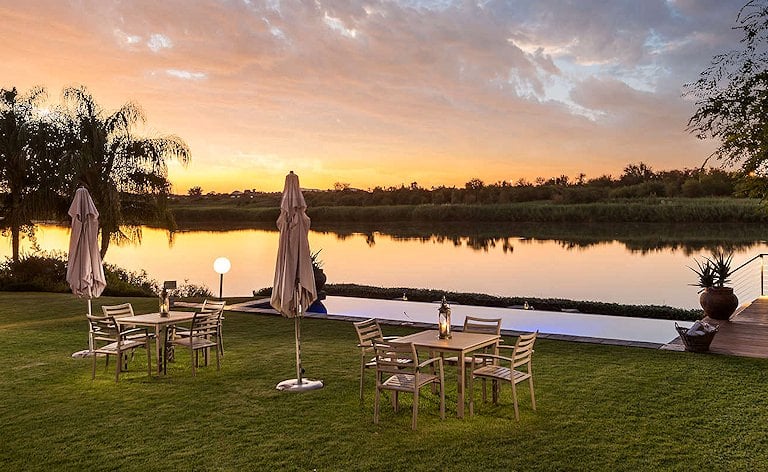
As an experienced guide, our representative will gladly answer any questions. Once formalities are completed, you’ll be escorted to the appropriate departure terminal, where you’ll board a local flight to Upington in South Africa’s Northern Cape Province. There, you’ll be met and transferred to your overnight accommodation. The remainder of your first day in South Africa is enjoyed at leisure on the banks of the Orange River, with time to relax, settle in, and enjoy the tranquil riverside setting.
Day 2: Upington / Kgalagadi Transfrontier Park
Highlights
- Enter the Kgalagadi and arrive at remote !Xaus Lodge.
- Late-afternoon wilderness experience with sundowners and night skies.
- First taste of vast dunes, silence, and desert atmosphere.
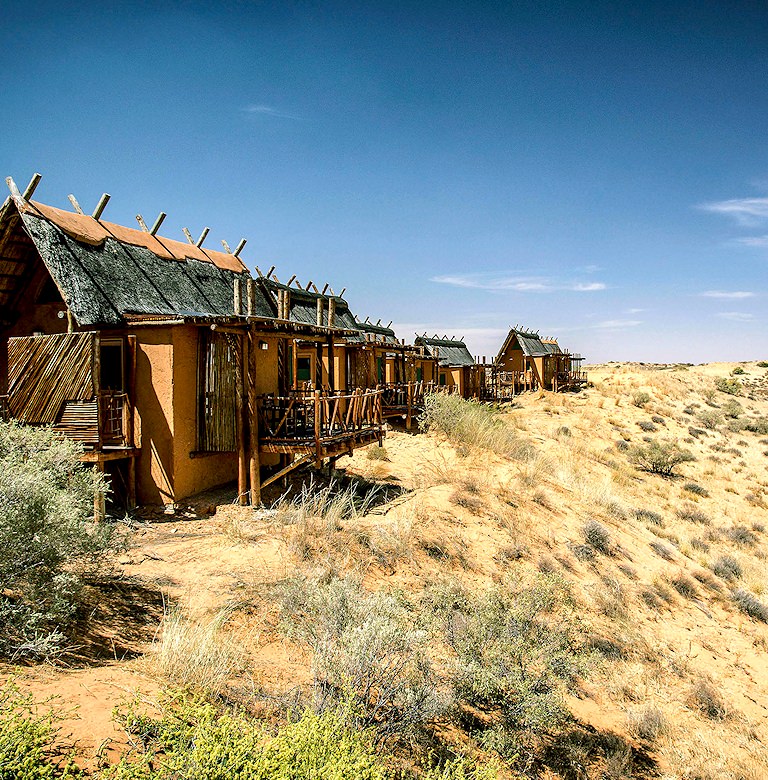
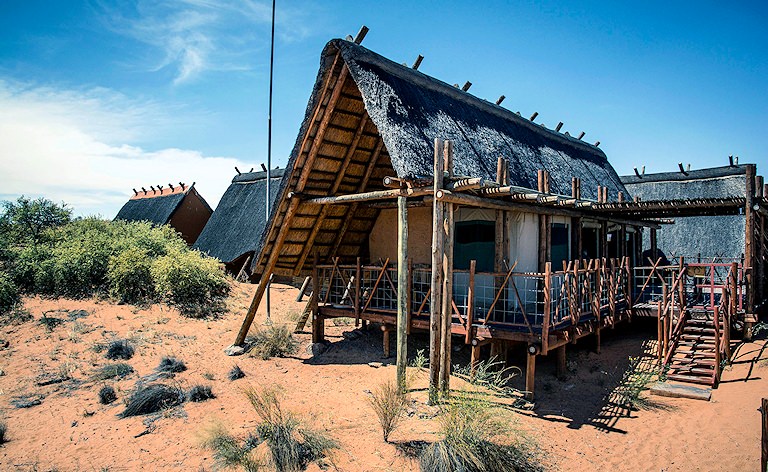
After an early breakfast, you’ll be met and transferred to the remote !Xaus Lodge in a private concession of the Kgalagadi Transfrontier Park. On arrival at the lodge, you’ll be warmly welcomed and assisted with settling in. The setting is wonderfully isolated, with vast dune landscapes and open skies that immediately convey the scale and quiet of the Kalahari environment.
The purpose of visiting !Xaus is to escape the world and place yourself in a remote location where the outside world no longer impacts your day-to-day activities. Later in the day, you’ll enjoy your first exciting activity in the Kgalagadi wilderness. The activity starts in the late afternoon, pauses at a remote location for sundowners, and continues into the evening, lasting three to four hours to maximize your experience and your chances of encountering desert-adapted wildlife.
Day 3-4: Kgalagadi Transfrontier Park
Highlights
- Explore dune valleys on drives, walks, and stargazing sessions.
- Learn the heritage story behind !Xaus and community ownership.
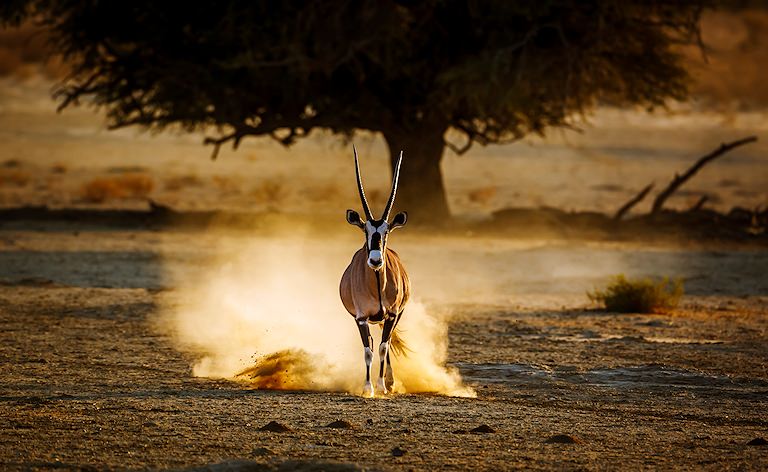
- Search for desert wildlife including oryx, hyena, and lions.
!Xaus, meaning “heart” in the Nama language, was established in May 2002 after an agreement was reached with the South African government. The agreement restored a large tract of land to those who once roamed or farmed the area. The !Ae!Hai Kalahari Heritage Park Agreement resulted in the transfer of ownership of 50,000 hectares of land within the boundaries of Kgalagadi Transfrontier Park to the Khomani San and Mier communities, helping them improve the quality of their lives. The Kgalagadi Transfrontier Park is an immense desert with grass-covered dunes. At over 3.5 million hectares, it’s almost twice the size of the Kruger National Park and about the same size as the Netherlands, and it is jointly managed by the South African and Botswana wildlife authorities.
A constant high-pressure cell forms a “lid” over the interior; consequently, the long-term annual rainfall average is low, classifying the Kgalagadi as a true desert. Unusually, desert grasses are abundant, giving the landscape the appearance of a semi-desert. The park is home to an abundance of wildlife, including large, black-maned Kalahari lions, cheetahs, brown and spotted hyenas, a handful of desert-adapted leopards, and large numbers of gemsbok, springbok, and wildebeest. The park is also well known for its huge eland population, believed to be among the largest herds in the world. While at !Xaus, your activities include game drives and after-dinner drives, guided dune walks, a visit to a Bushman craft village where available, and stargazing made possible by clean air and zero light pollution.
Day 5: Kgalakgadi Transfrontier Park / Upington
Highlights
- Return to Upington and meet your private African Sky guide.
- Rebalance with a slower afternoon beside the river.
- Optional local strolls, viewpoints, and downtime before longer drives.
After breakfast, you’ll be met and returned to Upington. On arrival at your accommodation, you’ll meet your African Sky guide, who will remain with you for the remainder of the tour. The handover is relaxed and unrushed, and your guide will confirm the next stages of the overland journey and answer any questions about timing, distances, and daily pacing.
The afternoon is at leisure. This is an ideal opportunity to rest after the desert experience, enjoy the calm riverside atmosphere, and prepare for the next travel day. Depending on time and interest, you may choose a gentle walk, time outdoors, or simply a quiet break before the adventure continues deeper into the Northern Cape’s remote landscapes.
Day 6: Upington / Witsand Kalahari


Highlights
- Visit Witsand’s pale dunes set against red Kalahari sands.
- Listen for the “roaring dune” phenomenon in warm conditions.
- Enjoy exceptional stargazing in the quiet Green Kalahari.
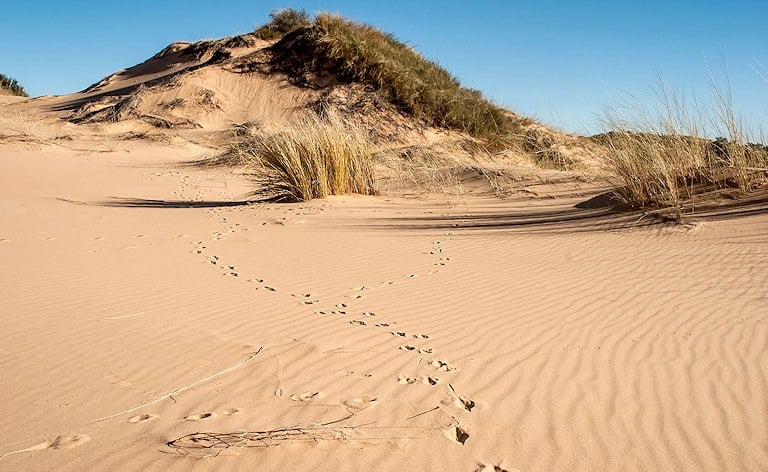
Our destination today is one of the most unusual places in South Africa: Witsand Kalahari, approximately 160km from Upington. Witsand—literally “white sand”—refers to a 9-kilometer white dune standing out in stark contrast to the typical red dunes of the Kalahari. Known as the “roaring dune,” a distinctive roaring may be heard as the wind blows. The sound is alternatively described as a bass, organ-like sound, and walking on the dunes can produce a muted groan. Witsand is also home to various animals, including gemsbok, red hartebeest, duiker, steenbok, and kudu.
The entire reserve is open to hikers, with no restrictions on where visitors can go. Dune boards and bicycles may be available for rental, and a guided nature walk can also be booked. We’ll spend one night here in the southern Kalahari under starry night skies, enjoying the stillness of the landscape and the unique character of this pale-dune environment before continuing onward the next day.
Day 7-8: Witsand Kalahari / Augrabies
Highlights
- Witness powerful Augrabies Falls carving a rugged desert gorge.
- Two-night stay at Tutwa with drives and river activities.
- Spot desert-adapted wildlife in a tranquil riverside sanctuary.
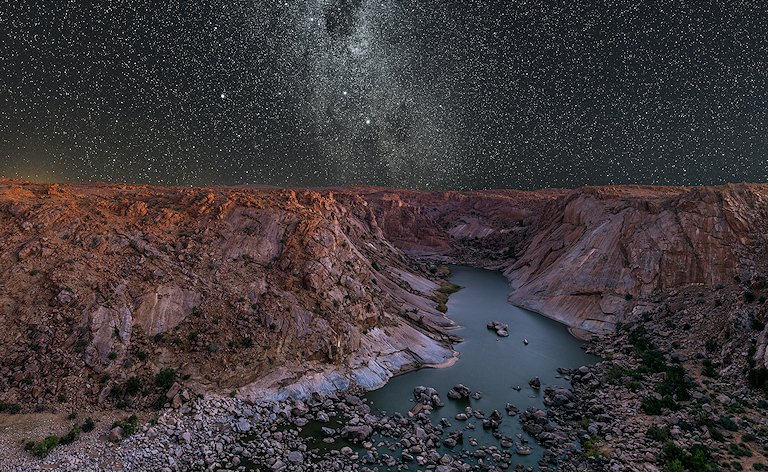
After an early breakfast, we’ll travel south to Groblershoop and then to Upington, where a quick stop is made to refuel and restock. Later, we’ll join the national N14 route in a westerly direction as it follows the Orange (Gariep) River. Our first point of interest is the Augrabies Falls. The region’s original inhabitants, the Khoikhoi, named the waterfall “Ankoerebis” or “place of big noises,” from which the Trekboers—among the first Europeans to settle Southern Africa’s interior—derived the current name, “Augrabies.” Unusually for a waterfall located in a desert environment, Augrabies boasts impressive flow records during major floods, although the flow varies greatly between seasons and the falls are not always equally dramatic.
After viewing the falls at leisure, we’ll continue to our overnight accommodation at Tutwa Desert Lodge. Tutwa is a 16,000-hectare private property located within the Riemvasmaak Community Conservancy, a region spanning 70,000 hectares of Kalahari Desert and inhabited by about 1,500 Khoisan or Nama people. These communities occupied this land for centuries until the Apartheid government dispossessed them of it; it was returned in 1994. With direct access to 24km of exclusive Orange (Gariep) River frontage, the lodge is an oasis of calm and cool in a vast environment, offering a private wildlife safari experience. Tutwa supports a variety of species including leopard, giraffe, zebra, gemsbok (oryx), springbok, meerkat, klipspringer, and nocturnal animals such as aardvark, aardwolf, and porcupine. Your stay includes all meals, alcoholic beverages (excluding premium brands), two game drives daily on open 4x4 vehicles, and one water-based activity on the Gariep River during your visit.
Day 9-11: Augrabies / Namaqualand
Highlights
- Discover the Succulent Karoo: an arid biodiversity hotspot.
- Seasonal wildflowers transform Namaqualand into vivid color carpets.
- Flexible hikes and scenic drives with optional coastal excursions.
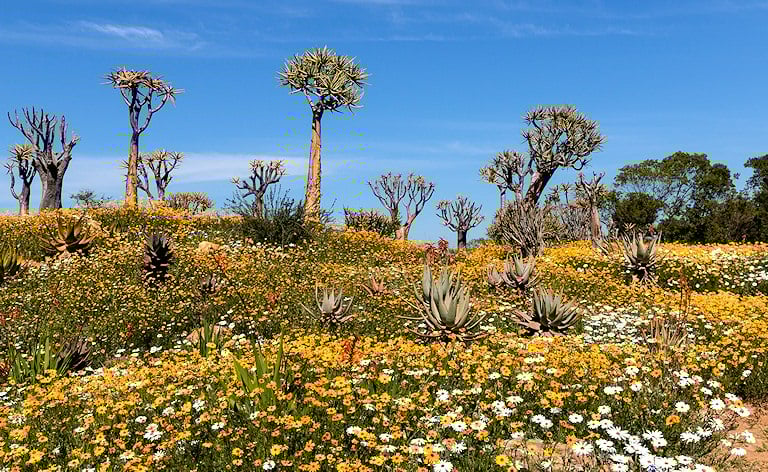
After saying goodbye to our hosts, we’ll depart this desert environment and return to civilization—at least for a moment, anyway. After rejoining the N14, we’ll travel to Springbok and then onward into one of South Africa’s most remote regions. Namaqualand is an arid environment along Southern Africa’s west coast, covering an area of approximately 44,000 square kilometers. Here, you’ll find the semi-desert Succulent Karoo biome, a biodiversity hotspot with the largest concentration of succulent plants in the world—more than 5,000 species—with a high percentage endemic to the region. The area is arid in summer and temperatures often rise above 40°C. Normally in August and September, thousands of wildflowers bloom spectacularly and the otherwise drab environment is transformed into an extraordinary display of purple, yellow, orange, and white. We’ll spend three nights exploring the Namaqualand environment.
Accommodation in the region is designed to place you close to the landscapes you’ve come to experience. As its name implies, the luxury mobile Namaqua Flowers Beach Camp is located on the beach, with impressive views in every direction; each dome tent offers full-size beds, warm bedding, electric lights, a hot shower, a dressing room, and a chemical flush toilet. Breakfast and dinner are included daily, while lunch options may be available at additional cost. Naries Namakwa Retreat, located about thirty minutes from Springbok under the Spektakelberg Mountain, serves as a comfortable base for exploring the barren Namaqua plains; breakfast and dinner are included daily, with lunch available at an additional cost. Hiking is a primary activity and is permitted throughout the reserve, and—if available—guided visits to a seal colony and local caves can be booked. Other available activities may include dedicated flower tours, day tours to the Richtersveld, and specialist excursions that must be pre-booked and may be seasonal.
Note
Some activities are seasonal and might not be available during your visit. Activities must be pre-booked. Any activities not included in the accommodation cost come at an additional expense. Please ask for details.
Day 12: Namaqualand / Olifants River Valley
Highlights
- Journey south through small settlements into the Olifants Valley.
- Stay on a working farm with warm hospitality and country cooking.
- Wine, birding, and riverside walks at Melkboomsdrift Guest House.
After an early breakfast, we’ll head off in a southerly direction. As we travel, you’ll experience several small settlements and villages typical of South Africa’s dry western region. The drive offers a sense of the scale and sparsity of this landscape, with long open roads and changing scenery as we transition toward the Olifants River Valley.
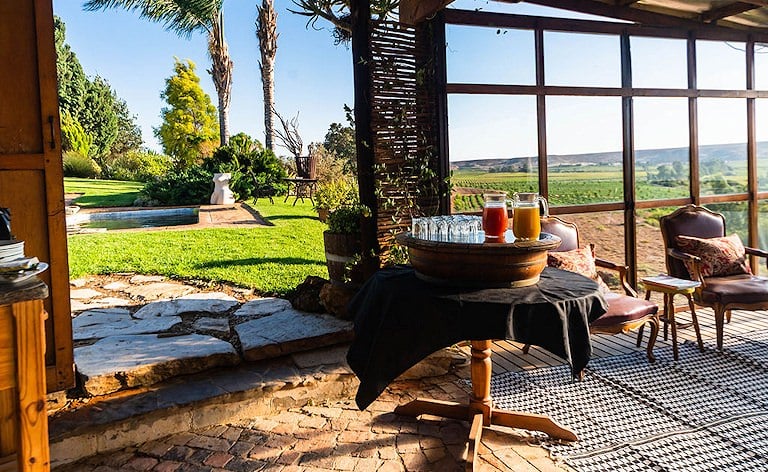
We’ll stop en route to stretch our legs and explore a few local attractions. Our final destination is Melkboomsdrift, a working wine farm located along the banks of the Olifants River, which some consider to be near the southern extent of the Namib Desert’s influence. Melkboomsdrift offers excellent country cooking and warm hospitality and is the perfect farm-style retreat for weary travelers. Aside from wine tasting at their cellar at Lutzville, other activities include hiking or strolling through the vineyards, bird watching along the river, or a visit to the ocean at Strandfontein or Doringbaai; fishing and golf are also possibilities, depending on timing and interest.
Note
Any activities not included in the accommodation cost come at an additional expense. Please ask for details.
Day 13: Olifants River Valley / Riebeek Kasteel
Highlights
- Arrive in the Riebeek Valley of vineyards and olive groves.
- Explore Riebeek Kasteel’s galleries, tastings, and rural charm.
- Overnight at the historic Royal Hotel in the village.
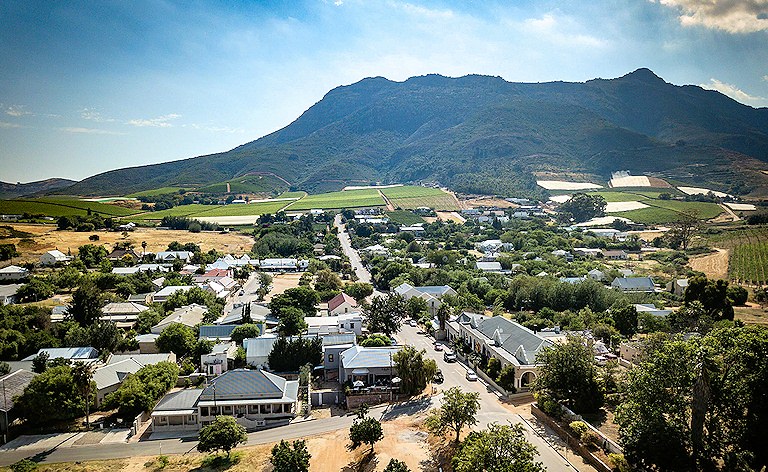
The Riebeek Valley is one of the oldest settled European districts in Southern Africa after Cape Town. The valley was recorded in 1661 by Pieter Cruythoff, who, under instruction from the Commander at the Cape, Jan van Riebeeck, conducted an expedition of discovery into the interior. Finding this fertile valley after crossing isolated mountains, he named it Riebeek Kasteel in honor of his Commander. On arrival, Cruythoff reported seeing thirteen horses (probably quagga, a now-extinct subspecies of the plains zebra), five rhinos, thousands of hartebeest, and lions. Nowadays, of course, no lions exist here, but you will find a valley of great scenic beauty filled with vineyards and olive groves.
After Cruythoff’s discovery, farmers moved into the district, and finally, in 1900, a town was laid out around an existing church and the already-established Royal Hotel, often regarded as the oldest hotel in South Africa. Today, Riebeek Kasteel is popular for its beauty and rural atmosphere. Worthwhile visits include De Oude Kerk (the Old Church), the Olive Boutique, The Gallery (representing mostly local artists), and Le Petit Chocolat. The town and district have many interesting shops and attractions, and your guide will be at your disposal as you explore at leisure.
Note
Any activities not included in the accommodation cost come at an additional expense. Please ask for details.
Day 14: Departure
Highlights
- Spend the day sampling the Cape Winelands’ iconic estates.
- Franschhoek and Stellenbosch blend history, scenery, and fine wines.
- End in Cape Town after an epic westward overland route.
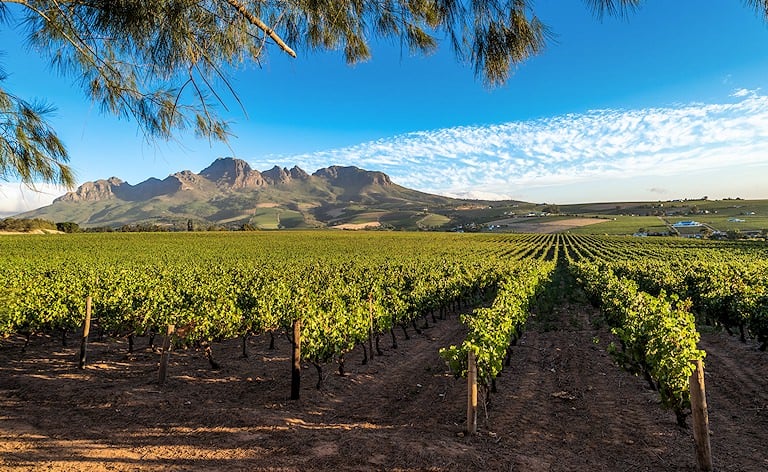
Today, we’ll visit the Cape Winelands before bringing your tour to an end in Cape Town. Franschhoek, literally “French Corner,” owes its existence to a small group of French Huguenots who settled here in the latter half of the 17th century and began working the Drakenstein Valley. Many settlers named their farms after the areas in France from where they originated. La Motte, La Cotte, Cabriere, Provence, Chamonix, Dieu Donne, and La Dauphine were among the first established farms—most still retain their original buildings.
Nearby Stellenbosch is one of the most historically well-preserved towns in Southern Africa. Water furrows along oak-lined streets complement the many fine examples of elegant Cape Dutch, Victorian, and Georgian architecture—part of this unique “Town of Oaks.” We’ll visit several fine wine estates in the Stellenbosch and Franschhoek districts throughout the day. The region is renowned internationally for the exceptional quality of wines its fertile soil produces, with classic varieties represented across whites and reds. During the late afternoon, you’ll be delivered to a location of your choice in Cape Town, bringing to an end a tour of some of South Africa’s less-traveled regions.
Included

- 2 Nights River Place Manor
- 3 Nights !Xaus Lodge
- 1 Night Witsand Kalahari
- 2 Nights Tutwa Desert Lodge
- 3 Nights Naries Namakwa Retreat / Namaqua Flowers Beach Camp
- 1 Night Melkboomsdrift Guest House
- 1 Night The Royal Hotel

- Resident Rangers: From Day 2–4
- Private African Sky Guide: From Day 5–14

- Day 5–14: Private Air conditioned vehicle
- Only Meals Specified

- O R Tambo International (Johannesburg) to Upington

- Upington Airport to Upington
- Upington to !Xaus Lodge
- IXaus Lodge to Upington

- All Activities Included in the Itinerary, Unless Stated as Optional
- All Entrance Fees to Places Mentioned in the Itinerary, Unless Stated as Optional

- Tourism Levy
- All Applicable Taxes
- All Park Fees, Where Applicable
Excluded

- International Airfare (To and From South Africa)
- Personal and Medical Insurance
- Drinks
- Gratuities
14 Day Great Western Trek