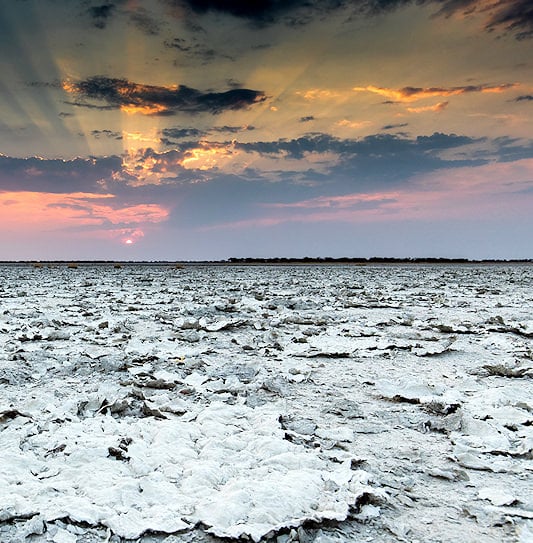
Botswana’s Nxai Pan National Park
Help Me Plan- Home
- >
- African Travel
- >
- Botswana
- >
- Nxai Pan National Park
Nxai Pan Destination Guide
Nxai Pan National Park covers 2,578 square kilometers of fossilized salt pans and grasslands. Famous for Baines Baobabs and the annual zebra migration, it transforms from arid desert to lush haven during the rainy season (Nov–Apr). With open skies, meerkat encounters, and guided Bushman walks, Nxai offers a serene, crowd-free safari experience.
Getting to Nxai Pan
By Air: Guests will be met at OR Tambo International and transferred to a flight to Maun Airport in Botswana. It is a one-hour light aircraft flight from Maun Airport to the airstrip near Nxai Pan. Remember that light aircraft flights can be bumpy, especially the landings — if you are uncomfortable with small planes, please speak to an African Sky consultant so we can make other arrangements.
By Road: The park is about 500 km north of Gaborone. The arduous drive covers beautiful landscapes and is a great way to get to know the area. African Sky guests, however, will be transported directly to the park in a light aircraft, where, upon arrival, an experienced guide will transport you in a 4x4 vehicle to the lodge.
Weather & Best Time to Visit
Rainy (Nov–Apr): pans hold water; zebra and other grazers concentrate; some roads can be muddy. Dry (May–Oct): easier travel, fewer visitors, stark desert scenery, and predator interactions are more visible.
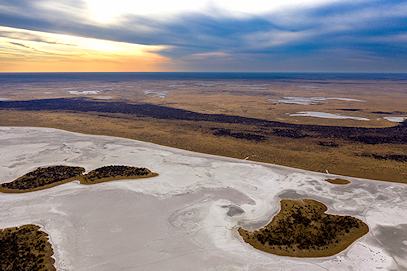
In addition to wildlife and islands, there are several noteworthy attractions. One is the "old trek route," a trail used in the 1950s and 1960s as a shortcut through Ngamiland to Kazungula via Pandamatenga. During this time, many boreholes were drilled to water the cattle and men on their long trek. Some of these boreholes now provide water for wildlife, creating unique oases that attract large animal concentrations in the dry season.
Reasons to visit Nxai Pan
Photography
The pan is not a traditional safari destination. Still, it has the advantage of very little to no vegetation cover, making it possible to capture images of various antelope and predator species unhindered. Nxai also offers Baines Baobabs, which create a fantastic feature against a backdrop of the desolate salt pan.
Nature Walks with Bushmen
A nature walk in the company of a San Bushman will offer unrivaled insight into the natural world. The ancestors of these hunter-gatherers have inhabited the region for thousands of years. During the detailed interaction, animal behavior, signs, and tracks left by various species will come under the spotlight.
Meerkat Encounters
Observing the antics of a meerkat gang is informative, exciting, and delightful. These tiny critters have an evolved social structure, with each playing a part in gathering food, tending the young, and guard duty. When a sentry raises the alarm, the whole mob disappears into their burrow at lightning speed.
Experiences to Savor
As with all other safari destinations, the rewarding experiences revolve around viewing animals in their environment and an immersion in the natural world.
Migrations
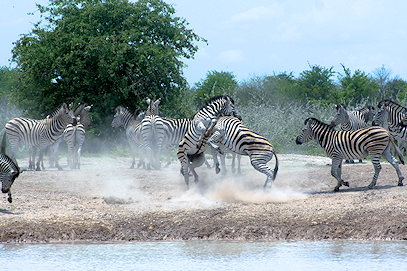
Once the rains have fallen, you can observe herds of wildebeest, gemsbok, springbok, and zebra as they migrate to this arid region to feed on newly sprouted vegetation. The zebra migration is notable for the number of these horse-like mammals that travel annually to Nxai Pan.
Baines Baobabs
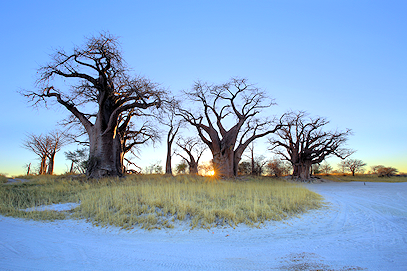
Baines Baobabs is a group of seven ancient baobab trees named after the legendary artist and explorer Thomas Baines, who painted them in 1862. It is a remarkable site, with massive baobabs highlighted against the backdrop of the dry wasteland of the salt pan in the southern part of the national park.
Savor the Silence
The silence can be almost “deafening” when standing at the edge of the pans at dusk. If a light wind is blowing, it is an almost spiritual experience. The locals often say the soft breeze blowing across the seemingly endless pans talks to them.Useful Information
History
The pans started forming more than five million years ago when the rivers that flowed into the great lake changed direction. Nxai Pan was declared a national park in 1970. In 1992, boundaries were expanded to include the area where Baines Baobabs stand. Today, the Nxai Pan National Park is 2,578 square kilometers in extent. "Nxai" is a hook that removes spring hares from their holes. In 1862, Thomas Baines and his comrade John Chapman traveled through the Nxai Pan in ox wagons en route to Victoria Falls. They made a stop near the group of baobabs and were so amazed by these “upside-down trees” that Baines painted them — the painting became famous and drew attention to this striking natural site.
Wildlife
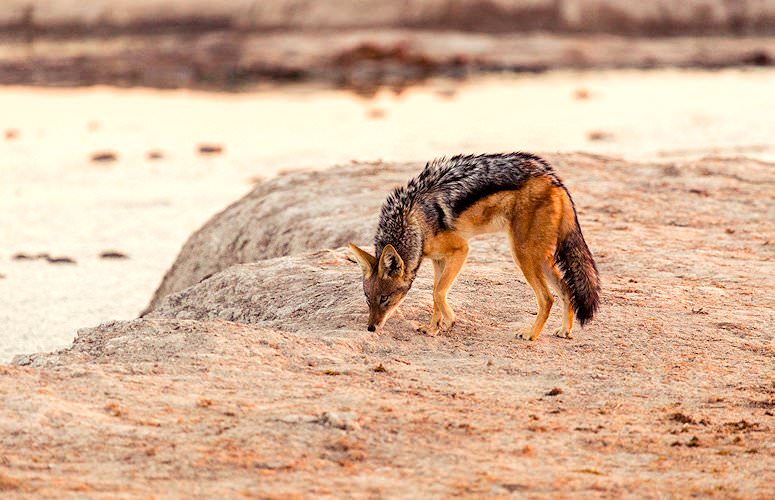
Once the rainy season starts in November or December, thousands of animals migrate in herds to the Nxai Pan National Park. The park transforms from an arid wasteland into a “Garden of Eden.” The waterhole, 2 km from the main entrance, is the best place to see all these animals interacting. Permanent residents of the area surrounding the waterhole are lion, giraffe, kudu, impala, ostrich, fascinating birdlife, large numbers of springbok, a sizable jackal population, bat-eared fox, and numerous smaller creatures. Staggering numbers of animals join these residents during the rainy season as herds of thousands of zebra, gemsbok, and wildebeest migrate to this area.
Vegetation & Terrain
In essence, the park is an arid wasteland during the dry season from May to October, when it becomes so dry that animals have to fight for food and water. There are different types of vegetation in various parts of the park. In the northern part of the park, the soil tends to be almost clay-like because of the high moisture present; trees like mopane grow here. Most of the park is void of trees and covered in short grass only.
Activities
Game viewing is best in the rainy season, from November to April, as the zebra migration reaches the Nxai Pan. It includes large numbers of zebra. Other animals you might see include wildebeest, springbok, lion, cheetah, and many more. Baines Baobabs is a sight you must see when visiting the pan. It is a cluster of seven baobab trees in the middle of a dry salt pan. Some of these trees are over a thousand years old. They were stumbled upon by Thomas Baines, who immortalized the image on canvas — a picture that later became iconic. This cluster of trees is a national monument and still looks the same as when Baines painted it in the 1800s. Birdwatching is also a favored activity for visitors to Nxai Pan, with the chance to observe great flocks of flamingo and pelican, as well as Kori bustard, korhaan, and red-necked falcon.