- Home
- >
- African Safari
- >
- Tugela Falls
Tugela Falls in the Drakensberg
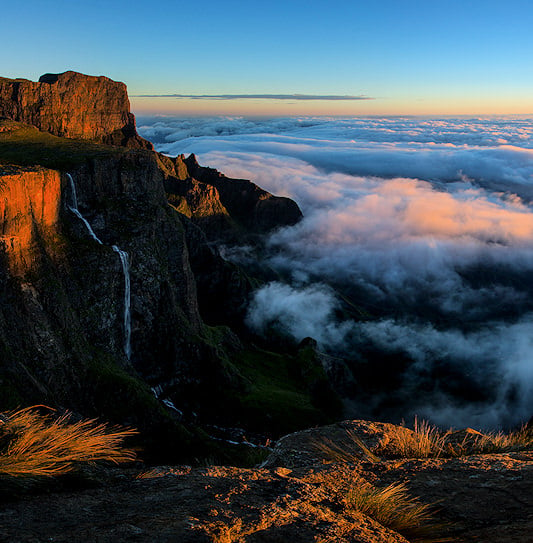
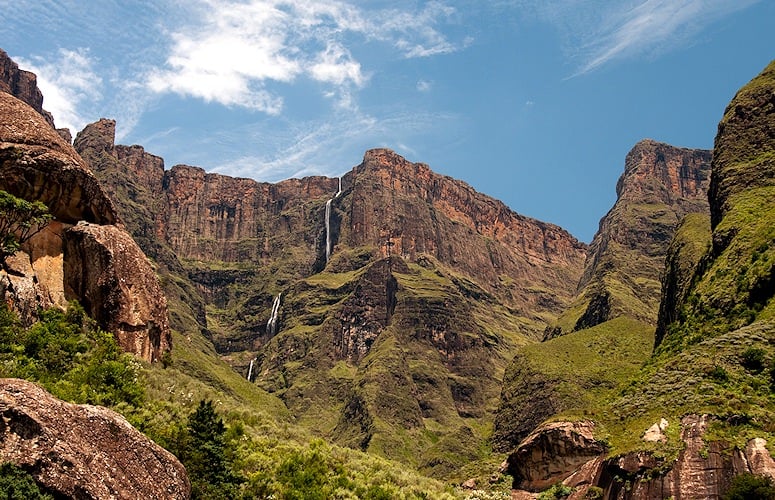
Tugela Falls plunges nearly a full kilometer from the escarpment of the Drakensberg’s Amphitheatre, creating one of the tallest waterfalls on the planet and the highest in Africa. Viewed from the valleys below or reached on rewarding mountain trails, the falls are a dramatic highlight of any journey through South Africa’s highlands.
In the summer rainy season, Tugela’s ribbon of water can be seen directly from the main road through Royal Natal National Park, but the most memorable views are earned on foot. Two main trails offer different perspectives: a challenging hike to the top of the Amphitheatre via chain ladders from the Sentinel car park, and a shorter valley route from within the park to the base of the falls, weaving through lush indigenous vegetation and boulder-strewn riverbeds.
The World's Second-Highest Waterfall in the Kwazulu-Natal Drakensberg
Area and Setting
Tugela Falls lies in the northern Drakensberg, where sheer basalt cliffs rise abruptly from rolling foothills to form the Amphitheatre escarpment. This is classic high-mountain scenery: sweeping grassy slopes, rocky ridges and deep-cut valleys with ever-changing views of the Tugela River far below. Royal Natal National Park and the nearby uKhahlamba Drakensberg World Heritage Site protect both the landscape and the rich birdlife, flora and San rock art found in the area.
Most visitors experience Tugela as part of a broader stay in the Drakensberg, combining waterfall views with other hikes, scenic drives and time at a country lodge or mountain retreat. The air is crisp, the weather can change quickly, and the sense of space is immense – it feels a world away from South Africa’s cities and safari areas.
What to Expect on a Visit
A day at Tugela Falls typically revolves around hiking. After checking in at either Royal Natal National Park or the Sentinel car park (for the summit route), you’ll follow marked mountain paths that gain height steadily, with regular stops to admire the views. Expect a mix of contour paths, rocky sections and, on the Amphitheatre route, exposed chain ladders that require a good head for heights.
The valley route to the base of the falls is shorter and more sheltered, following the Tugela River through indigenous forest, across footbridges and boulder fields to a viewpoint near the plunge pool. The summit route is longer and more demanding, but rewards hikers with sweeping panoramas from the top of the escarpment and the chance to look over the edge into the valley below when conditions allow.
Seasonality and Conditions
Tugela Falls is most dramatic in the summer rainfall months, when storms feed the river and the waterfall often flows strongly. Trails can be muddy and afternoon thunderclouds build quickly, so an early start is recommended. In winter, the air is clearer and the hiking more comfortable, but the falls may be reduced – or occasionally frozen into delicate ice ribbons after very cold spells in the high mountains.
Weather in the Drakensberg can shift rapidly at any time of year. Even on warm days at lower elevations, conditions on the escarpment can be cool and windy. Proper footwear, layered clothing, sun protection, snacks and sufficient water are essential for a safe and enjoyable outing, whether you choose the base or summit trail.
Riaan's Tips for Visiting Tugela Falls
Choose the Right Route for Your Fitness and Head for Heights
The Amphitheatre route via Sentinel and the chain ladders is unforgettable, but it does require reasonable fitness and confidence with heights. If anyone in your party is nervous about exposure or not keen on a long day in the mountains, the valley trail to the base of Tugela is a fantastic alternative – still scenic, shorter, and with less dramatic drops underfoot. When in doubt, I lean towards the base route for mixed-ability groups and save the summit for strong, keen hikers.
Start Early and Respect Mountain Weather
Aim to be on the trail soon after gate opening times, especially in summer. Mornings are cooler, the light on the Amphitheatre is beautiful, and you’ll be off the higher ground before afternoon thunderstorms are likely. I always recommend checking the forecast the evening before, packing a light rain jacket even on seemingly perfect days, and turning around if mist or storms roll in – the views will still be there on your next visit.
Use a Local Guide and Make Time in the Drakensberg
While confident hikers can follow the marked paths independently, a local guide adds a huge amount of value – from route choices and safety decisions to insights on geology, birdlife and the surrounding San rock art sites. If your schedule allows, spend at least two to three nights in the area rather than rushing in for a single hike. Building in a weather “buffer” day gives you a better chance of seeing Tugela at its best and lets you enjoy some of the other superb walks in Royal Natal and the greater Drakensberg.