• USD
  • EUR
  • GBP
  • AUD
  • CAD
  • ZAR

Cape Point

Help Me Plan

Explore the Legendary Cape Point

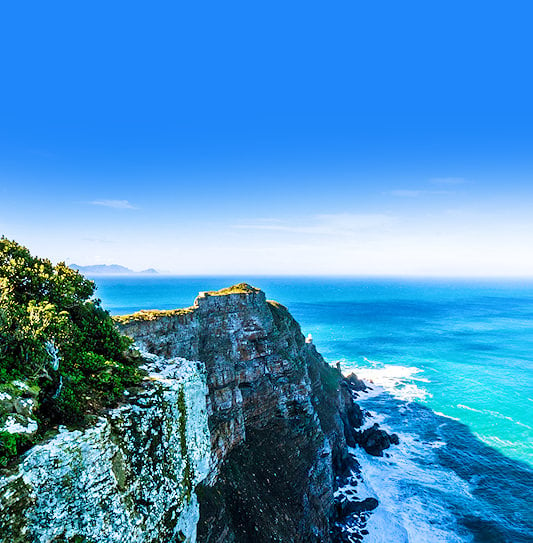
Cape Point crowns the southern end of the Cape Peninsula within Table Mountain National Park. Ride the Flying Dutchman funicular to the old lighthouse, explore cliff-edge paths with sweeping Atlantic and False Bay views, and refuel at the Two Oceans Restaurant. The Cape of Good Hope, Africa’s most southwesterly point, sits just to the west.
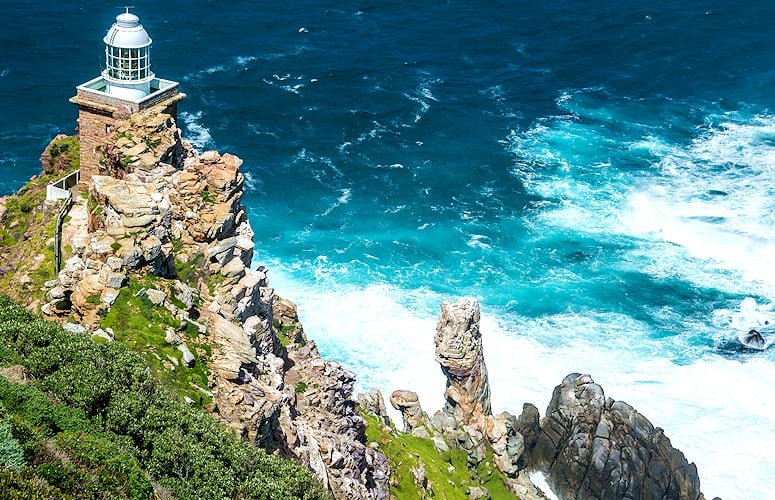
Views, lighthouses and the Flying Dutchman funicular at Cape Point, Table Mountain National Park
Location
Cape Peninsula, within Table Mountain National Park
Funicular
Flying Dutchman to the viewing point below the old lighthouse
Lighthouses
Old light (1859–1919) high on the peak; new lower light built 1919
Signature dining
Two Oceans Restaurant overlooking False Bay
Wildlife
Ostrich, baboon, antelope and rich birdlife (do not feed wildlife)
Trails
Clifftop paths and shipwreck routes with dramatic vistas
Safety note
Strong surf; no lifeguards at beaches like Diaz—swimming not advised
GPS
≈ −34.357, 18.497 (see map marker below)

Plan your day at Cape Point

Lighthouses and the Flying Dutchman

Start at the lower station and ride the Flying Dutchman funicular to the viewing area beneath the old lighthouse. Built in 1859 at the summit, the original light was often hidden by cloud; the current lighthouse was constructed lower down in 1919 and remains the most powerful on South Africa’s coast. The platforms offer expansive views across False Bay and the Atlantic, with interpretive signs that outline maritime history and famous shipwrecks along this rugged shoreline.

Wildlife, etiquette and facilities

The reserve shelters ostrich, antelope, chacma baboons and prolific birdlife. Enjoy close views from safe distances and never feed animals—baboons, in particular, can be inquisitive and bold around food. Facilities include the Two Oceans Restaurant with sweeping bay views, takeaway options and curio shops. Beaches are unpatrolled, and Diaz Beach is notorious for rip currents; admire from the viewpoints and stick to designated paths and boardwalks to protect fragile fynbos.

Trails, viewpoints and the “two oceans” myth

Short cliff paths lead to superb lookouts, and longer routes trace the coast past shipwreck sites. The Cape of Good Hope, a short drive or hike away, is Africa’s most southwesterly point and a classic photo stop. Many visitors believe the Atlantic and Indian Oceans meet here; officially, their boundary is at Cape Agulhas, about 150 km to the east-southeast. Even so, Cape Point’s headlands and changing currents create dramatic seas and unforgettable scenery.

Last Updated: November 21, 2025 Curated By: Riaan Viljoen