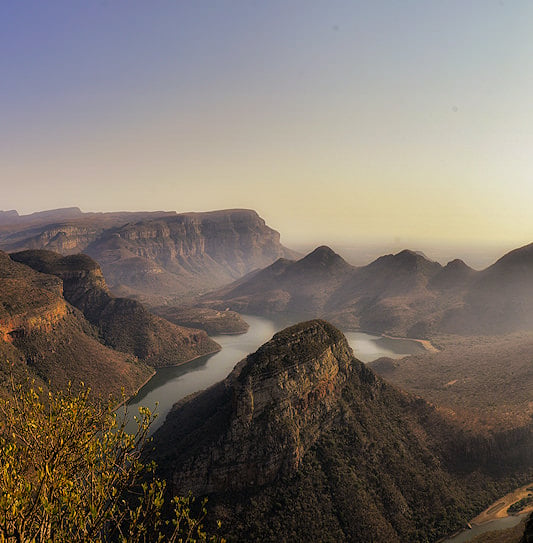
Blyde River Canyon
Help Me Plan- Home
- >
- African Travel
- >
- South Africa
- >
- Attractions
- >
- Blyde River Canyon
Why Blyde River Canyon Anchors the Panorama Route
Carved into the Drakensberg escarpment in Mpumalanga, Blyde River Canyon is a lush “green canyon” celebrated for sweeping cliffs, layered sandstone, and far-reaching Lowveld views. Signature lookouts include the Three Rondavels and nearby God’s Window, with Bourke’s Luck Potholes showcasing sculpted rock at the Blyde–Treur confluence. It’s an easy add to Kruger itineraries, with short walks to dramatic viewpoints.
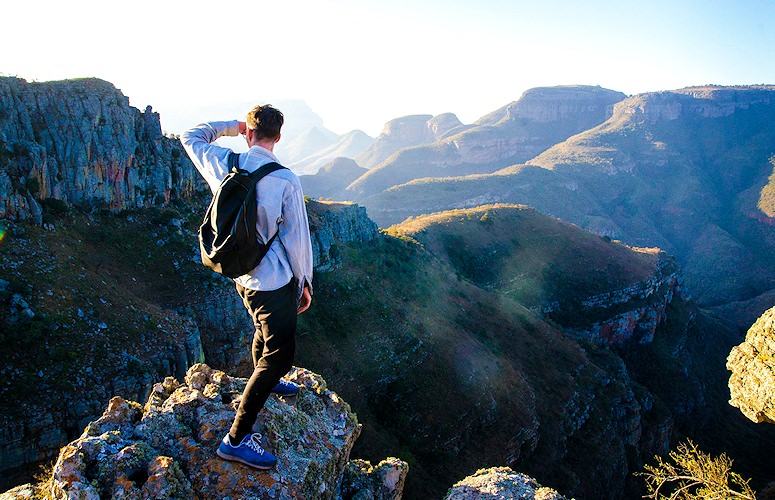
Planning Your Visit
What You’ll See at the Lookouts
From the terraces above Blydepoort Dam, the canyon unfolds in tiers of rust-colored rock, indigenous forest and the rounded buttresses of the Three Rondavels. Short paths lead to fenced viewpoints with wide horizons when cloud lifts. On clear days you can trace the river’s arc and the dam below; misty mornings reveal moody textures and occasional rainbows after showers. Expect boardwalks or stone steps in places, railings at the main platforms, and basic facilities at popular stops. Give yourself time—light and shadow change quickly along the escarpment and can transform the scene within minutes.
Route, Fees, and Practical Tips
Most visitors link the highlights along the R532 and R534 in a simple loop from Graskop: God’s Window and the Pinnacle, Bourke’s Luck Potholes, Lowveld View and the Three Rondavels. A modest per-person fee applies at several sites; carry small cash or cards where accepted. Parking fills on weekends and school holidays, so arrive early for easier bays and softer light. Shoes with grip are best on uneven stone, and a light jacket helps with sudden wind or drizzle. In summer, bring water and a lens cloth—spray and humidity can fog glass around viewpoints near the dam.
Geology, Nature, and Best Seasons
The canyon’s quartzite and sandstone walls record ancient uplift and erosion that diverted rivers and sculpted sheer cliffs over immense time. At the Blyde–Treur confluence, swirling currents carved the cylindrical basins known as Bourke’s Luck Potholes, a textbook display of fluvial power. Vegetation stays green through most of the year, earning the “green canyon” nickname, with summer rains boosting waterfalls and seasonal seeps. Birders scan for raptors riding thermals along the rim, while photographers prize polarized skies and long views after cold fronts. Summer (Nov–Mar) brings peak flow; winter often delivers crisp air and exceptional visibility.