• USD
  • EUR
  • GBP
  • AUD
  • CAD
  • ZAR

Guided Bush Walks in Southern Africa

Experience the bush on nature's terms.
Help Me Plan

Tracking Wildlife, Identifying Spoor, and Reading the Bush

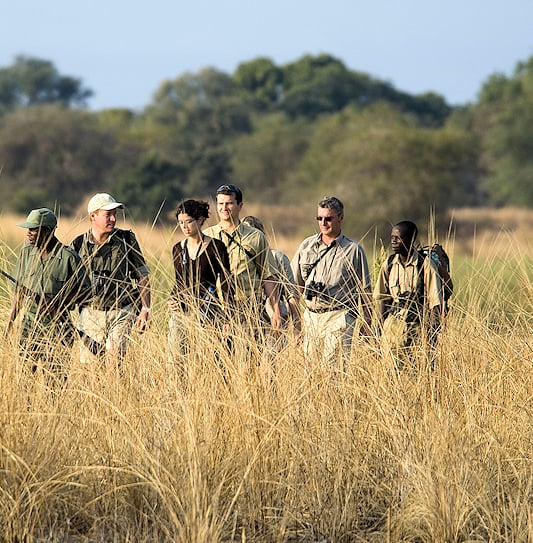
Guided bush walks place you on foot in the African wilderness, trading the comfort of a vehicle for the thrill of moving quietly through the bush alongside an expert ranger and tracker. Every sound, scent and track is amplified, offering an intimate safari experience that reveals the smaller details, subtle signs and hidden stories of the ecosystem around you.

Bush walks are typically conducted in the cool of the early morning or late afternoon in small, guided groups. Your armed ranger will interpret tracks, spoor and behavior, explaining everything from bird calls and insect life to the habits of larger mammals. In areas like South Africa’s Kruger National Park and the surrounding private reserves, bush walks invite you to slow down, engage all your senses and experience the wilderness on its own terms.

Activity Type
Guided on-foot bush walk with armed ranger
Typical Duration
2–3 hours (morning or late afternoon)
Group Size
Usually up to 6–8 guests per walk
Primary Regions
Kruger, Sabi Sand, Timbavati & other private reserves in Southern Africa
Experience Highlights
Tracking, birding, plants, insects & close-up ecosystem insights
Ideal For
Active travelers seeking an immersive, low-impact safari
Fitness & Terrain
Gentle to moderate walking on uneven natural ground
Safety & Age Limits
Strict safety protocols; minimum age & health requirements apply

General Activity Information


Area and Setting

Guided bush walks are offered in many of Southern Africa’s most celebrated wilderness areas, from private reserves bordering the Kruger National Park to remote conservancies in the Lowveld and beyond. These walks take place in unfenced ecosystems where wildlife roams freely, and where you move quietly on foot through savanna, riverine woodland, drainage lines and rocky outcrops instead of viewing the bush from a vehicle.

Most lodges use carefully selected walking areas close to camp or within their private traversing concessions. Routes are chosen according to recent animal activity, wind direction and terrain, ensuring that every outing balances interest and safety. Away from engine noise, you become acutely aware of bird calls, distant alarm snorts and the rustle of animals moving through the grass, gaining a much richer feel for how the ecosystem fits together.

What to Expect on a Bush Walk

Before setting out, your armed ranger will explain basic safety procedures, walking formation and hand signals. Groups generally walk in single file, with the guide in front and a second guide or tracker at the rear. The pace is unhurried, with frequent stops to examine tracks, identify plants and interpret signs such as dung, territorial markings and feeding evidence.

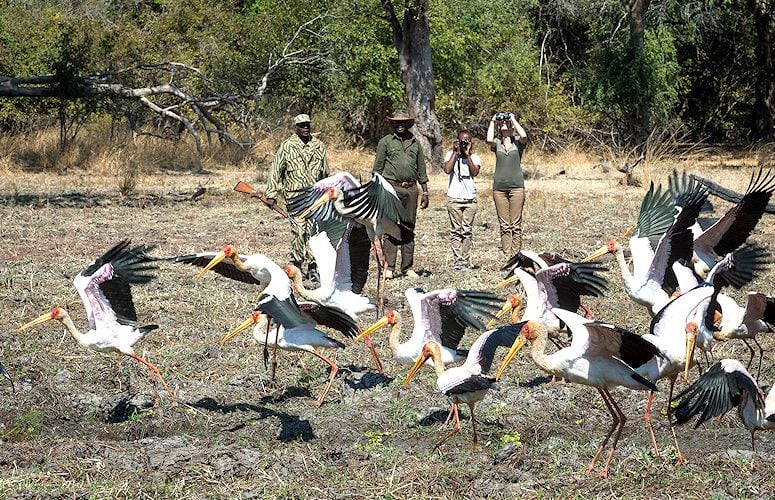
While large mammals are always a possibility, the real essence of a bush walk lies in the details — learning to read spoor, noticing the work of termites, studying bird behavior and understanding how predators and herbivores use the landscape. Your guide will position the group carefully whenever wildlife is encountered, keeping a safe distance and allowing you to observe animals without disturbing their natural behavior.

Best Time of Day and Year

Bush walks are almost always scheduled for the cool parts of the day, starting just after sunrise or in the late afternoon. Early morning outings often reveal fresh tracks from the night’s activity and crisp, clear air, while afternoon walks showcase golden light and the sounds of the bush preparing for evening.

Walks operate throughout the year, with each season offering something different. In the dry winter months, visibility is excellent and tracks are easier to read on firm ground, whereas the green season brings lush vegetation, vibrant birdlife and dramatic skies. African Sky consultants match lodges and regions to your fitness level, interests and preferred time of travel, ensuring that bush walks complement your overall safari experience.

Riaan's Tips for Bush Walks


1

Dress for Comfort and Subtlety

Wear neutral, earthy colors that blend into the environment and avoid bright whites or vivid tones that can attract attention. Closed, comfortable walking shoes or lightweight hiking boots are essential, along with a hat, sunscreen and a light layer for cool starts. Leave loose items that can rattle or shine back at the lodge so you move quietly and comfortably.

2

Focus on the Small Things

Don’t judge a bush walk purely by how many large animals you see. Some of the most memorable moments come from studying tracks, insects, birds, plants and subtle interactions that you’d miss from a vehicle. Ask questions, take time to look closely and let your guide unpack the stories written in the sand and soil.

3

Always Follow Your Guide’s Instructions

On-foot safaris are highly controlled and rely on everyone listening carefully. Walk in single file, keep conversation low, and stop immediately if asked to do so. Your guide’s judgment about wind, distance and animal behavior is your best safety tool and allows you to enjoy close encounters in a calm, respectful way that keeps both guests and wildlife at ease.

Last Updated: November 23, 2025 Curated By: Riaan Viljoen