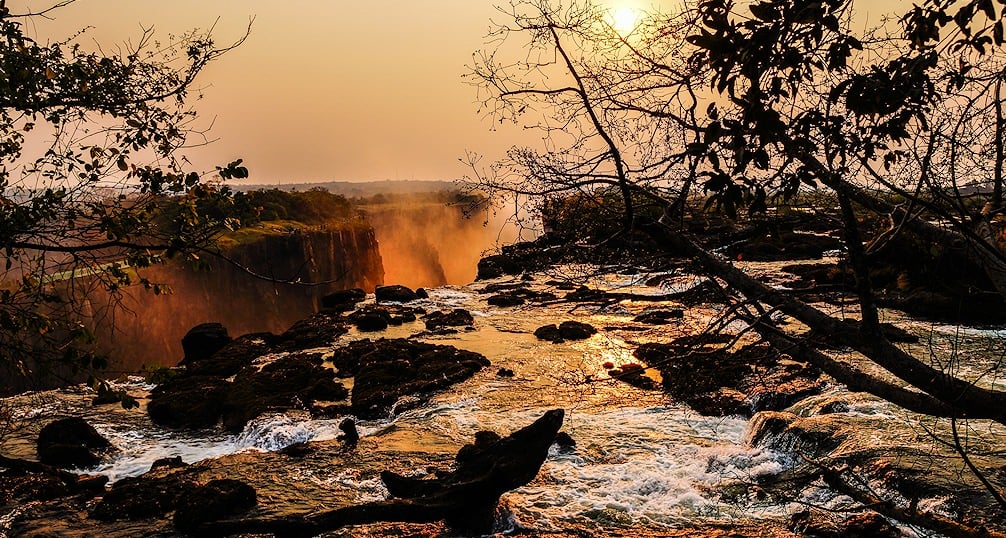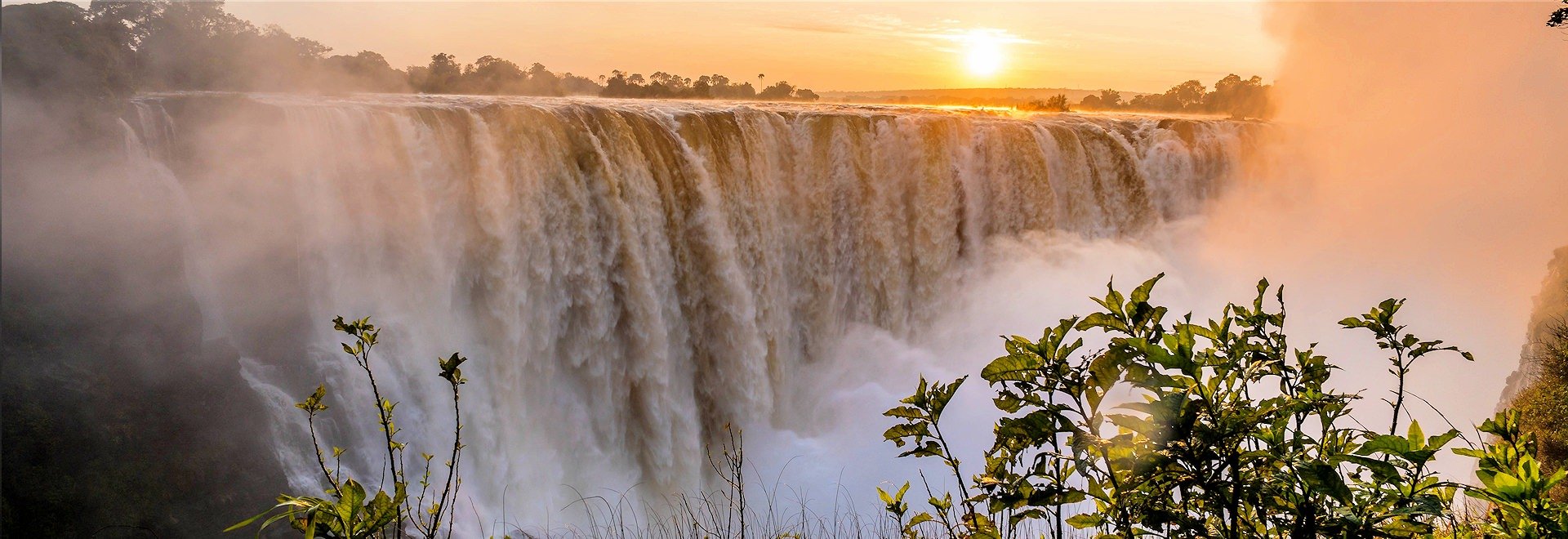
Clouds of spray can be seen from the airplane as you touch down near what the local people refer to as “the smoke that thunders,” offering the first glimpse of the magnitude and splendor of what we today call the Victoria Falls.
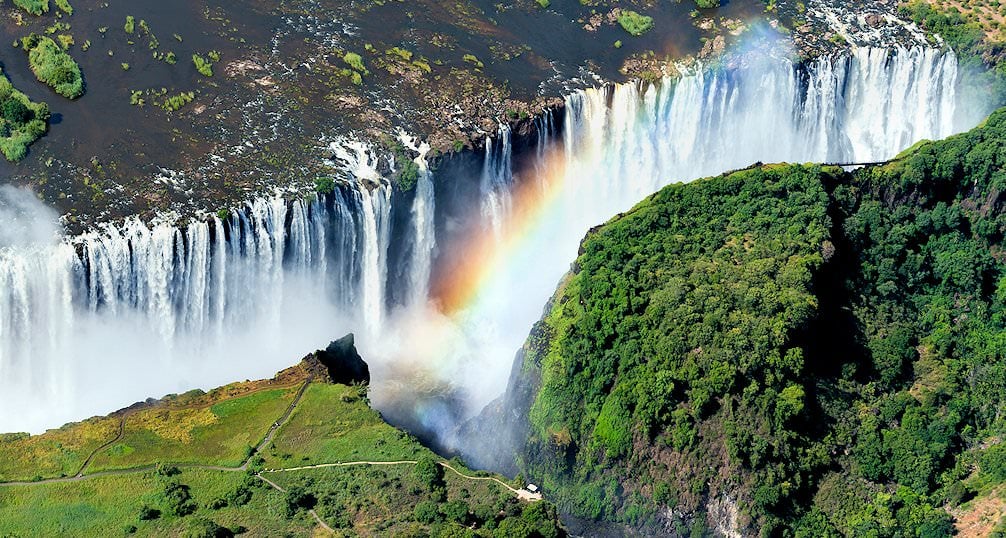
They are the largest falls when taking into account both width and height, creating an almost magical veil along the entire breadth of the Zambezi River as its waters plunge up to 108 meters into the First Gorge in an epic display unmatched anywhere else on the continent.
When David Livingstone, the renowned 19th century explorer, first discovered the falls on behalf of the western world in 1855, he named them after the British Monarch at the time, Queen Victoria, no doubt as a tribute to their magnificence. Hundreds of thousands of visitors come here each year, as Livingstone did over 150 years ago. They come to feel the awe he likely felt at a place that remains one of the natural wonders of the world.
Unlike during Livingstone’s time, however, there is now a wide choice of activities and lodges for those eager to walk in his footsteps.
The falls are about 1,708 meters wide and form the border between Zambia and Zimbabwe, and the site has been a UNESCO World Heritage Site, Mosi-oa-Tunya / Victoria Falls, since 1989. The Zimbabwean side looks across at the main curtain from a rainforest path with a string of viewpoints, while the Zambian side lets you walk close to the Eastern Cataract and out onto the Knife-Edge Bridge. Many visitors see both, and the KAZA UniVisa covers Zambia and Zimbabwe on a single visa for eligible nationalities.
Timing changes the experience completely. The river is at its highest from about February to May, when the spray can hide much of the curtain and soak anyone on the paths. From about September to December, the flow drops, the Zambian side can be almost dry, and the rock face and gorge are easier to see and photograph.
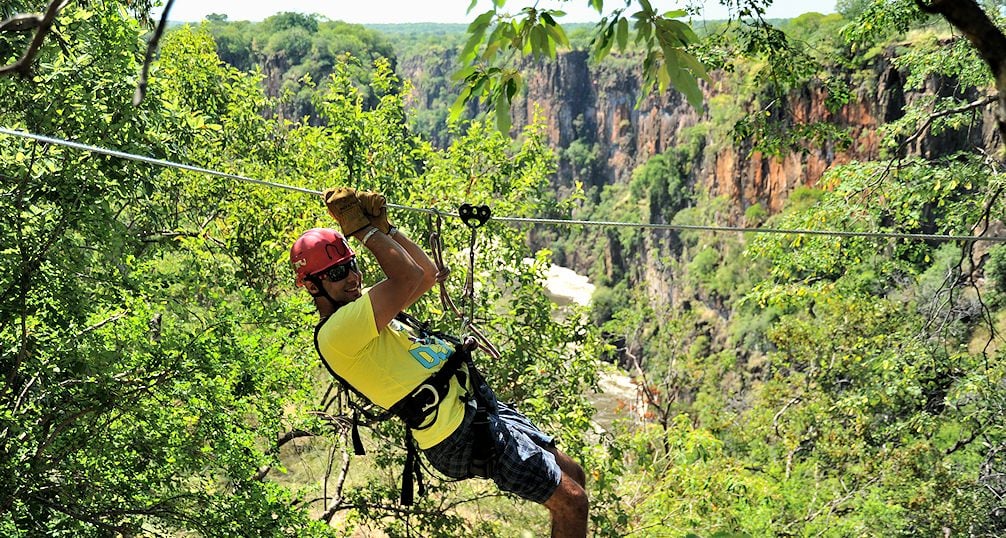
Those looking for a rush of adrenaline or an adventure certainly have a number of activity options worth considering. Among them are white-water rafting just downstream from the falls, microlight or helicopter flights and bungee jumping from the Victoria Falls bridge between Zimbabwe and Zambia. There is also swimming in the famous “Devil’s Pool”, a pool-sized pocket of water on the lip of the falls. From about mid-August to late December, when the water is low, it can be reached from Livingstone Island on the Zambian side. For those looking for a more relaxed experience, there are beautiful sunset cruises all along the Zambezi River upstream of the falls, cultural tours of local villages and wildlife viewing at sanctuaries in the area. A Zambezi sunset cruise is included on our honeymoon from the Sabi Sand to Chobe.
Elephant-back rides were once sold here, but they are now widely regarded as unethical, and Wild Horizons, the main operator at the falls, announced in 2017 that it would stop offering them. We do not include elephant riding on any trip. The best way to see elephant is in the wild, on a game drive in the Zambezi National Park in Zimbabwe or Mosi-oa-Tunya National Park in Zambia, or from a boat when herds come down to the river to drink. Our Victoria Falls safaris combine the falls with time on the river.
With amazing views of the natural world and experiences you are likely to share with friends and family for years, a camera is a necessity here, for the social media enthusiast, family scrapbooker or casual photographer alike.