• USD
  • EUR
  • GBP
  • AUD
  • CAD
  • ZAR
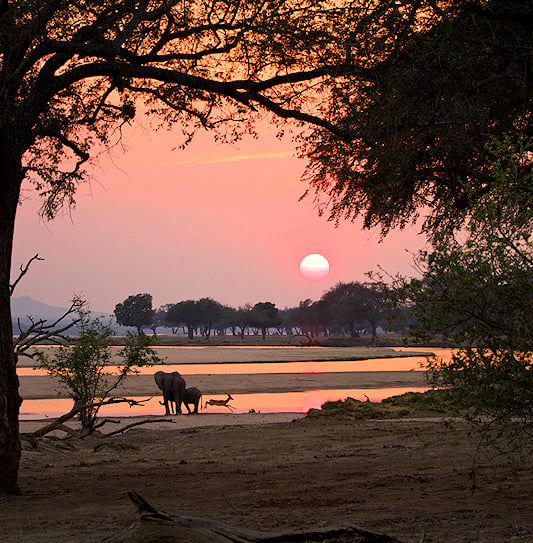
An elephant and a leaping antelope on a riverbank at sunset, framed by large trees in Mana Pools.

Zimbabwe'sMana Pools National Park

Help Me Plan

Mana Pools National Park Destination Guide

Mana Pools National Park, a UNESCO World Heritage site on the Zambezi, protects 219,600 hectares of wild floodplains, woodland, and the iconic four pools. Access is seasonal; during the dry months wildlife concentrates along the river, making walking and canoe safaris exceptional. Lush summer rains transform the valley and bring rewarding birding.

Getting to Mana Pools National Park

By Air: Mana Pools National Park lies in the Zambezi Valley in northern Zimbabwe and is typically reached by charter flight from Harare or Victoria Falls to an airstrip in the park. The road from Harare descends the escarpment and ends on long gravel tracks, and the drive takes most of a day, which is why most of our guests fly.

Weather & Best Time To Visit

Access is limited or closed to vehicles during the rainy season, roughly from mid/late November to March, when drenched floodplains hinder travel. As conditions dry from April, the valley greens up. Wildlife viewing is strongest from July to October, while late spring and summer bring intense heat and excellent birdwatching.

A young elephant calf walking beneath thick, fallen tree branches in Mana Pools National Park.

Elephant and wild dog are seen regularly on the river terraces. Small camps on the Zambezi’s banks, such as Nyamatusi Camp, look straight onto the water, and guided canoe trails run in the dry season.

Location
Lower Zambezi Valley
Size
219,600 ha
Bird Species
~350
Ramsar Site
2013
UNESCO Status
1984
Best Season
Jul–Oct
Top Activity
Walking safari
Signature Species
African wild dog

Reasons to visit Mana Pools

1

Genuinely Wild

Mana Pools remains a remote wilderness with only a handful of lodges and camps along the river. In certain zones, unguided walking is permitted under park rules; for safety and interpretation, guided experiences are strongly recommended.

2

Safari Activities

Explore on foot with a lodge ranger, paddle guided canoe trails on the Zambezi, or join open 4x4 game drives in the morning and late afternoon. These complement superb photographic opportunities in the late dry season.

3

Birder's Paradise

When water persists on the escarpment and floodplain, birders can find secretary bird, Goliath heron, Egyptian and spur-winged goose, stork, and bee-eater. Fishing is permitted in designated areas, and diverse flora adds to the appeal.

Start Planning

Experiences to Savor

The park offers distinct experiences, many of them unique to Mana Pools. Most of them happen on foot or on the water, in the open woodland of the river terraces.

Safari guests paddling a canoe along a river while a cape buffalo stands on the grassy bank.

Canoe Adventures

You’re in a small canoe on the broad Zambezi. A few meters away, a hippopotamus surfaces, watches, and slips under again. Below, tigerfish cruise while crocodile bask along sandy banks. The river delivers immersive, guided excitement without equal.
A couple sitting in camp chairs on a sandy riverbank, watching the sun set over the Zambezi River.

Armchair Game Viewing

From the comfort of a 4x4, follow gravel roads to view a pride of lion resting in the shade. Around the pools you might see elephant, antelope, and attentive predators sharing the floodplain mosaic.
An elephant walking through high grass and green shrubs in a woodland setting.

Balancing Act

One of Mana Pools’ signature sights is elephant standing on hind legs to reach the seedpods of towering ana trees, a remarkable display of balance and dexterity.

Useful Information

Wildlife

Look for large mammals including elephant, hippopotamus, Cape buffalo, and varied antelope, alongside predators such as lion, cheetah, leopard, and African wild dog. The river teems with crocodile and fish like tilapia and tigerfish. Birdwatching is superb, with colorful species such as Goliath heron and bee-eater.

Vegetation & Terrain

The park’s name comes from the Shona word for “four,” after the four large pools that the Zambezi left behind as it changed course across the floodplain. The tall ana trees (Faidherbia albida, also called winterthorn) that shade the river terraces drop their pods in the late dry season, which is when the elephant rear up to feed and the park is at its most photographed.

Mana Pools comprises floodplains with winterthorn and mahogany woodland, wild fig, ebony, and scattered baobab. The valley floor lies beneath the Zambezi escarpment, with the river’s seasonal rise and fall shaping habitats and concentrating wildlife as pans and pools contract.

Activities

Directly across the river lies Zambia’s Lower Zambezi National Park, and the two parks together protect one of the wildest stretches of the Zambezi. Standard safari activities in Mana Pools include guided game drives with lodge rangers, immersive walking excursions, and birdwatching. Guests can also enjoy guided canoe adventures and fishing in designated areas on the Zambezi floodplains.

Last Updated: November 6, 2026 Curated By: Riaan Viljoen