- Home
- >
- African Travel
- >
- Namibia
- >
- Sesriem Canyon
Sesriem Canyon Destination Guide
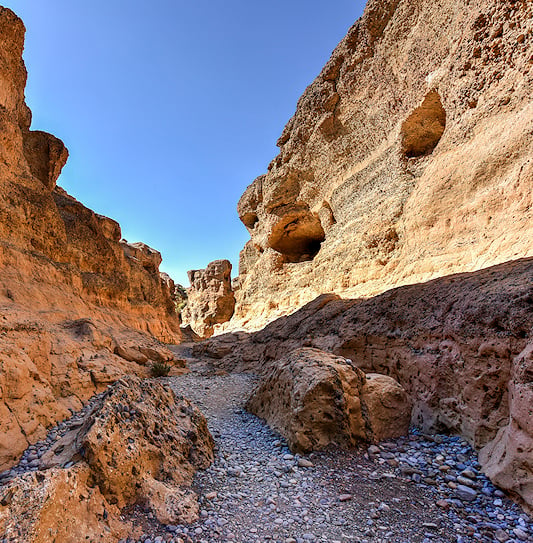
Sesriem Canyon is a narrow gorge cut by the Tsauchab River in Namibia’s Namib-Naukluft Park. About 1 km long and up to 30 m deep, and in places only about 2 m wide, it is usually visited before or after Sossusvlei. Shaded sections, layered rock and pools after good rains make the short walk worthwhile. Sossusvlei, Deadvlei and 4x4 routes through the Namib-Naukluft feature in our guide to Namibian desert adventures.
Getting to Sesriem Canyon
By Road: Sesriem Canyon lies near the Sesriem entrance to Namib-Naukluft Park. African Sky visits the canyon by privately guided, air-conditioned vehicle as part of many Sossusvlei itineraries.
The canyon lies a few kilometers from the Sesriem gate along a short gravel road. Most visitors fit it in on the way back from Sossusvlei, when the tar road returns to Sesriem and the midday heat makes the shade of the gorge welcome. A path leads down from the parking area, and an hour or so is enough to walk along the floor and back. Namibia’s Ministry of Environment, Forestry and Tourism covers Sesriem and Sossusvlei on its official Namib-Naukluft Park page.
Weather & Best Time to Visit
Sesriem Canyon can be visited throughout the year. Daytime temperatures can be high, particularly during summer, so morning or late afternoon is more comfortable for walking. Sections of the gorge remain shaded, while pools at the bottom are replenished after good rains.
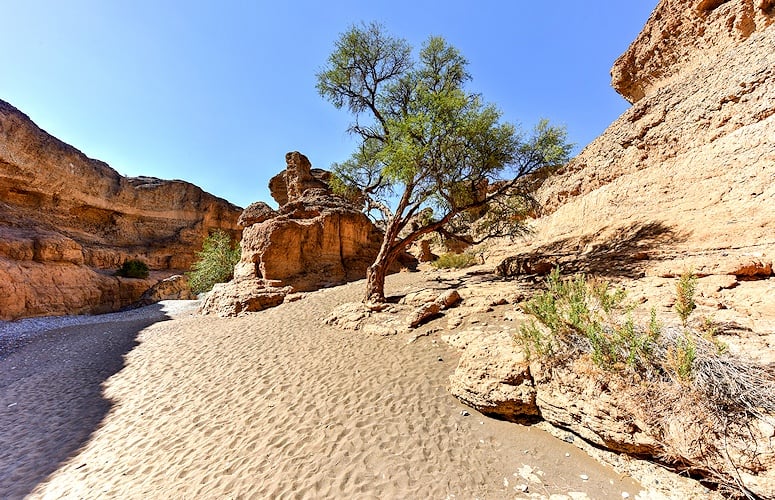
Sesriem takes its name from the six lengths of rawhide thong, or riem, that early travelers tied together to draw water from pools in the canyon. In this extremely dry landscape, access to water made the gorge an important stopping point for travelers and their animals.
Reasons to Visit Sesriem Canyon
Unique Geology
The canyon exposes layers of rock and sediment along steep walls cut by the Tsauchab River. Walking through the gorge gives visitors a close view of erosion and the geological structure of the Namib that is difficult to appreciate from the surrounding desert plains.
The walls are made of gravel and boulders washed down from the escarpment and cemented together about 15 million years ago. The Tsauchab cut down through this conglomerate over roughly the last five million years, leaving the banded cliffs you see today. Downstream, the same river runs west into the dune sea and ends at Sossusvlei, where its floodwater collects in the pan in the rare years when it flows that far.
Pools After Good Rains
Pools can form at the bottom of Sesriem Canyon after good rains. Their presence varies with conditions, but they provide an interesting contrast to the surrounding dry landscape and help explain why the canyon was historically valued as a source of water.
Walk Below the Rim
Descending into Sesriem Canyon provides a very different view of the Namib. Steep walls create long sections of shade, and the walk follows the narrow canyon floor between eroded rock faces. It makes an interesting contrast to the open dune landscapes encountered farther toward Sossusvlei.
Staying close to the gate makes a visit easy. Several lodges and camps lie within a short drive of Sesriem, and you can compare them in our guide to Sossusvlei lodges. Lodges inside the Sesriem gate, or on private reserves with their own access to the park, let you reach the dunes earliest in the morning and leave the canyon for later in the day.