


7-Day Garden Route Self-Drive Tour
Help Me Plan
A Loop Through the Little Karoo and Garden Route
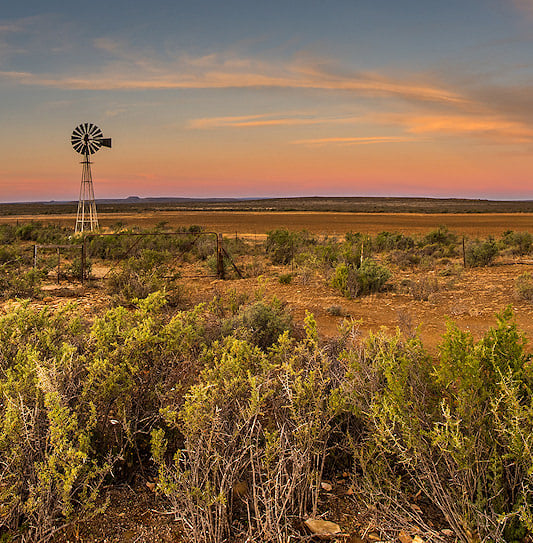
This 7-day self-drive journey begins and ends in Cape Town, linking the semi-arid landscapes of the Little Karoo with the forests, lagoons, and coastline of the Garden Route before a final overnight stay in Arniston on the Overberg coast.
Tour Overview
Ostrich feathers made Oudtshoorn rich twice, and the mansions the feather barons built during the second boom, before the First World War brought it to an end, still stand in town. From the Little Karoo the drive drops to the lagoon and forests of Knysna. It then swings back west to Arniston, a whitewashed fishing village on the Overberg coast, before the return to Cape Town.
Travel Pace & Connections
From Oudtshoorn, the N12 crosses the Outeniqua Mountains by the Outeniqua Pass to George, where the N2 turns east for Knysna. Heading back west, most of the distance to Arniston is on the N2 before the turn south through Bredasdorp, so set off from Knysna early. Arniston to Cape Town takes about two and a half hours.
Ideal For
Seven days give you three quite different stretches of the Western Cape: the bare ridges of the Little Karoo, the coastal forest around Knysna and a whitewashed fishing village. Between June and November, southern right whales come close to the Overberg shore, and the final stretch of coast is at its best.
- 2 Nights Little Karoo
- 3 Nights Garden Route
- 1 Night Overberg
Price Per Person Sharing From:
USD 1,130 - 2,022The price can be reduced by substituting accommodations
What influences prices?
 Tour Ref. Code
 Starting Date
 Starting Point
 Ending Point
 Customizable
 Type
 Accommodation Level
 Countries Visited

South Africa Self-Drive Tour Itinerary: 7-Day Garden Route Self-Drive Tour


Day 1-7: Arrival / Itinerary

Highlights
- Scenic self-drive route through Oudtshoorn, Knysna, and Arniston
- Cango Caves, forests, coastline, and classic Garden Route views
- Seasonal whale watching along the Overberg coast near Arniston
You will depart from Cape Town and travel inland to the Little Karoo, where two nights are spent in the Oudtshoorn area. This semi-arid region is known for dramatic mountain scenery, wide open landscapes, and major attractions such as the Cango Caves in the Swartberg foothills. From here, the route continues to Knysna for three nights, giving you time to enjoy one of South Africa’s best-known coastal regions, with access to indigenous forest scenery, lagoons, beaches, scenic drives, and nearby Garden Route attractions.
The Cango Caves are carved from Precambrian limestone in the Swartberg foothills north of Oudtshoorn. The system runs for more than 4 km, about a quarter of it open to visitors. The Heritage Tour takes about an hour. The Adventure Tour takes about 90 minutes and includes a leopard-crawl through the Devil’s Post Box and a squeeze up the Devil’s Chimney. Back in town, look out for the feather palaces built by the ostrich barons in the years before 1914.
At Knysna, two sandstone cliffs called the Heads guard the mouth of the lagoon, once described by the Royal Navy as the most dangerous harbor entrance in the world. You can drive up the eastern head for the view, and the Featherbed Nature Reserve on the western head is reached by boat. Three nights leave room for a day east to Plettenberg Bay and the Tsitsikamma, where a suspension bridge spans the Storms River Mouth.
After your Garden Route stay, continue west to Arniston in the Overberg for a final overnight stop before returning to Cape Town. Arniston is known for its fishing-village character, sweeping dunes, and the Waenhuiskrans sea cave, which can be visited at low tide. If you are traveling during the June to November whale season, this stretch of coast can also offer rewarding land-based whale watching.
In 1815 the East Indiaman Arniston was wrecked on the reef here, and only six of the 378 people on board survived; the settlement later took the ship’s name. Its Afrikaans name, Waenhuiskrans, means wagon-house cliff, after the sea cave that resembles the sheds settlers built for their wagons. At Kassiesbaai, the whitewashed, thatched fishermen’s cottages are more than two centuries old and protected as a national monument.
The final morning’s drive back to Cape Town crosses the rolling wheat farms of the Overberg, yellow with canola in late winter and early spring. Then the N2 climbs Sir Lowry’s Pass, and the view opens over False Bay.
Included

- 2 Nights Adley House
- 3 Nights Knysna Hollow Boutique Hotel
- 1 Night Arniston Spa Hotel

- Toyota Fortuner 4X2 or Similar: Europcar (GROUP I)

- None

- None

- All Activities Included in the Itinerary, Unless Stated as Optional
- All Entrance Fees to Places Mentioned in the Itinerary, Unless Stated as Optional

- Tourism Levy
- All Applicable Taxes
- Park Fees, where Applicable
Excluded

- International Airfare (To and From South Africa)
- Personal and Medical Insurance
- Drinks
- Gratuities
7-Day Garden Route Self-Drive Tour
Other Itineraries You Might Like
The southern Cape can also be driven with Cape Town and the Winelands added, or toured in fewer days.
4-Day Garden Route Breakaway Tour
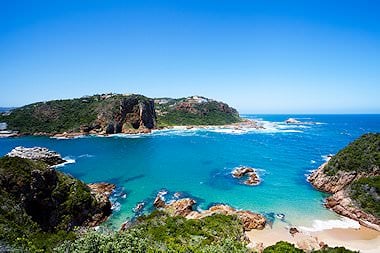
A four-day taste of Oudtshoorn and Knysna, leaving out the Overberg.
8-Day Cape Town & Garden Route Tour
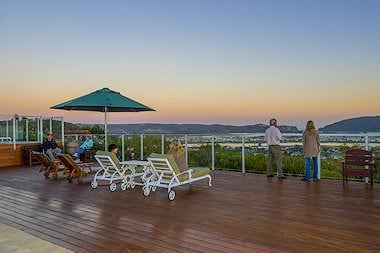
Three nights in Cape Town ahead of a night at Arniston and three in Knysna.
7-Day Winelands, Little Karoo & Garden Route Tour
Begins in the Cape Winelands before crossing the Little Karoo to the coast.
10 Day Southern Route Self-Drive Tour
A ten-day loop by car through Cape Town, Franschhoek and Knysna, using Route 62 on the way out.