General Activity Information
Area and Setting
Elephant encounters take place in carefully managed sanctuaries and protected wilderness areas in Zimbabwe and South Africa. These environments offer ample space for the elephants to roam, forage and interact naturally while giving guests a respectful, close-up experience. None of the encounters we recommend involves riding: the time is spent watching, listening and learning, with animal welfare central to every interaction.
Near Victoria Falls, the Wild Horizons Wildlife Sanctuary covers 4,500 acres of private bush on the Zimbabwean side and is home to a herd of previously orphaned or abandoned elephants. Wild Horizons ended its rides at the end of 2017. Its Elephant Encounter now takes about two and a half to three hours, with a guide leading guests along elephant trails to meet the herd. Wild Horizons’ Elephant Camp stands inside the same sanctuary, within sight of the spray from the Falls. The Lion Encounter outside Victoria Falls town changed in a similar way, ending its lion walks at the end of 2020 in favor of a hide and a drive through the pride’s enclosure.
On the Garden Route, Knysna Elephant Park opened in 1994 and has rescued, raised or relocated more than 40 elephants; visits center on feeding, touching and walking alongside the herd. In the Greater Kruger, Jabulani on the Kapama Private Game Reserve keeps a herd that lives around the camp, and most of its elephant activities are for watching. Guests see the herd swim in a dam and settle in for the night, and carers give a talk in the company of one of the older bulls.
In Botswana, Abu Camp in the Okavango Delta is temporarily closed and is expected to reopen in December 2026. For elephants that live entirely wild, a few days in Addo Elephant National Park near Gqeberha make a good counterpart, with the herds watched from a game-drive vehicle.
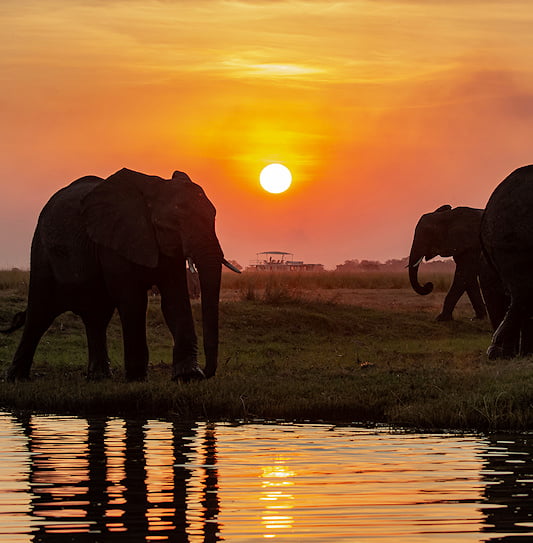
Most encounters begin in a natural bush setting or at the elephants’ holding area, where guests are introduced to the individual elephants, their history and their daily routines. The surrounding terrain may include riverine forests, open savannas or mopane woodland, giving you the chance to observe elephants behaving calmly and naturally within their familiar environment.
What to Expect During an Elephant Encounter
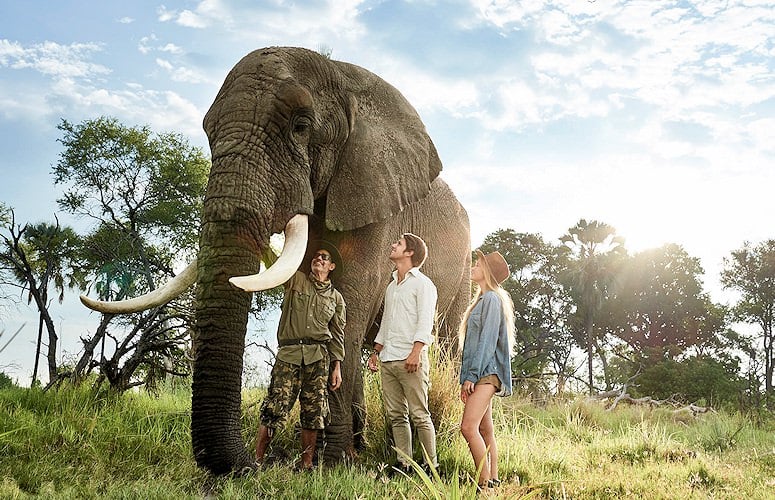
Experiences typically start with a thorough briefing on safety, elephant behavior and ethical interaction guidelines. Under the supervision of trained handlers and conservation guides, guests may walk alongside the elephants, watch them feed, touch their trunk or skin, and learn how they communicate using rumbling calls, scent and body language.
Guides share insights into elephant conservation, the challenges of human–elephant conflict, rehabilitation efforts and the stories behind each elephant in the herd. The atmosphere is calm and immersive, allowing time for observation, photography and quiet moments in the company of these remarkable animals. Every encounter is designed to minimize stress and prioritize elephant dignity. Elephant encounters are one of our eight experiences to consider in Southern Africa, alongside mokoro trips and whale-watching boat rides.
Best Time of Day and Year
Elephant encounters are offered year-round and are typically scheduled in the early morning or late afternoon, when temperatures are cooler and the elephants are most active. These periods offer softer natural lighting for photography and a more comfortable experience for both guests and animals.
While encounters are not season-dependent, the dry season (roughly May–October) often provides clearer visibility and easier access to certain viewing areas. African Sky consultants can guide you toward the best regional options based on your itinerary and the style of elephant interaction you prefer.