


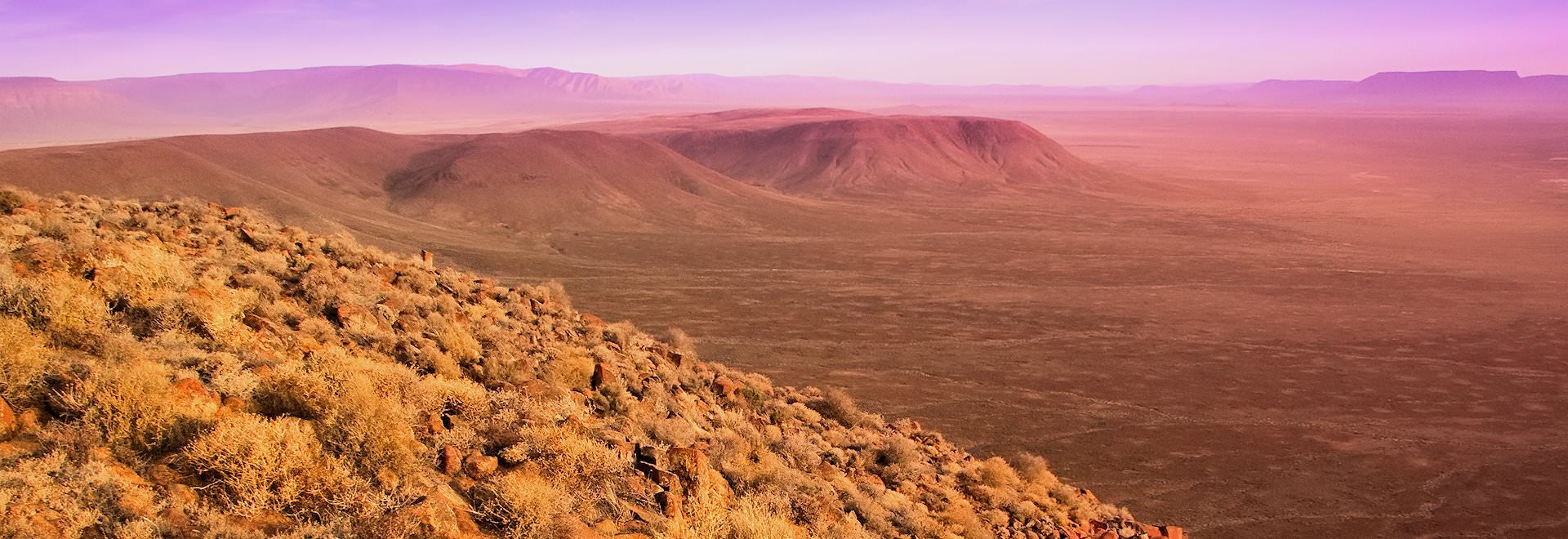
The Karoo Highlands route runs along the border of South Africa’s Great Escarpment. This large mountainous wall runs nearly parallel to the coast across South Africa, dividing coast-side lowlands from the towering central plateau of the country.
This ancient dividing line is starkly visible in the southern part of the Northern Cape, and the highlands to its north have a vastly different climate and overall vegetation mix. This is the beginning of the Karoo proper, a land of cold winters and dry years, of wildflower carpets and stargazing.
Nieuwoudtville
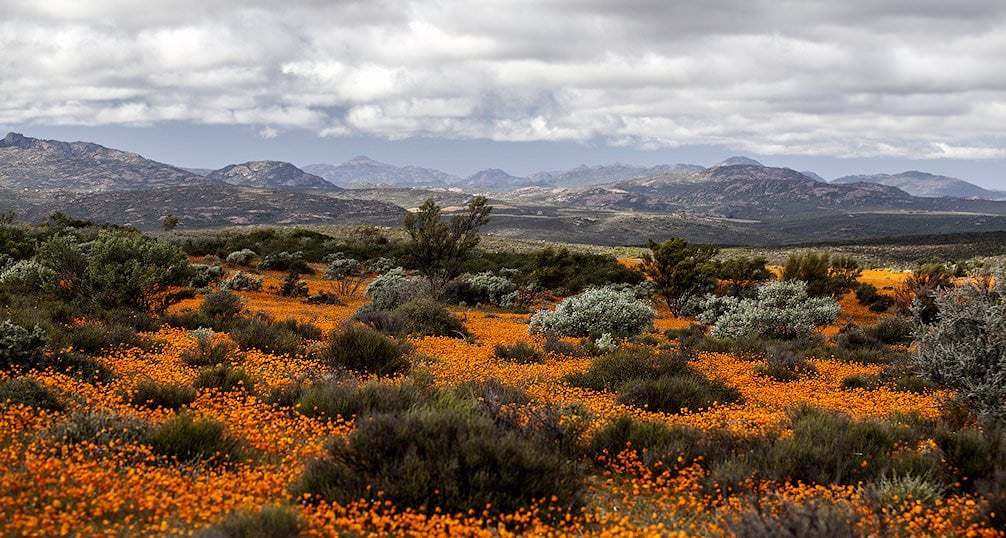
The town of Nieuwoudtville is the first one after the steep ascent up Vanrhyns Pass, a steep and beautifully winding road taking you from Namaqualand to the Karoo Highlands.
The quaint town is on the right-hand side of the road after a short but scenic drive through wildflower meadows and sheep farms. Oorlogskloof Nature Reserve and the Hantam National Botanical Garden preserve the astonishing natural and, in particular, floral heritage and are certainly worth visiting. The district has the greatest variety of indigenous bulbous plants in the world, and just outside town the Nieuwoudtville Falls drop about 100 m on the Doring River.
The Geissorhiza splendidissima, or ‘Blue Pride of Nieuwoudtville,’ is an endemic bright-blue flower to be found in the botanical garden, and emblematic of the richness of the area and the ‘Bokkeveld Escarpment,’ as the mountains that form this section of the Great Escarpment are known.
Calvinia
A further drive down this winding route will bring you to the ‘Karoo-Victorian’ architecture and Dutch Reformed Churches of Calvinia. Succulent lamb, friendly townspeople, and rugby matches are all on the weekly agenda, and visitors to the area can certainly experience Karoo hospitality here. Calvinia, the main town of the Hantam district, was founded in 1851 and named after John Calvin, although European farmers had reached the area in the 1760s, settling alongside the Khoisan communities that had lived there for millennia. The surrounding farms make this one of the country’s largest wool-producing areas. In spring, flower farms near the town open for their displays, and 4x4 routes into the hills pass San rock paintings and sites from the Anglo-Boer War. The many ornate churches in the town are reminders of this history, as is the Calvinia Museum.
Sutherland
Touring the remote corners of South Africa brings one to some of the best places in the world from which to gaze at the stars.
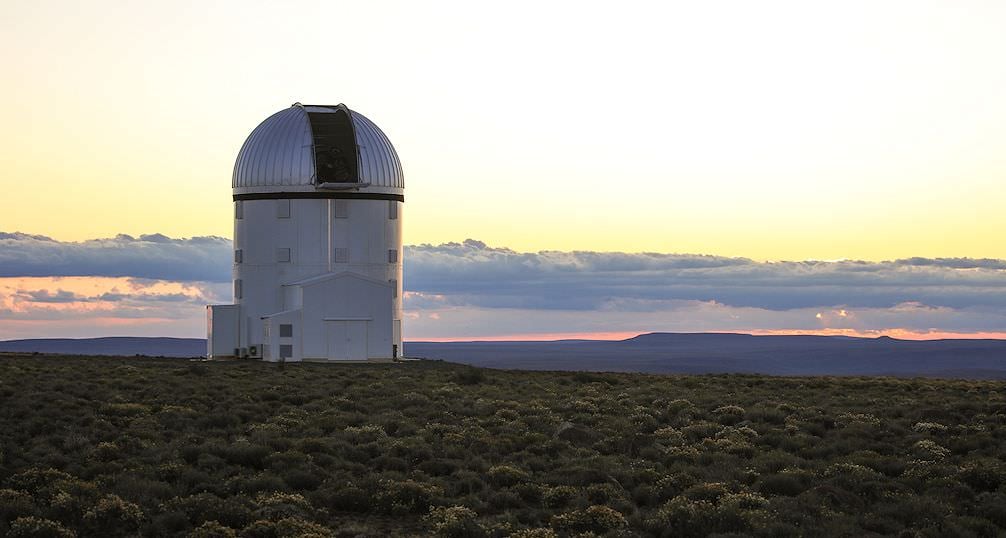
South Africa’s flagship optical telescope, SALT (Southern African Large Telescope), is located just outside the town of Sutherland, while the MeerKAT Radio Telescope array is situated further north near Carnarvon; both are world-class projects defining the Karoo Highlands.
Scientists and space lovers worldwide are drawn here, with SALT being the largest standalone optical telescope in the Southern Hemisphere. Its main mirror, 11 m across, is made up of 91 hexagonal segments. At about 1,450 m in the Roggeveld, Sutherland is also known to South Africans as the coldest town in the country, and the same high, dry air makes it the place to go for stargazing. This quiet town sits among sheep farms and telescopes, quite a distance away from neighboring towns or cities, and reachable only by beautiful passes and roads. Our 10-day off-the-beaten-track Western Cape tour spends two nights in the Great Karoo for the Sutherland skies.
The observatory runs guided day tours of its visitor center and selected telescopes, SALT among them, at 10:30 and 14:30 on weekdays, and night tours several times a week. Groups are limited to 20, and booking is essential. Sutherland nights are cold, so pack warm clothes for the night tours. Beyond Sutherland the route runs on through Williston, Fraserburg, Carnarvon and Loxton to Victoria West, past the corbeled stone houses that early farmers built where timber was scarce.
Matjiesfontein
Though not strictly on the Karoo Highlands Route which runs from Nieuwoudtville to Victoria West, Matjiesfontein is mentioned here because of its singularity: visiting the town feels like a step back in time. The Victorian architecture of the town’s main road is beautifully grand and maintained, with Victorian-style hotels, pubs and restaurants for visitors to enjoy. The town is small, but holds a rich collection of stories of years gone by, and experiences that bring these stories to life. The railway line through the Karoo stops here, and the village transport museum displays vintage cars and steam locomotives. Matjiesfontein heads our list of hidden treasures in South Africa.
James Logan, a Scottish railwayman, founded the village in 1884 as a Victorian health spa and built the hotel now known as the Lord Milner in 1899. During the Anglo-Boer War the hotel served as a military hospital, its turret as a lookout post, and about 10,000 troops camped around the village. Further along the N1, the Karoo National Park outside Beaufort West shows the wild side of the same landscape.