


 Blog
BlogDesert Adventures: Exploring Namibia and the Kalahari
Share this on Social Media


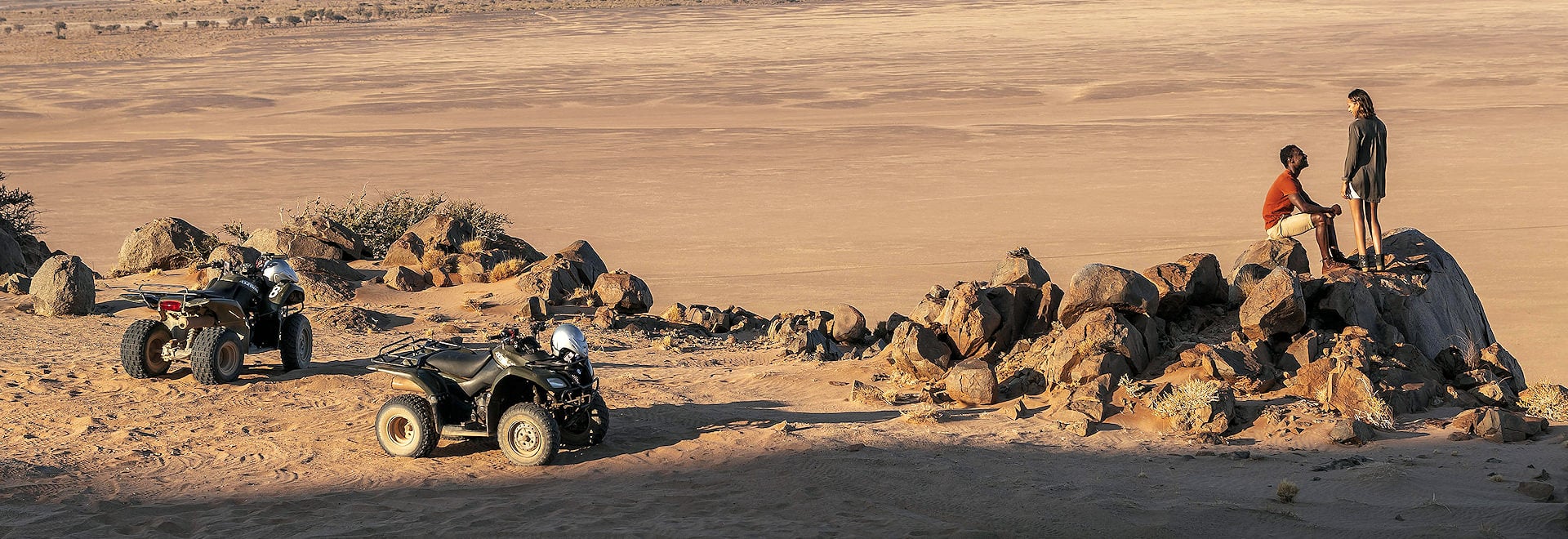
If you are considering a truly unique getaway with a spirit of adventure, then look no further than the country of Namibia, which offers a plethora of world–renowned destinations with diverse activities and attractions. Discover the Namib–Naukluft Park by 4x4, experience tranquility in the midst of striking desertscapes, and meet the ancient San people who have inhabited the Kalahari for millennia—all this under the starry skies visited by stargazers from around the world.
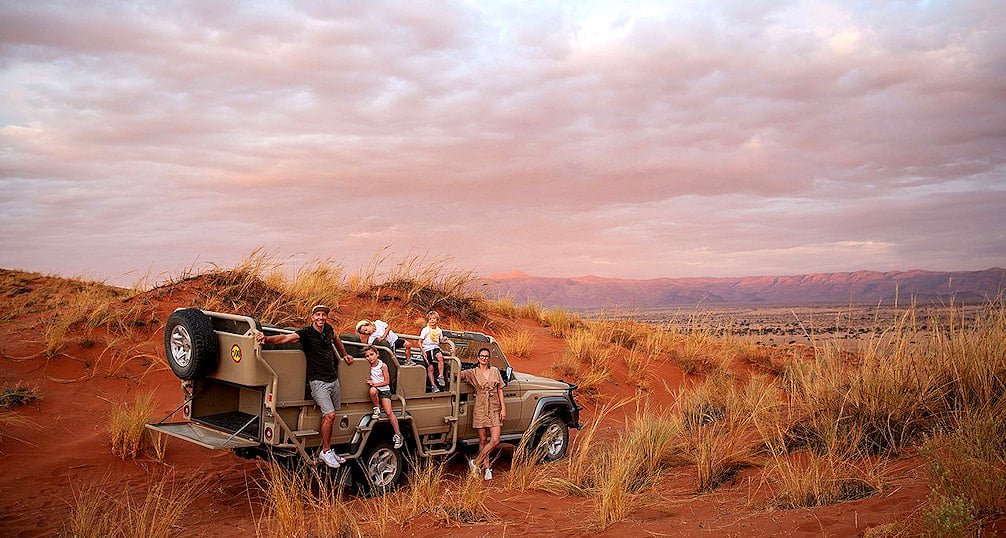
4x4 self–drive through Namib–Naukluft
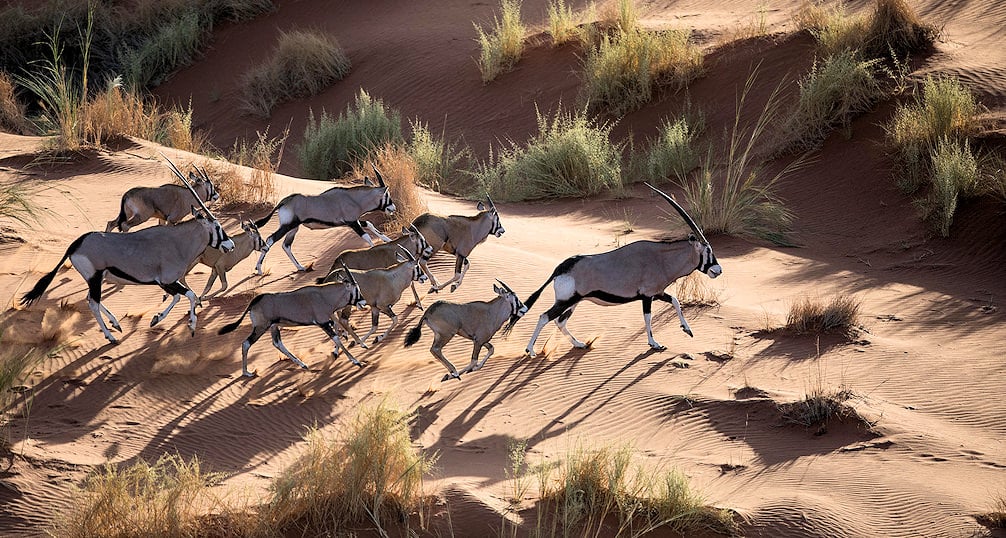
The Namib–Naukluft Park is a vast desert wilderness where the “mountain meets the desert.” Spanning approximately 50,000 km2—making it the largest conservation area in Africa—the region contrasts the massive red dunes of the Namib Desert (Sossusvlei) with the rugged, rocky topography of the Naukluft Mountains. This arid wilderness is inhabited by unique desert animals, including gemsbok (oryx), klipspringer, Peringuey’s adder (sidewinder), the web–footed gecko, and many more.
A self–drive 4x4 trip over this terrain is one of the best ways to take in the scenery and observe mammals and other desert critters as they roam the red–tinted sand and wide–open spaces. The trail is 73 km and typically takes about two days to complete; drivers will encounter narrow, rocky tracks, steep inclines (like the “Zebra Zigzag”), and sharp stones that make navigating a challenge.
A key landmark to visit during the journey is Big Daddy, one of the highest dunes in the world (~325m). The activity is generally safe, but better suited to the adventurous type with vehicles fitted with GPS, dual batteries, 40–litre water tanks, and heavy–duty suspension—tourists must also attend a “crash course” on how to engage 4WD and change a tire before they are handed the keys. Sojourners can stay at basic, rustic camps or overnight in rooftop tents, adding to the authentic experience.
During the expedition, the landscape will be dotted with camel thorn trees, the Welwitschia mirabilis—a “living fossil” plant that can live for over 1,000 years—as well as the quiver tree, named after the San people’s practice of hollowing out its fibrous branches to use as quivers for their poisoned arrows.
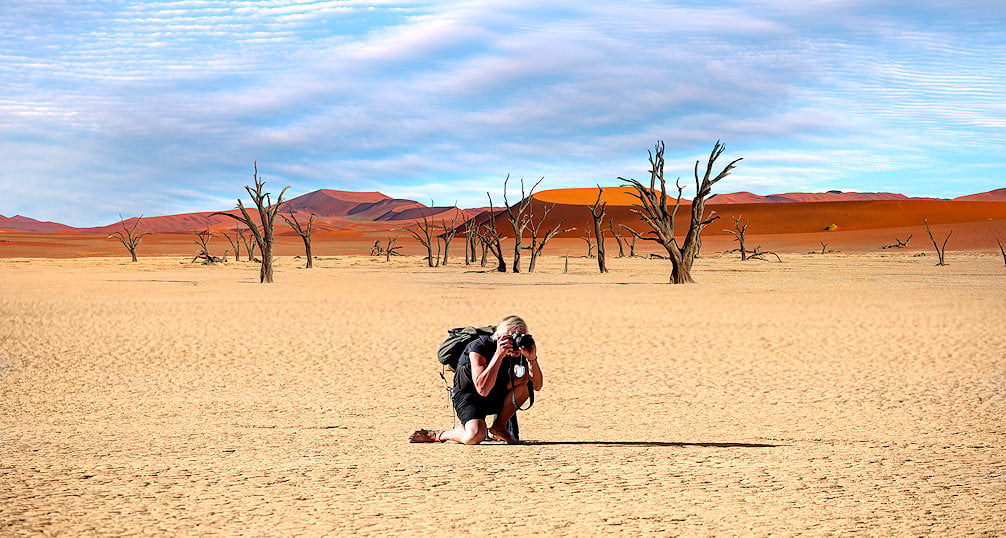
Visiting Sossusvlei and Deadvlei
If roughing it in a 4x4 is not quite your idea of a relaxing vacation then consider the alien–like topography and isolation that Sossusvlei has on offer. The one–of–a–kind picturesque photographer’s paradise is a contrast of black sun—scorched mummified Camel Thorn trees against a blinding white cracked salt pan, surrounded by giant electric–orange dunes.
Dune 45 with a height of ~170 m has a reputation of being “the most photographed dune in the world” and tourists enjoy the challenge of ascending the dune to view the spectacular sunrise—The dunes here are part of the Namib Sand Sea, a UNESCO World Heritage site and some of the oldest dunes in the world. If you defeated Dune 45 fairly easily you could have a stab at Big Daddy, the giant dune of Sossusvlei with a soaring height of 325 m to 350 m—after the taxing climb, tourists enjoy running or sliding down the dune as a reward for their endurance. Another highlight of the area is Sesriem Canyon—a natural canyon carved and sculpted by the Tsauchab River into sedimentary rock layers over millions of years. The 1 km walk through the 30 m deep canyon is mostly shaded and offers a cool retreat from the hot desert sun.
For those looking for a touch of luxury, Sossusvlei offers exclusively designed lodges such as &Beyond Sossusvlei Desert Lodge—high–end and futuristic with a world–class observatory—and Little Kulala, with its classy, natural, and earthy architecture. Activities may include quad–biking, stargazing, and themed desert dinners.
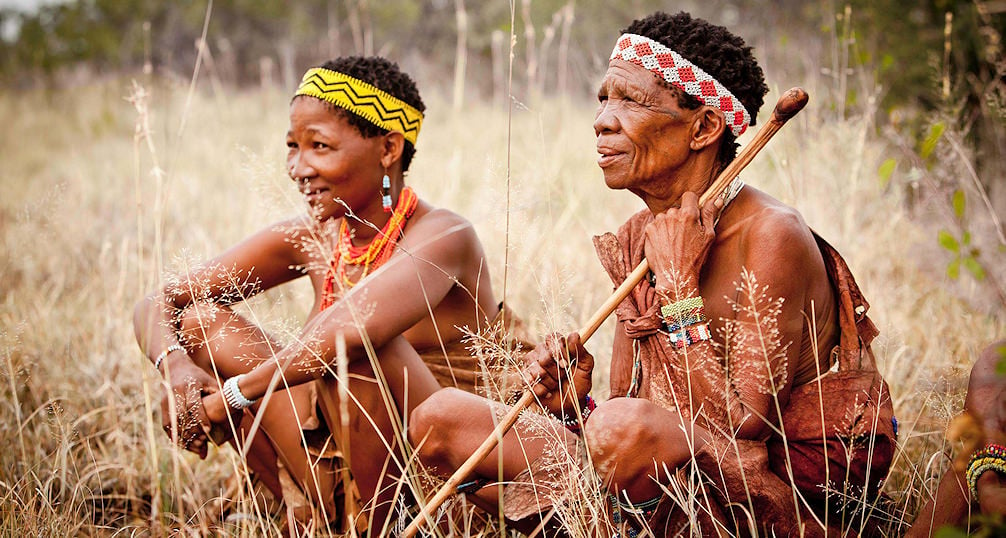
Meeting the San people in the Kalahari
Encountering and interacting with the San people in the semi–arid Kalahari Desert will add a special cultural highlight to your tour of Namibia.
The San have called the Kalahari home for tens of thousands of years and are a resilient people who still practice centuries–old traditions, maintaining a deep respect for the balance of nature. While they are modern Namibian citizens, they keep ancient skills alive to pass knowledge to their children and educate visitors. Excursions are typically guided; meeting the San is not just a show, but an experience where guests participate in a “Bushman Walk.” Here, you learn about animal tracking, medicinal plants, fire–making, traditional bow hunting, and essential survival—such as filling hollowed–out ostrich eggs with water and burying them for the dry season. Guests will delight in experiences like the Healing Dance, a ritualistic dance where the elders enter a trance to heal the sick, or be entertained by the rich stories and fables of the Khoe–San culture. They speak Khoe–San languages, famous for having up to five different “click” sounds
Unique desert wildlife encounters
The desert is a merciless place which offers little to nothing in the fight for daily survival, and yet astonishingly, animals who should usually depend on lush greenery have in time re–written their own biology to see the sand as their sanctuary.
One such example is the desert–adapted giraffe found in the Kunene region, which can be seen silhouetted against a towering 300 m dune. These giraffes have mastered the art of extracting every drop of liquid sustenance from fog–soaked leaves and specialized desert plants like wild melons. Desert elephants have also adapted to the harsh conditions with slender bodies and longer legs which help them trek up to 70 km a day in search of much–needed water; interestingly, they possess a “mental map” passed down through generations to find hidden waterholes. The desert black rhino is the only rhino in the world to live outside a protected park, and they are expert “mountaineers,” scaling steep, rocky ridges in the Damaraland region to reach water–rich succulents.
The Peringuey’s adder, better known as the sidewinder, has a unique S–shaped sideways loop motion for moving across the 70°C (158°F) dunes. It is an expert in camouflage, burying its body in the sand and leaving only its eyes exposed like a periscope to scan for potential prey. They have evolved to collect precious dew from the Atlantic fog on their scales in the form of tiny droplets, which they then lick off their bodies to stay hydrated. The fog–basking beetle collects condensation on foggy mornings by standing on its head on dune crests, allowing water to condense on its shell and trickle down directly into its mouth.
The Dune Lark is the true champion of the Namib Desert and is the only bird species that is 100% endemic to Namibia—living its entire life in the shifting sands of the Namib. This bird is considered a biological marvel that never needs to drink water; it gets all its hydration from a diet of moisture–rich seeds and small insects. Its “sand–colored” plumage is a perfect match for the specific reddish hue of the Sossusvlei dunes, making them difficult to spot as they dart between grass clumps at the base of the towering ridges.
Although not a true desert animal, the black–maned lion is the undisputed king of the Kalahari—a semi–arid area situated roughly 300 km from the Namib Desert. These hardy lions are leaner and lankier compared to their savanna cousins, built for endurance rather than raw power. They thrive in the Kalahari, which is slightly cooler at night and has more “shrub–savanna” cover than the open dunes of the Namib. They, too, have evolved to survive on hydration from their prey and Tsamma melons during periods of drought.
Starlit evening experiences
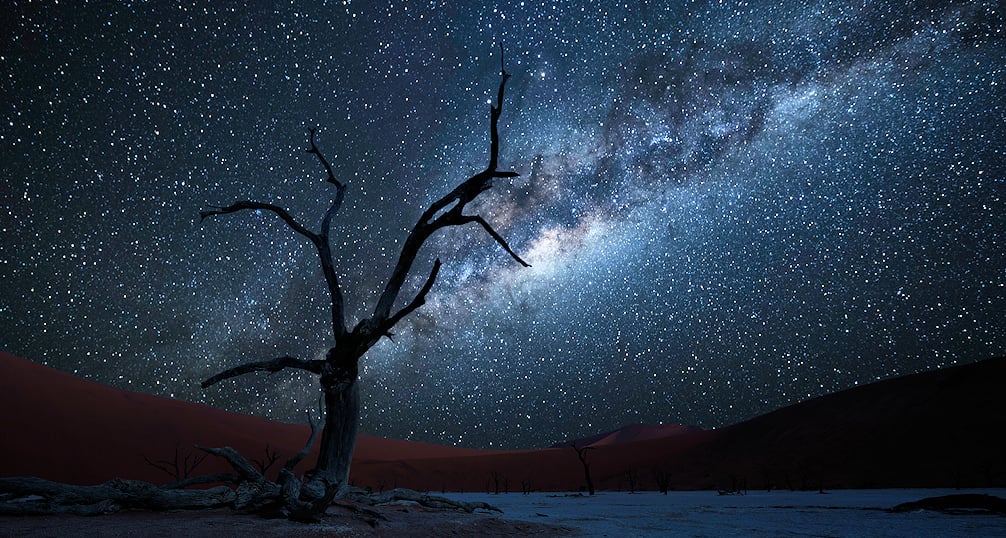
Namibia is one of the top stargazing destinations on the planet. In 2012, the NamibRand Nature Reserve (where Sossusvlei Desert Lodge is located) was declared Africa’s first International Dark Sky Reserve, achieving “Gold Tier” status—the highest possible rating for darkness and clarity.
The &Beyond Sossusvlei Desert Lodge Observatory is equipped with a state–of–the–art Meade LX200R 12–inch telescope housed in a dedicated observatory with a rotating dome. The resident astronomer leads the sessions and “maps” the sky with the use of a high–powered laser pointer, pinpointing constellations of the Southern Hemisphere including the Southern Cross, the Jewel Box, Alpha Centauri, and the Magellanic Clouds.
If you are less technically inclined you can still enjoy other starlit activities, aimed at relaxation under the white–dotted Namibian night sky. Observe celestial wonders from the top of a dune while enjoying dinner prepared by a top–grade chef, or drift off on a Star Bed (an outdoor bed on a private deck or rooftop) as you gaze at the heavens. Night–sky photography is popular with tourists, and even amateur photographers can capture the Milky Way in its grandeur due to the extremely still, clear, and dry air. An outdoor excursion such as a full moon walk is the perfect way to soak in the solitude of the desert, when the salt pan is illuminated by the moon's light with a ghostly glow and the desert is bright enough to see without a flashlight.