• USD
  • EUR
  • GBP
  • AUD
  • CAD
  • ZAR
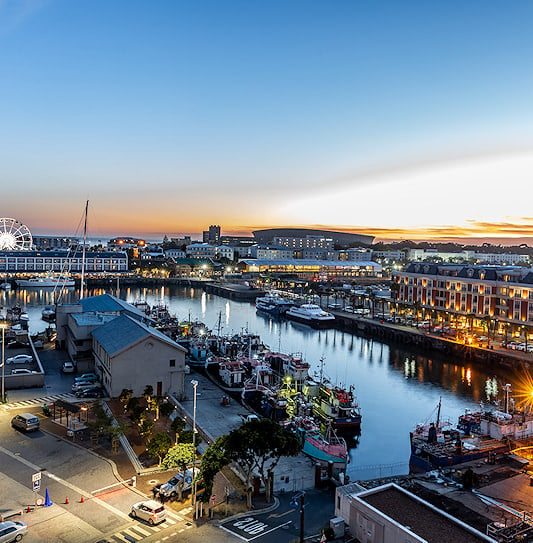
Boats docked in a harbor canal lined with illuminated buildings and a Ferris wheel at dusk, V&A Waterfront, Cape Town.

Victoria & Alfred Waterfront

Help Me Plan

A Working Harbor at the Foot of Table Mountain

The V&A Waterfront is still a working harbor, but its old docks now hold museums, an aquarium, hotels, restaurants and shops, with Table Mountain rising behind them. With about 24 million visitors a year, it is one of Cape Town’s busiest places. Zeitz MOCAA and the Two Oceans Aquarium are the main sights, ferries to Robben Island leave from the Nelson Mandela Gateway, and harbor cruises sail from the quays.

Yachts docked in the harbor in front of the historic red Clock Tower at the V&A Waterfront.
Robben Island
The Nelson Mandela Gateway is the departure point for Robben Island ferries.
Culture & Art
Zeitz MOCAA, in the converted grain silo, shows contemporary African art.
Family Fun
The Two Oceans Aquarium has kelp forest and predator exhibits.
Shopping
The Watershed sells local design, crafts and gifts.
Water Activities
Harbor cruises and sunset sails depart from the marina.
Reservations
Advance bookings are advised for ferries and peak-season dining.
Visitor Schedule
Weekend afternoons are busiest; mornings offer easier parking.
History
Prince Alfred tipped the first stone for the breakwater in 1860; the Clock Tower dates from 1882.

Plan Your Day: Top Stops, Ferries, and Dining

Essential Attractions in Walking Distance

Start in the Silo District at Zeitz MOCAA, a museum of contemporary African art carved out of the old grain silo and opened in 2017. From there it is about a ten-minute walk to the Two Oceans Aquarium, with its kelp forest and predator tanks. The Watershed, a large market hall for local design and crafts, is close by. Families can add the Cape Wheel or a short harbor cruise. The walkways are paved and suit strollers, and security staff patrol the area. With limited time, one museum, a waterfront lunch and a late-afternoon cruise make a well-balanced day.

The Waterfront takes its name from the Alfred and Victoria basins. On September 17, 1860, the young Prince Alfred, Queen Victoria’s second son, tipped the first load of stone for the breakwater that gave Cape Town its first sheltered harbor. The red Clock Tower, once the Port Captain’s office, followed in 1882. Redevelopment of the old docks began in 1988, and many of the original warehouses and quays survive among the newer buildings.

Robben Island Logistics and Tips

Ferries to Robben Island leave from the Nelson Mandela Gateway at the Clock Tower, and the Robben Island day tour builds the crossing into a full day in the city. Tickets sell out in high season, so book well ahead and arrive early for boarding. Sailings depend on wind and swell and are sometimes canceled at short notice, so leave some flexibility in your plans. The exhibits at the Gateway are worth a look while you wait. Bring a light layer and sun protection, and take motion-sickness tablets if the sea looks rough. If your sailing is called off, rebook for another slot and spend the time at Zeitz MOCAA or on a harbor cruise.

Dining, Shopping, and Sunset Plans

Book the popular restaurants with marina views, especially for lunch and dinner in summer. Mid-afternoon is a quiet time for coffee or a chocolate tasting between sights. At the end of the day, join a sunset cruise into Table Bay or find a terrace facing the bay and Signal Hill. The garages near the Silo District are usually the easiest place to park, or you can arrive by taxi or ride-hailing car. In the evening, walk along the quays as the last light fades on Table Mountain, and check your ferry or cruise times for the next morning. For a base at the harbor or elsewhere in the city, see our Cape Town accommodation options.

View More South Africa Attractions
Last Updated: November 6, 2026 Curated By: Riaan Viljoen