
South Africa's Addo Elephant National Park
Help Me Plan- Home
- >
- African Travel
- >
- South Africa
- >
- National Parks
- >
- Addo Elephant National Park
Addo Elephant National Park Destination Guide
Addo Elephant National Park was proclaimed in 1931 to protect the last elephant of South Africa’s Eastern Cape. Today it is a malaria-free Big Five reserve with varied biomes and a linked marine protected area that extends conservation into Algoa Bay. Access from Gqeberha is easy, making it ideal for families and Garden Route combinations.
Getting There
By Air: The most convenient access is via Chief Dawid Stuurman International Airport in Gqeberha (formerly Port Elizabeth), about 70 km from the main camp, with additional connections via George (~370 km) and Cape Town (~750 km), depending on your tour. Direct flights operate daily from major hubs.
By Road: The drive from Cape Town or George through the Garden Route—especially the Tsitsikamma Forest—is a classic. It’s typically included when you’re visiting multiple coastal areas. From Gqeberha, the park is about an hour’s drive on good roads.
Weather & Best Time To Visit
Addo can be visited year-round. Summers are warm; winter nights can be cool. The best wildlife viewing is typically in the dry winter months (May–September) when animals concentrate at waterholes—pack a warm layer for open vehicles.
In summer, seasonal rains green the landscape. You’ll see newborns of all shapes and sizes, wildflowers across the region, and the return of migratory birds. Sightings can be more challenging as thicker vegetation sometimes obscures wildlife.
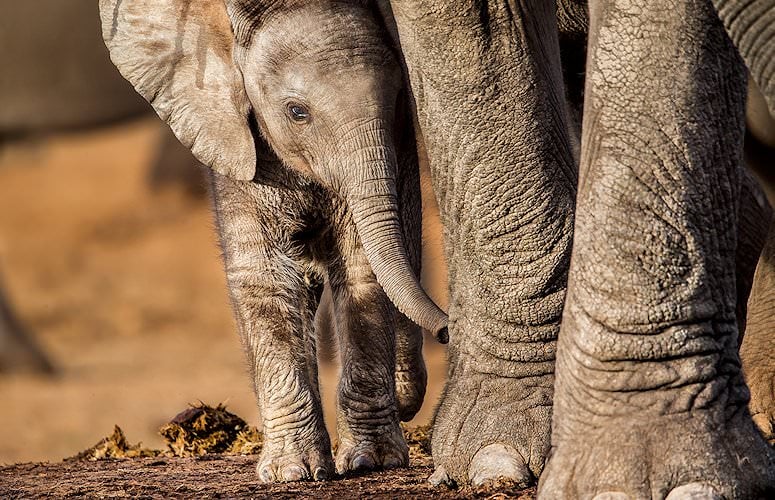
Addo is a drive of about an hour from Port Elizabeth. It is an ideal safari destination to combine with a visit to the picturesque Garden Route and for families seeking to visit a malaria-free wildlife sanctuary where children can experience Big Five game viewing.
Safaris and Tours that visit Addo
Addo Elephant Park is featured in these recommended packages alongside other popular destinations, including Cape Town, the Garden Route, and Kruger National Park.
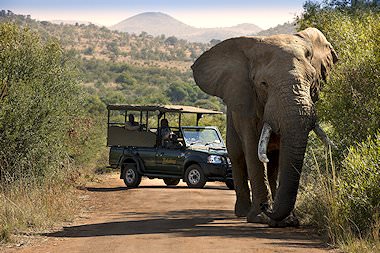
This privately guided safari is ideal for those who wish to explore several national parks in one comprehensive adventure.
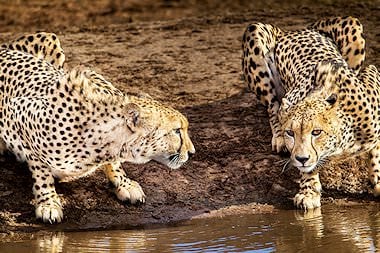
From South Africa's most famous city, Cape Town, the tour travels to the Garden Route before savoring a Big Five safari in Addo Elephant Park.
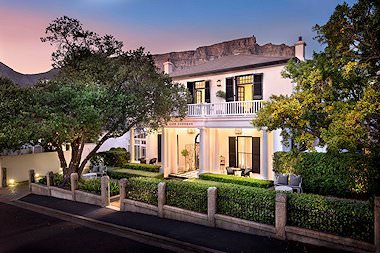
Our most extensive pre-designed itinerary combines the highlights of South Africa in a three-week adventure that includes visiting Addo.
Reasons to visit Addo Elephant Park
The Addo Elephants
If you want to see African elephant in all their glory, this is where you should go. It started as a conservation project in 1931 with only 11 elephant and has flourished into a mighty parade—the highest concentration of these land mammals found in the wild. More than 700 elephant call Addo home.
Size & Surroundings
The park is now among the largest in South Africa. It covers Darlington Lake, the Zuurberg Mountain Range, abundant birdlife, the popular Sundays River Valley with spectacular sunsets, and hiking along the Woody Cape dunes. The diverse settings ensure something special for every nature lover.
Convenience
First, the park is malaria-free. It also accommodates all ages and mobility levels: wheelchair-friendly accommodation is available, and kids can go horse riding or visit the Addo Raptor & Reptile Centre. Forget the bustle and enjoy the tranquil atmosphere.
Experiences to Savor at Addo Elephant Park
As expected, experiences to savor in this Big Five-bearing national park are primarily oriented around the wildlife that you will encounter and the game-viewing activities available. However, this unique park still offers more than meets the eye in terms of variety.
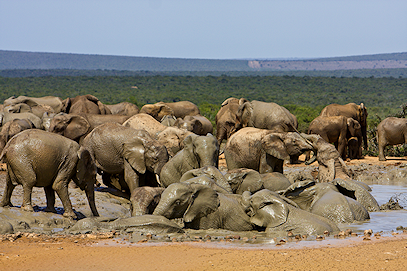
Walking amongst giants
There is no other place where the giant African elephant can be experienced like at Addo—they are everywhere. They can be seen up close on 4x4 trails, horse trails, hiking trails, and at the Main Camp’s Interpretive Centre, where the legendary Hapoor can be seen.
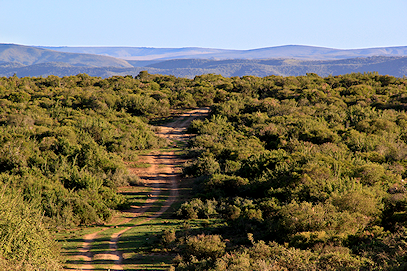
Authentically African
From its beautiful coastline with whales, sharks, and dolphins to the dry Karoo with jackal and whip snake—at Addo, you can immerse yourself in true African wilderness. The park is renowned for conserving the “Big 7”.
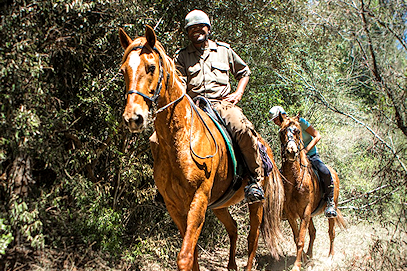
Relishing variety
You can be sure that your Addo experience will be unique. The park caters to everyone, with options ranging from horseback safaris and 4x4 trails to canoe-based bird watching, visits to the Addo Raptor & Reptile Centre, and hiking along many available trails.Useful Information
History
The Addo area is rich in history. Wildlife and nomadic tribes, like the Gonaqua, lived in harmony. Following the arrival of Dutch settlers in the 1700s, these tribes were decimated by a smallpox epidemic.
In the same period, the Xhosa people started moving slowly along the coast from the foot of the Drakensberg Mountains. They extended their territory from the Sundays River to the Mbashe River in the Transkei between 1700 and 1850.
In the late 1800s, Dutch farmers started colonizing the area in large numbers. Threatened by the presence of elephant so close to their crops and water, a battle between man and nature ensued. The government appointed Major PJ Pretorius to take care of the problem. Between 1919 and 1920, 114 elephant were killed in an attempt to exterminate the herd once and for all. Sixteen elephant survived.
A public outcry finally forced the government to pay attention to their disregard for the animals. In 1931, with only 11 elephant left, the park was proclaimed with 2 000 hectares to conserve the animals.
Wildlife
The park expanded from its mere 2 000 hectares in 1931 to a mega-park of roughly 164 000 hectares. It includes five of South Africa's nine biomes and conserves the “Big Seven,” which extends the Big Five to include great white shark and southern right whale. The 700+ wild elephant are, however, the main attraction. In the early years, to persuade the elephant to stay, rangers fed them citrus fruits from local farms—a success at first.
The feeding continued after elephant-proof fencing in the 1950s. By the 1970s, the citrus practice had become problematic—the elephant showed signs of dependency, became hostile toward each other and rangers, and damaged vegetation. In 1979, the feeding stopped. Until recently, no citrus fruits were allowed into Addo Elephant National Park.
Vegetation & Terrain
Addo Elephant National Park encompasses just under 170 000 hectares that stretch across the Eastern Cape, from the warm Indian Ocean to the vast open expanse of the Karoo. It includes the evergreen Sundays River Valley, the dunes of the Woody Cape coast, the Bird and St Croix island groups, and the Zuurberg Mountain Range. The diverse landscapes also contain many archaeological sites, such as the middens found on the Alexandria dune field and the rock art found in the caves of the Zuurberg Mountains. The analogies between the artifacts found in the different areas also substantiate that the nomadic tribes traveled immense distances across this area.
The park has expanded over the years to conserve five of South Africa's nine biomes: the Albany Thicket, Fynbos, Forest, Nama Karoo, and the Indian Ocean Coastal Belt, and also expanding to make it the world's first “Big 7” conservation area. The ongoing commitment to the varying ecosystems promotes a sustainable and inclusive ecotourism industry and economic development in the Eastern Cape region, and plans are underway to expand its borders further. Upon completion, it is envisaged that the park will expand to conserve 240 000 hectares of land and a further 120 000 hectares of protected marine area.
Activities
There is something for everyone to do in Addo; game drives, hiking, canoeing, and 4x4 trails are just a few. The Bedrogfontein 4x4 trail, for example, takes you back in history over mountains, through ravines and forests, and into the Karoo as you travel from Kabouga to Darlington. It is where the Afrikaner and British troops fought many battles during the Anglo-Boer War and is also a place where rock art paintings tell stories of a time long forgotten. This self-drive, one-way 4x4 route covers 45 km of grade 2–3 terrain. It takes approximately six hours and another two hours from Darlington to the main camp.
Two-hour horse rides through the Nyathi area for the more adventurous types keep you on the edge of your seat. Game viewing from horseback is excellent because the animals are more relaxed around the horses than, for example, a game-viewing vehicle, and staying on the road is not necessary. Game viewing in a Big Five area adds to the intensity and excitement of the experience. With so much to choose from, let the African Sky team help you find what suits you best.